

TL;DR:
- Poor dust control causes up to 80% of premature coating failures in paint environments.
- Multi-layer protection systems offer superior dust trapping and static reduction compared to single-layer films.
- Proper application and maintenance of multi-layer films significantly reduce rework, improve finish quality, and lower costs.
Poor dust control is quietly destroying paint jobs across automotive and industrial facilities. Most managers assume a single layer of booth film is enough, but up to 80% of premature coating failures trace back to contamination from inadequate protection. That’s not a minor quality issue. That’s rework, wasted materials, unhappy customers, and lost revenue stacking up shift after shift. This guide breaks down why single-layer solutions consistently fall short, how multi-layer protection actually works in real booth environments, and what facility managers can do right now to stop contamination from eating into their margins.
Table of Contents
- The science of dust contamination in paint environments
- How multi-layer protection works: Method, features, and value
- Real-world results: Downtime, efficiency, and finish quality gains
- Selecting and maintaining a multi-layer protection system
- A perspective managers rarely hear: Precision beats more product
- Explore proven multi-layer protection solutions
- Frequently asked questions
Key Takeaways
| Point | Details |
|---|---|
| Contamination is costly | Most coating failures and defects originate from inadequate or single-layer dust protection. |
| Multi-layer offers real advantages | Layered films trap more dust, reduce booth downtime, and improve finish quality reliably. |
| Practical setup matters | Effectiveness depends on both product choice and diligent staff application and maintenance routines. |
| Efficiency drives savings | Shops benefit from reduced cleaning, less rework, and higher throughput when protection is optimized. |
The science of dust contamination in paint environments
Dust in a spray booth isn’t just a nuisance. It’s a precision enemy. Particles as small as 5 microns, invisible to the naked eye, can embed into a wet coating and create defects that only show up under inspection lighting after the job is done. By then, you’re already looking at a rework cycle.
The sources of contamination in painting environments are more varied than most managers realize:
- Booth walls and floors that haven’t been properly protected release settled dust every time airflow changes
- Clothing and equipment brought in from outside the booth carry particles that become airborne during spraying
- Sanding operations in adjacent areas push fine abrasive dust through gaps and ventilation paths
- Peeling or degraded single-layer films that were applied weeks ago and never replaced
- Electrostatic attraction on unprotected surfaces that actively pulls airborne particles back into the wet paint zone
Single-layer barriers fail for a simple reason: they reach their dust-trapping capacity quickly and then become a source of contamination themselves. Once a film surface is saturated, particles bounce off rather than adhere. The film looks intact, but it’s no longer doing its job.
Stat to know: Up to 80% of premature coating failures are caused by contamination linked to inadequate preparation or single-layer protection.
The real cost isn’t just the failed job. It’s the chain reaction: additional labor for wet sanding and polishing, delayed vehicle delivery, customer dissatisfaction, and the slow erosion of your shop’s reputation. Research into surface protection process impact shows that rework rates drop significantly when protection systems are upgraded from single to multi-layer. The science is straightforward. The application is where most facilities fall behind.
How multi-layer protection works: Method, features, and value
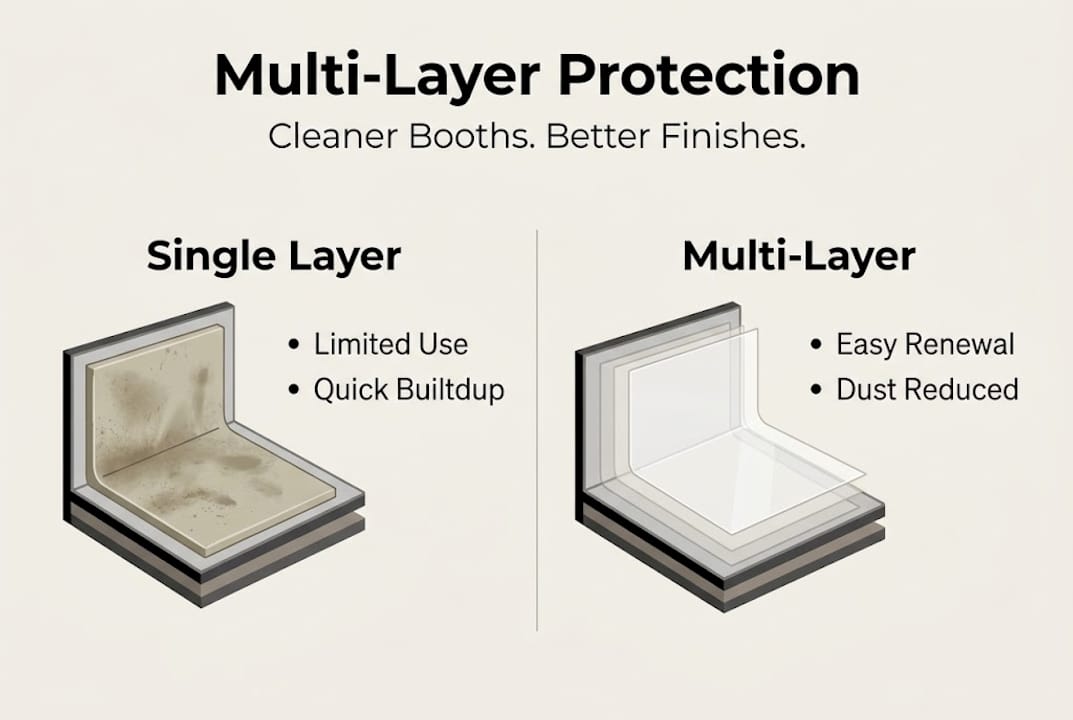
Multi-layer protection isn’t just stacking more film. It’s an engineered system where each layer serves a distinct function, and the design allows for fast, clean layer removal without disturbing the layers beneath.
A true multi-layer system typically includes:
- A base adhesive layer that bonds securely to booth walls or floors without leaving residue
- Intermediate dust-trapping layers with anti-static properties that attract and hold airborne particles
- A peelable top layer that can be removed quickly between jobs, exposing a fresh, clean surface underneath
The anti-static feature is critical. Unprotected surfaces in a spray booth build up static charge during painting, which acts like a magnet for dust. Anti-static films neutralize this effect, reducing the particle load in the air near the work surface.
Here’s how single-layer and multi-layer systems compare in practice:
| Feature | Single-layer film | Multi-layer film |
|---|---|---|
| Dust trapping capacity | Limited, saturates quickly | High, renewed with each peel |
| Replacement time | Full removal required | Top layer peels in minutes |
| Anti-static protection | Rarely included | Standard in quality systems |
| Contamination risk over time | Increases rapidly | Stays consistently low |
| Cost per job cycle | Higher due to full replacement | Lower with layer-by-layer use |
Pro Tip: Film thickness matters more than most managers expect. Thicker films resist tearing during removal but add cost. For high-traffic booths running multiple jobs per day, a medium-gauge multi-layer film with a reinforced base layer typically delivers the best balance of durability and economy. Consult a multi-layer protective film guide to match film specs to your booth’s actual workload.
The benefits of enhancing booth quality with protective films go beyond dust control. Proper film systems also reduce cleaning chemical use, protect booth surfaces from paint buildup, and extend the service life of the booth itself. The 80% contamination failure rate is preventable. The tools exist. The question is whether your current setup is actually using them.
Real-world results: Downtime, efficiency, and finish quality gains
Theory is useful. Numbers are better. Facilities that have switched from single-layer to multi-layer protection report consistent, measurable improvements across three key areas: defect rates, cleaning time, and staff efficiency.
Here’s a representative picture of before-and-after outcomes reported by shops that made the switch:
| Metric | Before multi-layer | After multi-layer |
|---|---|---|
| Finish defect rate | 18-22% of jobs | 4-7% of jobs |
| Daily booth cleaning time | 45-60 minutes | 10-15 minutes |
| Rework labor hours per week | 8-12 hours | 2-3 hours |
| Customer complaint rate | Moderate to high | Low |
Those cleaning time reductions alone represent significant labor savings across a full year of operation. When technicians spend less time scrubbing walls and more time on productive work, the entire facility runs better.
“We went from spending nearly an hour cleaning the booth between shifts to pulling a layer and being ready in ten minutes. That’s time we put back into actual paint work.”
The connection between booth efficiency and protective films is direct. Less contamination means fewer defects. Fewer defects mean less rework. Less rework means more throughput. It’s a compounding benefit that shows up in both quality metrics and the bottom line.
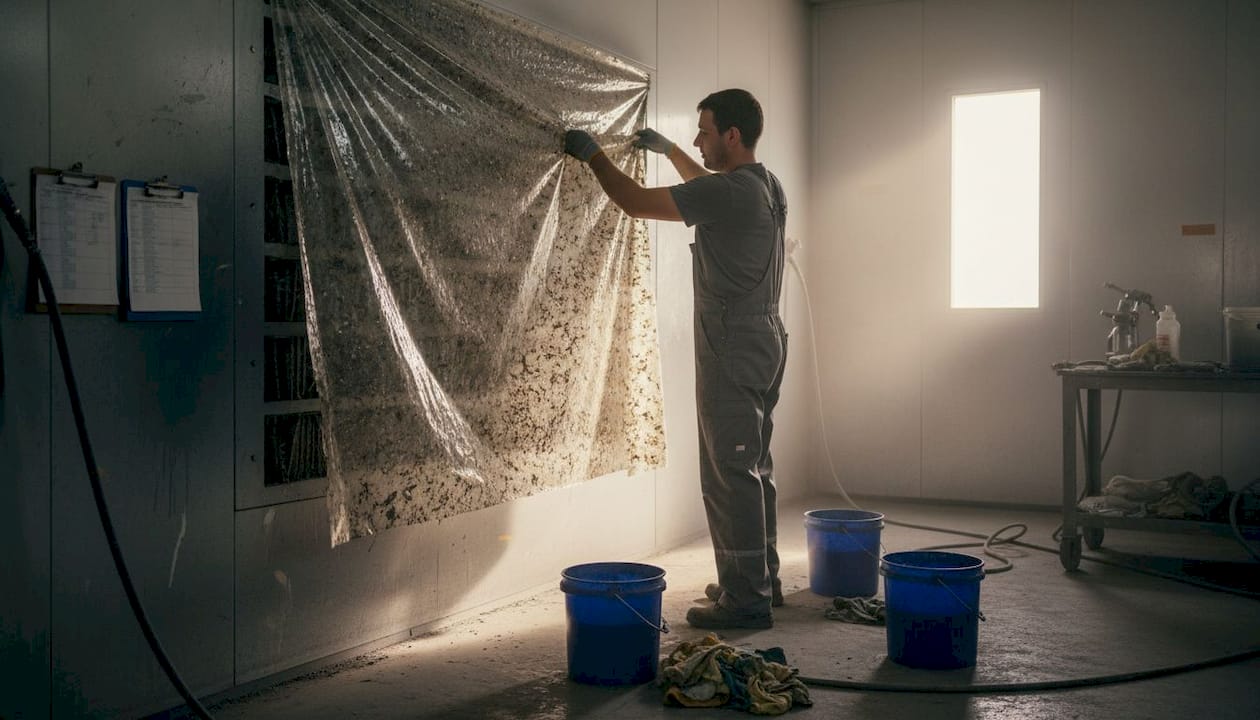
The 80% contamination-linked failure rate isn’t just a statistic. It’s a signal that most facilities are losing a significant portion of their output quality to a solvable problem. Managers who understand how to maximize paint quality with innovative protective films consistently outperform competitors still relying on outdated single-layer methods. The gap between the two approaches is widening as film technology improves.
Selecting and maintaining a multi-layer protection system
Choosing the right multi-layer system starts with understanding your booth’s specific demands. Not all films perform the same way in every environment, and selecting the wrong product can leave you with the same problems you were trying to solve.
Key selection criteria to evaluate:
- Anti-static rating: Look for films specifically rated for electrostatic reduction in spray environments, not generic plastic sheeting
- Heat resistance: Booth temperatures during curing cycles can degrade low-quality films and release particles. Verify the film’s rated temperature range matches your process
- Peel force consistency: A film that tears during removal wastes time and creates debris. Test peel behavior before committing to bulk orders
- Coverage dimensions: Walls, floors, and ceiling areas have different requirements. Make sure the system you choose covers all critical surfaces in your booth
- Dispenser compatibility: Patented dispenser systems allow for bubble-free, fast installation. A film without a matched dispenser often results in air pockets that trap contamination underneath
Maintenance intervals depend on booth usage. Most active shops replace top layers every one to two weeks, but high-volume facilities may need weekly or even per-shift peeling on floor films. Track defect rates by week and correlate them with film age. That data will tell you exactly when replacement is needed in your specific operation.
Pro Tip: Train every technician who enters the booth on proper film application, not just the person responsible for booth prep. Improper entry technique, like dragging equipment across a fresh film layer, can compromise the surface before a single coat is sprayed. A 20-minute training session per staff member pays back in fewer defects per month. Explore the range of spray booth film types and review real-world protective film applications to build a training program grounded in actual booth conditions.
The coating failure rate tied to contamination drops sharply when selection and maintenance protocols are taken seriously. Cost-benefit analysis consistently favors multi-layer systems once rework labor and material waste are factored in.
A perspective managers rarely hear: Precision beats more product
Here’s something the industry doesn’t say loudly enough: most contamination failures in booths using multi-layer film aren’t caused by the film itself. They’re caused by how it’s applied.
We’ve seen facilities running premium multi-layer systems still fighting defect rates above 10%, while shops using mid-range film with tight protocols achieve rates below 5%. The difference isn’t the product. It’s the consistency of the process.
Hasty installation, skipped base layer checks, and technicians who treat film replacement as a low-priority task all undermine the system’s potential. A multi-layer film applied with air bubbles underneath is worse than no film at all, because it creates a false sense of security.
The real advantage comes from standardizing every step: installation procedure, replacement schedule, staff entry behavior, and periodic review of defect data. Facilities that treat film management as a quality control function, not a janitorial one, see the biggest gains. A bulk film dust reduction approach combined with disciplined protocols delivers results that no single product upgrade can match on its own. Precision is the multiplier.
Explore proven multi-layer protection solutions
If your facility is still dealing with high rework rates, long cleaning cycles, or inconsistent finish quality, the root cause is likely your current dust protection setup. Multi-layer film systems have a proven track record in automotive refinishing and industrial painting environments, and the results are repeatable when the right product meets the right process.
At Dust Free Film, we’ve been engineering spray booth protection solutions since 2012, built to European manufacturing standards and field-tested in high-volume operations. Whether you’re looking to reduce defect rates, cut cleaning time, or protect your booth surfaces long-term, we can match you with the right system. Request a quote today and get personalized recommendations based on your booth size, usage volume, and finish quality goals.
Frequently asked questions
What is the main reason for using multi-layer protective film in spray booths?
Multi-layer film provides superior dust control by continuously offering a fresh, clean surface, directly reducing contamination that drives up to 80% of premature coating failures.
How often should multi-layer protection be maintained or replaced?
Most shops peel and replace top layers every one to two weeks, though high-volume booths may need per-shift replacement on floor films to maintain optimal dust control.
Does using multi-layer protection decrease operational costs?
Yes, by cutting rework labor, reducing cleaning time by up to 75%, and lowering material waste, multi-layer systems deliver clear cost savings across the full operation cycle.
Are all films effective or do specific features matter?
Specific features matter significantly. Anti-static properties and correct film thickness for your booth’s temperature and traffic level are essential. Generic plastic sheeting rarely delivers the same results as purpose-built spray booth film.