
For aerospace spray booths, the best aerospace booth film is Dust Free Film’s multi-layer Wall Protector paired with its Floor Protector: electrostatic, removable-layer surfaces that trap airborne dust and overspray before it settles on a curing finish. Both products cut booth cleaning downtime because operators peel away a spent layer instead of stripping and reinstalling the whole system. The sections below walk through selection criteria, specs, installation, and sourcing so you can specify and justify the purchase.
TL;DR:
- Electrostatic wall film captures fine overspray and airborne dust before it settles, reducing contamination and rework for aerospace curing panels.
- Layer numbering and visible peel indicators help technicians quickly identify when to change film, minimizing booth downtime and cleaning cycles.
- The films tolerate temperatures up to 80°C, suitable for most bake cycles, but specific temperature ratings must be confirmed in writing for high-heat processes.
- Proper installation involves surface prep, using the dedicated dispenser for straight, seam-free application, and peeling layers on contamination or scheduled intervals.
- Buying direct from the manufacturer allows customized sizes, private labels, and faster lead times, essential for facilities with nonstandard booth dimensions or multiple locations.
Table of Contents
- What Makes These Products Best for Aerospace Booths
- How Do You Choose the Right Booth Film for Aerospace Finishing?
- What Specs and Performance Should You Ask For?
- Installation Workflow and Maintenance Best Practices
- Where and How to Buy Aerospace Spray Booth Film
- Why Trust This Recommendation on Aerospace Booth Film
- How Facility Managers Actually Deploy Booth Film at Scale
- Get Aerospace-Grade Booth Film Direct From the Manufacturer
- Selected Sources and Further Reading
- FAQ
What Makes These Products Best for Aerospace Booths
Two films handle two different jobs. The Wall Protector uses a slightly tacky, electrostatically charged surface built to grab overspray and airborne particulate before it drifts back onto a wet panel. The Floor Protector is heavier duty, built for foot and cart traffic, with a slip-resistant surface instead of tack, since a sticky floor in a working booth is a hazard, not a feature.
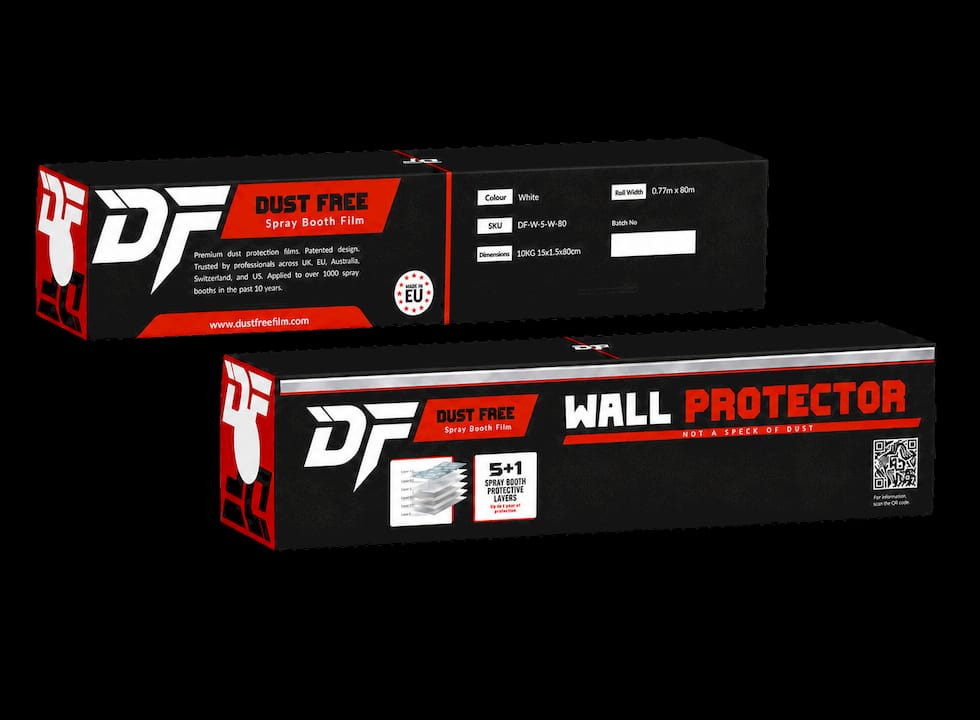
Both are multi-layer systems. Each layer numbers visibly, so a technician peels one contaminated sheet off and exposes a clean surface underneath in seconds, without shutting the booth down for a full reline.
- Walls: electrostatic pull captures fine overspray mist that gravity alone would let settle on panels
- Floors: slip resistance holds up under rolling carts and foot traffic without tack buildup
- Both: layer removal restores a clean working surface without a full teardown
For aerospace finishing, where a single embedded particle can mean reworking a coat, this layered approach is the difference between a five-minute peel and a half-day booth shutdown.
Pro Tip: Match wall coverage height to your spray pattern, not just booth height. Overspray drifts higher than most managers expect, and an underprotected upper wall becomes the source of the next batch’s contamination.
How Do You Choose the Right Booth Film for Aerospace Finishing?
Specifying booth film for an aerospace finishing line is a procurement decision, not just a maintenance purchase. Get these five factors right before you send an RFQ.
- Capture mechanism. Decide where you need electrostatic pull (walls, ceilings) versus where tack would create a safety issue (floors, walkways).
- Layer count and numbering. Confirm the film has visible layer numbers and integrated length markings, so technicians know exactly how many clean surfaces remain before reorder.
- Thermal and chemical tolerance. Ask for the operating temperature rating in writing. Aerospace coatings and bake cycles run hot, and a film that softens or releases adhesive at high heat becomes its own contamination source.
- Dispenser ergonomics. A film that requires two people and a ladder to hang straight costs you labor hours every changeout. Ask whether the supplier includes an application box built for one-person installation.
- RFQ specifics. Roll widths, roll lengths, private-label options, and lead times all belong in the request, not discovered after the order ships.
Aerospace finishing environments run tighter tolerances than general industrial paint work, so treat the RFQ like a spec sheet, not a shopping list.
What Specs and Performance Should You Ask For?
Two numbers matter more than any others on a datasheet: capture method and temperature rating. Electrostatic surfaces work best on vertical walls and overhead surfaces where fine particulate drifts through the air; tacky or slip-resistant floor surfaces work where foot traffic and equipment carts rule out an electrostatic charge holding up.
Dust Free Film’s products are rated for operating temperatures up to 80°C, which covers most spray booth bake and flash-off cycles without the film degrading or releasing residue onto a curing panel.
- Ask for the rated temperature ceiling in writing, not a verbal assurance
- Ask how layer numbering signals when to peel (visible printed numbers, not guesswork)
- Track cleaning cycle frequency before and after switching film to see the downtime difference
- Track paint defect rates tied to particulate contamination over a full production run
Statistic Callout: Booths that reduce manual wall and floor cleaning cycles free up technician hours that would otherwise go to scraping and wiping instead of finishing panels. The exact hours saved vary by booth size and shift schedule, but the pattern holds across facilities that switch from bare walls to a removable-layer system.
Installation Workflow and Maintenance Best Practices
Getting a straight, tape-free line on the first pass saves more time than any other single step in the install.
- Prep the surface. Clear the wall or floor of loose debris before dispensing; trapped particulate under the film defeats its purpose.
- Overlap edges without tape. The film’s tape-free overlap design keeps seams sealed against overspray, without adhesive residue to clean later.
- Set a layer-change cadence. Peel a layer when visible contamination builds up or on a fixed shift schedule, whichever comes first, per guidance in the spray booth efficiency guide.
Pro Tip: Train one technician per shift as the dedicated installer. Consistency in tension and overlap technique matters more than speed, and a single trained hand avoids the crooked seams that let overspray sneak through.
Where and How to Buy Aerospace Spray Booth Film
Facility managers weigh factory-direct purchasing against distributor relationships based on order size and lead time tolerance. Dust Free Film supports both paths, along with bulk orders, custom configurations, private-label production, and worldwide shipping for industrial customers.
- Request roll width and length options that match your specific booth dimensions, not a generic standard size
- Ask about private-label production if you’re outfitting multiple facilities under one brand standard
- Confirm lead times against your production schedule before committing to a bulk order
- Request a sample roll before a full order to test tack, capture performance, and layer-peel ease under your own booth conditions
Why Trust This Recommendation on Aerospace Booth Film
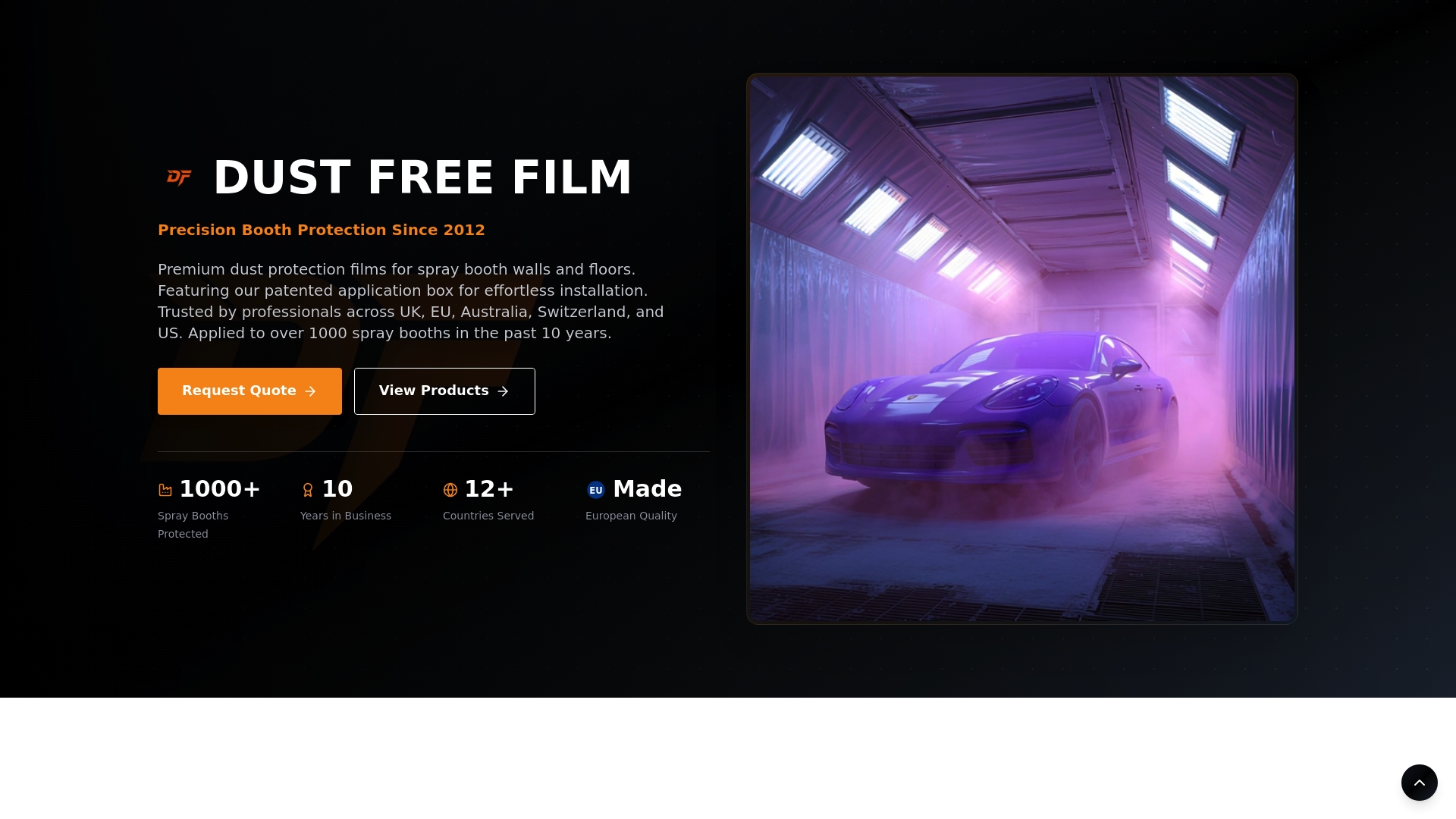
This guide was compiled by Pavlos - Angelos Filippakis, drawing on Dust Free Film’s technical specifications, product design, and documented manufacturing history. Dust Free Film has manufactured spray booth protection films in Europe since 2012, and its patented application box and electrostatic multi-layer film design are core to how the product performs in daily use, not marketing claims layered on afterward.
For verification, request technical datasheets and sample rolls directly, and review the booth wall film performance breakdown for additional technical detail before specifying a large order.
— Pavlos - Angelos Filippakis
How Facility Managers Actually Deploy Booth Film at Scale
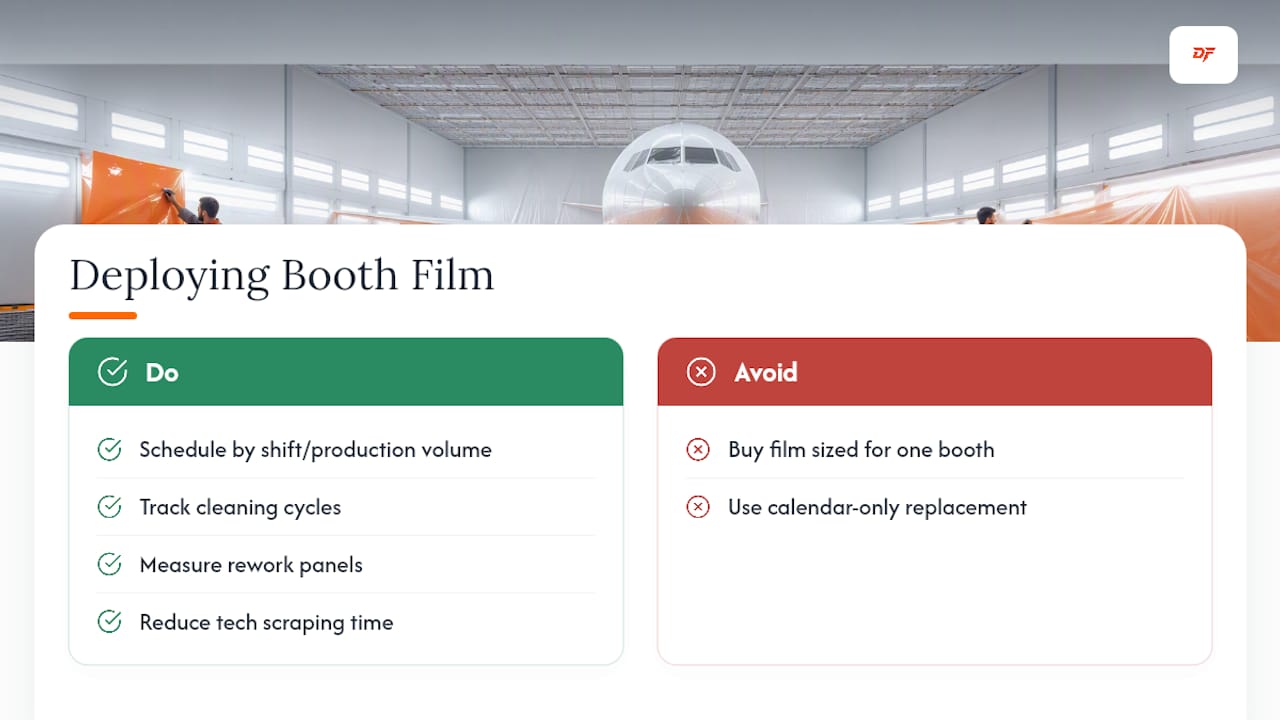
Most facilities run film replacement on a shift-based schedule tied to production volume, not a calendar date. The real ROI shows up in fewer cleaning cycles, fewer rework panels from embedded particulate, and less technician time spent scraping walls instead of finishing work. The most common procurement mistake is buying film sized for one booth and assuming it fits every line. It rarely does.
Get Aerospace-Grade Booth Film Direct From the Manufacturer
Some manufacturers sell factory-direct with VAT-free worldwide shipping and no distributor markup, plus custom configurations not typically available from off-the-shelf film suppliers.
If your facility runs nonstandard booth dimensions or needs private-label rolls across multiple sites, the Wall Protector and Floor Protector pages list technical specs you can hand straight to procurement. Request a sample roll or a custom quote through the products page to test capture performance and layer-peel speed in your own booth before committing to a bulk order.
Selected Sources and Further Reading
Review the Wall Protector and Floor Protector product pages for full specs, and see how aerospace trade events treat on-site presence as a repeatable quality asset.
FAQ
What Is the Best Aerospace Booth Film for Walls?
The best wall film for aerospace booths uses an electrostatically charged, multi-layer surface that captures airborne overspray before it settles on curing panels. Dust Free Film’s Wall Protector is built specifically for this, with removable layers that expose a clean surface without a full reline.
How Often Should You Replace Booth Floor Film?
Replace a floor film layer when visible contamination builds up or on a fixed shift schedule, whichever comes first. The Floor Protector’s multi-layer design lets technicians peel one soiled layer and expose a fresh, slip-resistant surface in minutes.
What Temperature Can Aerospace Booth Film Withstand?
Dust Free Film’s wall and floor films are rated for operating temperatures up to 80°C, covering most spray booth bake and flash-off cycles. Always confirm the rated ceiling in writing before specifying film for a high-heat curing process.
How Much Does Dust Free Film Cost?
Current pricing for the Wall Protector and Floor Protector is available directly on the product pages, since costs vary by roll size, order volume, and custom configuration. Request a quote for bulk or private-label orders to get exact figures for your facility.
Can One Person Install Booth Protection Film?
Yes. Dust Free Film’s patented application box uses a freely rotating roll, reinforced sides, and an integrated metal cutting bar, letting one installer brace the box with a foot and dispense a straight line without a second person.