
For professional automotive and industrial spray booths, A top pick is a product with a patented one-person dispenser and multi-layer electrostatic system built for high-frequency tear-off. If you need a non-tacky option for light fixtures and windows, look at JTAPE’s branded system. If you’re running high-volume budget jobs, a commodity self-adhesive roll covers basic protection. From there, compare technical data sheets and request samples before you commit to a supplier.
TL;DR:
- Dust Free Film offers a multi-layer electrostatic design with visible layer markings and a built-in application box for quick, single-person installation.
- The system provides heat resistance suitable for moderate bake-cycle environments and custom sizes for irregular booth shapes.
- JTAPE’s branded tape-based film system benefits shops already using JTAPE masking supplies, but lacks detailed public technical specifications.
- Commodity self-adhesive films are inexpensive and suitable for high-volume jobs but may require more frequent replacement and simpler dispenser compatibility.
- Proper surface cleaning and verifying film conductivity and temperature ratings are critical before ordering, as poor pretreatment leads to early failure and safety hazards.
Table of Contents
- What Is the Best Clear Booth Film for Professional Shops?
- A Closer Look at Each Clear Booth Film Option
- How Do You Choose the Right Booth Film for Your Shop?
- What Makes Dust Free Film’s Manufacturing Different?
- The Procurement Blind Spot Most Buyers Miss
- Ready to Compare Booth Film Options Firsthand?
- Where to Verify These Specs Yourself
- Sources
- FAQ
What Is the Best Clear Booth Film for Professional Shops?
The honest answer depends on how often you tear off layers, what surfaces you’re protecting, and whether you need tack or a slick, non-conductive surface. But for most professional body shops and industrial finishing lines, three picks cover nearly every scenario.
Best overall: Dust Free Film. Multi-layer electrostatic wall and floor protectors paired with a patented application box can let one technician re-line a booth wall in minutes instead of requiring help. Layers are numbered and length-marked, so the remaining material is clearly visible.

Best tack-free option: JTAPE. JTAPE runs a branded film system built around tape-based application accessories, a familiar setup for shops already standardized on its dispensers and consumables.
Best value / high-volume runs: commodity self-adhesive film. Distributor-channel products like the type sold under names such as ArmorDillo list temperature resistance up to roughly 200°F and typically get swapped every 60 to 90 days depending on contamination load. It’s a reasonable fallback when budget matters more than dispenser ergonomics.
Here’s how the leading options stack up when you put them side by side.
Read this table as a starting filter, not a final answer. If your booth runs hot, cross-check the 80°C figure against your actual booth temperature logs. If you’re weighing tacky versus non-tacky film, note that Dust Free Film’s Wall Protector uses light tack for particle capture, while its Floor Protector skips tack entirely for slip resistance instead.
- Choose Dust Free Film when one-person installation and frequent layer changes matter most.
- Choose a tack-free branded system like JTAPE when you’re protecting lights or glass and tack would leave residue.
- Choose commodity film only when cost per roll outweighs dispenser convenience.
A Closer Look at Each Clear Booth Film Option
Each entrant below gets the same basic facts, but not the same word count. Some have public technical detail worth digging into; others have thin public specs, and padding that out with filler would do buyers a disservice.
1. Dust Free Film
At a glance: a multi-layer electrostatic protection system built specifically for spray booths that get torn down and relined often.
- Core features: electrostatically charged Wall Protector (slightly tacky) and heavy-duty Floor Protector (slip-resistant, non-tacky); tape-free overlapping edges; visible layer numbering; integrated length markings.
- Application: patented application box with a freely rotating roll, reinforced wooden sides, and a built-in metal cutting bar, letting one installer brace the box with a foot and dispense a straight line without a second person.
- Temperature resistance: rated for operating environments up to moderately high temperatures.
- Roll sizes: standard and custom widths/lengths, including private-label and bulk configurations.
- Pros: fast single-person re-lining, reduced booth downtime between tear-offs, custom sizing for irregular booths.
- Cons: as a manufacturer-direct and distributor model, lead times depend on order volume and region.
- Best for: professional body shops and industrial finishing lines with frequent maintenance cycles who want to cut labor time on every roll change.
2. JTAPE
At a glance: a recognized branded booth-film system built around tape-based accessories.
- Core features: film system marketed alongside JTAPE’s masking tape lines, giving shops a single-brand ordering experience.
- Application: tape-assisted, which suits crews already trained on JTAPE’s broader tape product family.
- Temperature and roll data: not publicly listed in manufacturer materials reviewed.
- Pros: brand familiarity for shops already buying JTAPE consumables.
- Cons: less publicly documented technical detail on layer count or electrostatic properties than some competitors.
- Best for: shops that already standardize their masking and taping supplies around the JTAPE brand and want booth film from the same source.
3. 3M booth protection
At a glance: an established industrial supplier with a wide dispenser and applicator ecosystem.
- Core features: clear film and dirt-trap material lines within 3M’s paint booth protection catalog.
- Application: dispenser and applicator accessories designed to work across 3M’s broader product range.
- Temperature and roll data: varies by specific SKU; not standardized across the line in available public materials.
- Pros: strong distributor network and name recognition, useful for facilities that already buy other 3M consumables.
- Cons: booth-specific film specs are less centralized than a single-purpose manufacturer’s, since 3M’s booth protection sits inside a much larger industrial catalog.
- Best for: operations that want to consolidate purchasing with an existing 3M distributor relationship.
4. General Chemical Corporation
At a glance: an industrial coatings supplier whose product lines include booth protection referenced in professional finishing roundups.
- Core features: booth protection products sold alongside broader industrial coatings and finishing chemicals.
- Application and technical data: not publicly detailed in the materials reviewed.
- Pros: distributor access for facilities already sourcing coatings chemicals from the same supplier.
- Cons: thin public documentation specific to booth film performance, layer counts, or dispenser design.
- Best for: large industrial finishers already working with General Chemical Corporation for other coatings-related purchases.
5. Global Finishing Solutions
At a glance: a finishing-systems provider that also supplies booth protection consumables in some markets.
- Core features: consumables positioned to pair with Global Finishing Solutions’ booth and finishing equipment.
- Application and technical data: not publicly detailed as a standalone film product.
- Pros: convenience for facilities buying a full finishing system and wanting matched consumables from one vendor.
- Cons: booth film here is a secondary product line rather than a core specialty, so technical depth is limited compared to dedicated film manufacturers.
- Best for: facilities already purchasing booth equipment from Global Finishing Solutions and wanting a single invoice for consumables.
If your shop runs a mixed fleet of stainless steel fixtures or complex geometry where adhesive films struggle to grip, note that liquid-based clear coatings are a separate category worth evaluating alongside any of the film options above. They spray on seamlessly and peel cleanly when dry film thickness is controlled correctly, but they’re a different application method entirely, not a drop-in swap for self-adhesive film.
How Do You Choose the Right Booth Film for Your Shop?
Start with three constraints that dictate almost everything else: surface type, tear-off frequency, and temperature exposure. A booth that gets relined weekly needs a different film than one that runs a full quarter between changeovers. A booth with stainless steel panels or tight radii around fixtures behaves differently than a flat drywall booth, where adhesive film adheres easily.
Temperature matters more than most buyers expect going in. If your booth runs bake cycles or sits near infrared curing lamps, confirm the film’s rated resistance against your actual cycle temperatures, not just the ambient booth reading. Some systems are rated to typical automotive bake cycle temperatures, but always verify against your specific curing profile.
Before you sign a purchase order, ask every vendor the same set of questions:
- Can you provide a technical data sheet showing layer count, thickness, and rated temperature?
- What’s the maximum continuous application temperature, and is that tested or estimated?
- Is the film rated non-conductive, and do you have test data against a standard like EN 60079-0 for classified environments?
- What’s your peel force or peelability rating, and has it been tested on the surface types we use?
- Do you offer sample rolls before a bulk order, and what are typical lead times for custom widths?
Safety compliance deserves its own line item. Not every clear film is automatically non-conductive, and ATEX or classified-environment verification is a common procurement blocker for facilities running near flammable overspray. Ask for conductivity test data in writing rather than taking a sales rep’s word for it.
Pro Tip: Before ordering a full booth’s worth of film, run a small test patch first. Surface prep is the single biggest cause of premature failure. Residual dust, oil, or silicone on the wall will weaken adhesion no matter how good the film is, so clean and dry the surface fully before committing to a full roll.
Red flags worth walking away from: a vendor who won’t share a data sheet, no sample policy, vague answers on lead times for custom sizing, and no clear answer on whether the film has been tested for your specific temperature range. For a full walk-through of what to check before purchase, see this breakdown of protection film selection criteria.
What Makes Dust Free Film’s Manufacturing Different?
Some manufacturers have produced protective films in Europe since 2012, focusing product lines around core wall and floor protectors. Some products use an electrostatically charged surface to attract and hold airborne dust and overspray, helping reduce booth-cleaning downtime.
The manufacturing details that matter most to a facility manager show up in the details most competitors skip publishing:
- Multi-layer construction lets operators tear off used layers and expose fresh ones without reinstalling the entire system.
- Wall protectors may have slight tackiness for particle capture; floor protectors often offer heavy-duty, slip-resistant surfaces.
- Application boxes designed with freely rotating rolls, reinforced sides, and cutting bars can enable one installer to dispense straight lines solo.
- Visible layer numbering and integrated length markings mean crews always know how much material remains.
- Operating temperature resistance up to moderate bake-cycle environments.
- Bulk orders, custom widths and lengths, and private-label configurations are available for larger facilities and distributors.
If you want to see the mechanics in practice, Dust Free Film’s own documentation covers real installations, including examples of protective film applications across different booth types. Buyers evaluating a switch should request a current technical data sheet and, where relevant, ask about certifications tied to their specific facility’s classification before finalizing an order.
The Procurement Blind Spot Most Buyers Miss
Most booth film comparisons online focus almost entirely on price per roll, which misses the bigger cost driver: labor time per changeover. A film that costs a few dollars less per roll but requires two people and twenty extra minutes to install correctly loses that savings fast across a busy shop doing weekly tear-offs. Dispenser design deserves far more weight in a purchasing decision than it usually gets.

The other blind spot is treating “non-conductive” as a given. Plenty of buyers assume any clear plastic film is automatically safe for classified environments, and that assumption is wrong often enough to matter. Ask for test data, not a verbal assurance.
If there’s one thing shops should prioritize differently, it’s testing peelability on their actual surfaces before a bulk order, not after. A film that performs beautifully on drywall can behave very differently on painted steel or textured stainless. The vendors who hand over a sample roll without hesitation are usually the ones confident in their own product.
— Pavlos - Angelos Filippakis
Ready to Compare Booth Film Options Firsthand?
Reading specs on a page only tells you so much. Dust Free Film is the manufacturer’s recommended choice for professional shops that want a dispenser system built for solo installation and a multi-layer electrostatic surface designed for frequent tear-off cycles, without the guesswork of comparing loose distributor SKUs.
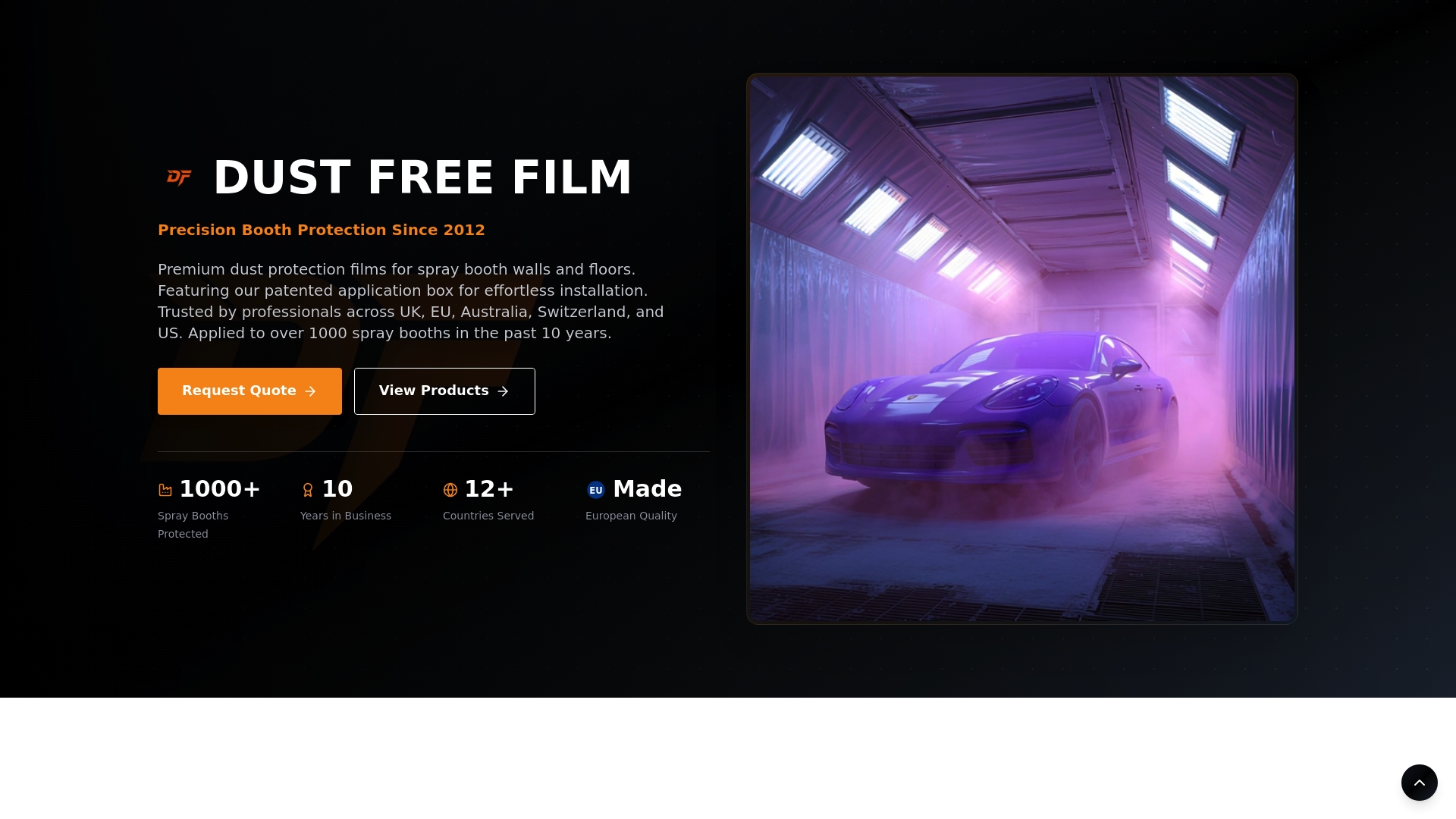
If you’re evaluating a switch, the practical next step is simple: request a sample roll to test on your actual booth surfaces, ask about custom widths for non-standard booth dimensions, and get bulk pricing if you’re outfitting multiple lines. Facilities running high tear-off frequency, mixed substrates, or unusual booth geometry get the most value from a custom configuration rather than a stock roll. Visit the Dust Free Film product and procurement page to request samples, pull technical documentation, or reach a distributor in your region.
Where to Verify These Specs Yourself
Don’t take any single article’s word on booth film specs, including this one. Pull the primary documents before you buy.
For liquid-based clear coating alternatives, the technical data sheet for peelable liquid coatings lays out application method and dry film thickness requirements. For safety compliance in classified environments, review fire safety regulations and certification standards for spray booths before assuming any film is rated for your facility. And for the surface-prep step that determines whether any film sticks properly in the first place, this guide to pretreatment and finish quality covers the common failure points. Shops working with complex substrates like carbon fiber panels may also find this carbon fiber hood painting process breakdown useful for understanding surface handling on tricky geometry.
Sources
- Fire safety in spray booths: regulations, certifications and best practices (USIUS)
- Surface preparation basics: how proper pretreatment shapes finish quality (California Pulse)
FAQ
How Long Does It Take to Install Clear Booth Film?
Installation time depends on the dispenser system. A patented box design built for one-person application, like Dust Free Film’s, can line a booth wall considerably faster than tape-based systems requiring a second installer to hold and align the roll.
Is Clear Booth Film Safe in Classified or ATEX Environments?
Not automatically. Buyers need to verify conductivity and ATEX compliance with the vendor directly rather than assuming any clear film is non-conductive by default.
What Causes Clear Booth Film to Fail Early?
Poor surface preparation is the most common cause. Residual dust, oil, or silicone on the surface weakens adhesion and can cause the film to leave adhesive residue when removed.
Should I Choose Tacky or Non-Tacky Film?
It depends on the surface. Tacky film, like Dust Free Film’s Wall Protector, captures more airborne particles on walls, while non-tacky film suits lights, windows, and floors where residue or slip resistance matters more.
Are Liquid Clear Coatings Better Than Adhesive Booth Film?
For stainless steel or complex geometry, liquid-based clear coatings often perform better since they spray on seamlessly, but they require controlled dry film thickness and a different application process than roll-on film.