

The best mixing room film is a multi-layer, electrostatically charged wall and floor protector rated for your booth’s maximum bake temperature. It captures overspray before it hardens on hard surfaces, strips off layer by layer, and keeps a fresh, reflective surface exposed underneath. There are factory-made systems with patented dispenser boxes that let one person install the film correctly the first time.
TL;DR:
- Use a multi-layer, electrostatically charged film rated for your booth’s peak bake temperature to ensure durability during repeated cycles.
- Choose a dispenser with a rotating roll and integrated cutting bar to facilitate single-person installation and save time.
- Regularly replace film layers when overspray dulls reflectivity, layers become hard to peel, or after a set number of bake cycles, tracked via an install log.
- Ensure the film’s temperature rating matches or exceeds your actual bake cycle temperature, not just the manufacturer’s maximum, to prevent early failure.
- Match film roll widths to your booth’s dimensions and perform a payback analysis comparing film and labor costs to optimize cost-effectiveness.
Table of Contents
- What Makes a Mixing Room Film the Best Choice?
- How Dust Free Film Matches Every Buying Criterion
- How Do You Choose the Right Film, Roll Size, and Dispenser?
- Installing Mixing Room Film Without a Second Pair of Hands
- When Should You Replace a Layer?
- What Safety Standards Apply to Mixing Room Film?
- An Operator’s View on Film That Actually Holds Up
- Get a Custom Film Specification From Dust Free Film
- Sources
- FAQ
What Makes a Mixing Room Film the Best Choice?
Not every roll of plastic sold as “spray booth film” belongs in a mixing room. The criteria below separate a film that earns its shelf space from one that peels, melts, or lets dust through after two weeks.
- Heat resistance and bake-cycle compatibility. Mixing rooms sit next to booths that cycle through bake temperatures repeatedly. A film rated below your booth’s peak temperature will soften, warp, or release adhesive residue during a bake cycle.
- Electrostatic or tacky surface vs. clear non-sticky protectors. A charged or slightly tacky surface actively pulls overspray particles out of the air instead of just catching what happens to settle on it.
- Layer count and per-layer life. More layers mean more strip-and-refresh cycles before you replace the whole system, which changes your labor math significantly.
- Adhesion without residue. Tape-free, overlapping edges hold a seal against walls and equipment without leaving adhesive behind on removal.
- Slip resistance and puncture resistance on floors. Floor traffic, rolling carts, and dropped tools punish floor film in ways wall film never sees.
- Dispenser design for single-person installs. A rotating application box with an integrated cutting bar changes install time from a two-person job to a five-minute task for one.
- Total cost of ownership, not sticker price. Compare film cost against labor hours saved on deep cleaning, not just cost per roll.
Pro Tip: Ask any supplier for the film’s rated bake temperature in writing, not just “heat resistant” on the sales sheet. Manufacturers of statically charged multi-layer films advise matching the film’s temperature rating to your booth’s actual bake cycle, and pushing a film past its rating is the single most common cause of early failure.
How Dust Free Film Matches Every Buying Criterion
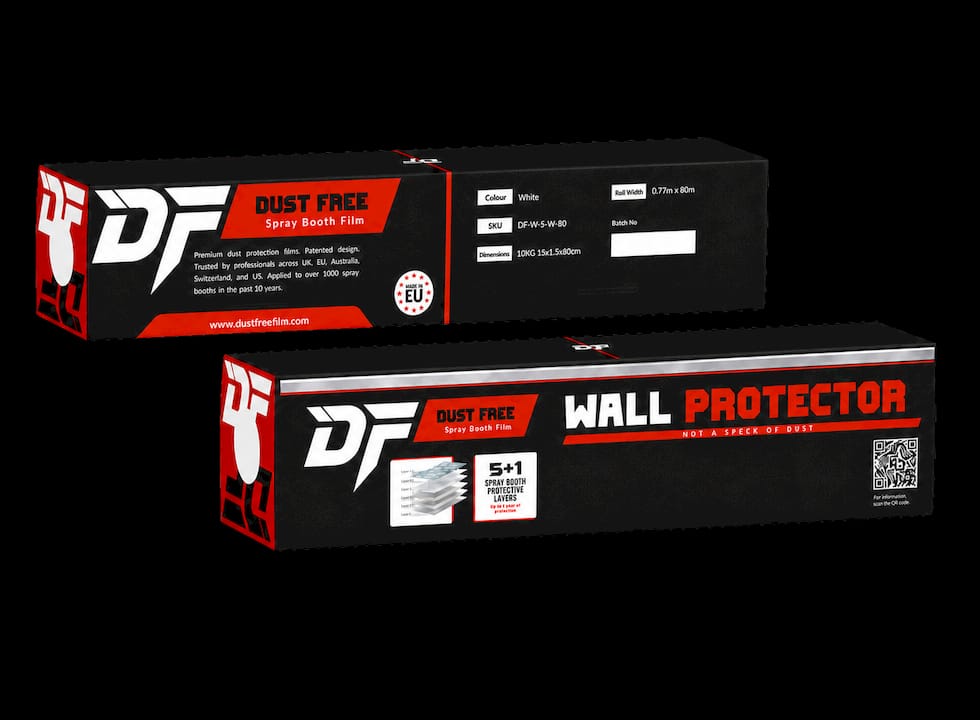
Some wall and floor protectors are built around a multi-layer, electrostatically charged design. The static charge does the heavy lifting on dust capture. Instead of waiting for overspray to fall and stick, the charged surface pulls particles toward it, which is why protective film preserves lighting reflectivity for accurate color matching far longer than a bare wall would.
On the spec sheet, three things stand out for a procurement checklist:
- Some films are rated to withstand operating temperatures up to 80°C, allowing them to survive repeated bake cycles without degrading.
- Some films feature tape-free, overlapping edges with visible layer numbering and integrated length markings to help identify exposed layers and remaining roll length.
- Some floor protectors are built for slip resistance in high-traffic mixing areas, paired with wall protectors tuned for particle capture.
A patented application box with a freely rotating roll, reinforced wooden sides, and an integrated metal cutting bar allows one installer to brace the box with a foot and dispense a straight, wrinkle-free run without a second set of hands. Shops running lean maintenance crews feel that difference during every shift changeover, when a five-minute film swap beats a twenty-minute two-person job. The Dust Free Film site itself frames dispenser design as a labor-cost lever, not just a convenience feature, and the math backs that up once you count install hours across a full year.
How Do You Choose the Right Film, Roll Size, and Dispenser?
Matching film to your mixing room takes five concrete steps rather than a guess based on the last supplier who called.
- Measure your wall and floor square footage and log your booth’s actual bake temperature, not the nameplate maximum, along with how often it cycles per shift.
- Estimate replacement cadence from throughput. A high-volume body shop running multiple bakes a day burns through layers faster than a low-volume industrial coating line running once a week.
- Choose roll widths that match your mounting points. Measure floor-to-ceiling and corner-to-corner distances before ordering, since a roll that’s too narrow means extra seams and more entry points for dust.
- Select a dispenser box sized to your install team. A single-person patented box makes sense for shops with one maintenance tech; larger facilities with dedicated crews may run multiple boxes in parallel to cut changeover time further.
- Run the payback math. Compare film and labor cost against the hours your team currently spends on deep cleaning walls and floors between finishes.
Pro Tip: Log your bake cycle count for two weeks before ordering. A procurement-focused comparison of film against saved cleaning labor works far better when you’re using your shop’s real cycle data instead of a supplier’s generic average.
Installing Mixing Room Film Without a Second Pair of Hands
Surface prep decides whether film lasts its full service life or starts lifting at the edges within days. Walls and floors need to be clean, dry, and free of loose debris before the first layer goes down. Any grit trapped underneath creates a bump that catches on future removals and can tear the layer beneath it.
- Load the roll into the rotating application box and brace it with one foot for a stable, straight dispense line.
- Use the integrated metal cutting bar to trim cleanly around light fixtures, vents, and equipment mounts instead of tearing the film by hand.
- Work in one continuous pass where possible. Stopping mid-run is the most common cause of wrinkles and trapped air pockets.
- Overlap tape-free edges by the manufacturer’s recommended margin to maintain a sealed barrier against overspray migration.
- Keep ventilation running during application, and follow the same PPE guidance you’d use for any mixing-room task, since state safety guidance for paint mixing areas covers glove and ventilation practices that apply during film installs too.
When Should You Replace a Layer?
Three signals tell you it’s time to strip a layer, and none of them are “it looks fine, so leave it.” Heavy overspray buildup that dulls the surface, visibly reduced light reflectivity, and difficulty peeling the layer after repeated bake cycles all mean the film has done its job and needs to come off.
- Set an interval range, then adjust for throughput. A high-cycle booth needs more frequent layer changes than a facility running occasional touch-up work.
- Track layer numbers against your install log. The visible numbering and integrated length markings exist so a technician can tell at a glance which layer is exposed without guessing.
- Document every replacement date. A simple log tied to bake-cycle counts makes your maintenance cadence provable, which matters if an inspector ever asks how you’re managing overspray buildup.
- Dispose of contaminated film according to your local hazardous waste rules, since spent layers carry the same solvents and pigments you’re trying to keep off your walls in the first place.
Daily and weekly maintenance guidance for spray booths generally recommends peelable or removable film specifically to cut cleaning time and reduce safety risk, which lines up with treating layer replacement as a scheduled task rather than a reactive one.
What Safety Standards Apply to Mixing Room Film?
Fire code is the standard most buyers overlook until an inspector brings it up. NFPA 33 requires housekeeping that prevents overspray accumulation from becoming a fire hazard, and a film system that strips away contaminated layers on schedule is a direct, practical way to meet that requirement without constant manual scraping.
Temperature rating matters here too. A film pushed past its rated limit during a bake cycle can degrade and actually add to the housekeeping problem it was meant to solve.
- Match your film’s temperature rating to your actual bake cycle, not just your booth’s nameplate maximum.
- Keep respiratory and PPE programs in place regardless of film quality. OSHA guidance requires supplied-air respirators for isocyanate-containing coatings, and film reduces airborne particulate load but does not replace that requirement.
- Confirm final specs with your booth manufacturer and your local Authority Having Jurisdiction before locking in a film choice, since local fire code enforcement varies.
An Operator’s View on Film That Actually Holds Up
Most guidance on protective film reads like it was written by someone who has never had to reinstall a wall system on a 6 a.m. shift with one tired technician and a roll cart that keeps drifting off line. The dispenser is where theory meets the floor. A box that lets one person brace it with a foot and cut a straight edge alone isn’t a convenience feature, it’s the difference between a five-minute swap and a two-person job that eats into production time every single week.
The bigger payoff shows up slower: consistent film use keeps wall reflectivity steady, which matters more than most shops realize when a colorist is trying to match a metallic finish under booth lighting that’s been dulled by six months of unremoved overspray.
— Pavlos - Angelos Filippakis
Get a Custom Film Specification From Dust Free Film
Some manufacturers offer factory-direct ordering with support for bulk orders, custom roll widths, private-label configurations, and worldwide shipping through regional distribution partners to support varied customer needs.
If your booth runs a bake cycle your current film can’t handle, or your floor traffic is chewing through protector faster than expected, that’s a specification problem, not a product-selection problem. Some companies can size dispenser boxes and roll widths to actual wall and floor dimensions instead of standard SKUs. Start by reviewing how to choose protection films for spray booth efficiency, then reach out through Dustfreefilm for a site-specific quote covering film, dispenser boxes, and delivery timing for your facility.
Sources
FAQ
What Is the Best Type of Film for a Paint Mixing Room?
A multi-layer, electrostatically charged film rated to your booth’s maximum bake temperature is the best mixing room film, since it actively captures airborne particles instead of just catching what settles.
How Often Should Mixing Room Film Be Replaced?
Replace a layer once overspray buildup dulls reflectivity or the layer becomes hard to peel after repeated bake cycles; high-throughput shops will hit that point faster than low-volume facilities.
Does Protective Film Replace PPE or Ventilation Requirements?
No. Film reduces airborne particulate load, but OSHA guidance still requires supplied-air respirators for isocyanate-containing coatings and an active ventilation program regardless of film use.
Can One Person Install Mixing Room Film Alone?
Yes, with the right dispenser. Some patented application boxes have a freely rotating roll and an integrated cutting bar, letting one installer brace the box with a foot and dispense a straight run without a second person.
What Temperature Rating Should Mixing Room Film Have?
The film’s rating needs to meet or exceed your booth’s actual peak bake temperature. Some wall and floor protector films are rated to withstand operating temperatures up to 80°C.