

For most professional spray booths, the best overspray floor film is a multi-layer electrostatic floor protector, like Dust Free Film’s Multiple-Layer Spray Booth Floor Protector, because it captures contamination without slowing down changeovers. The main exception: shops with routine heavy impacts, dropped tools, or rolling equipment traffic often need padded or rigid boards instead, since thin films puncture under that kind of abuse.
TL;DR:
- Multi-layer electrostatic films are ideal for daily-cycle booths due to their quick, peel-away layers and resistance to common impacts.
- Padded runs and rigid boards are better suited for heavy impact environments or workstations with frequent dropped tools or rolling equipment.
- Choosing the right protection depends on traffic, equipment load, heat exposure, and replacement cycle, not just initial cost.
- Proper installation with a dispenser system and correct seam overlaps reduces labor, contamination, and safety hazards during changeovers.
- Total cost of ownership factors in material lifespan, labor, and downtime, often favoring higher-quality products with longer usability despite higher upfront prices.
Table of Contents
- What Type of Floor Protection Works Best for Paint Booths?
- How Do Floor Protection Types Compare on Durability and Cost?
- How Do You Choose the Right Overspray Floor Film?
- How Do You Install, Maintain, and Remove Overspray Floor Film?
- What Does Overspray Floor Protection Cost Over Time?
- How Dust Free Film’s Design Meets the Professional Checklist
- Matching the Product to the Workload, Not the Other Way Around
- Get the Right Floor Protection for Your Booth
- Sources
- FAQ
What Type of Floor Protection Works Best for Paint Booths?
Every paint shop eventually asks the same question: plastic sheeting, adhesive film, padded mats, or boards? The answer depends on what rolls, drops, and drags across your floor every day, not on which product has the flashiest marketing copy.
Multi-layer electrostatic films use a static charge to pull dust and overspray particles onto the surface instead of letting them settle and recirculate. They come in stacked sheets, so once the top layer is loaded with contamination, you peel it away to expose a clean one underneath. This is the category built specifically for standard automotive refinishing and repeat-cycle industrial finishing, where booths turn over jobs daily and cleaning downtime eats into billable hours.
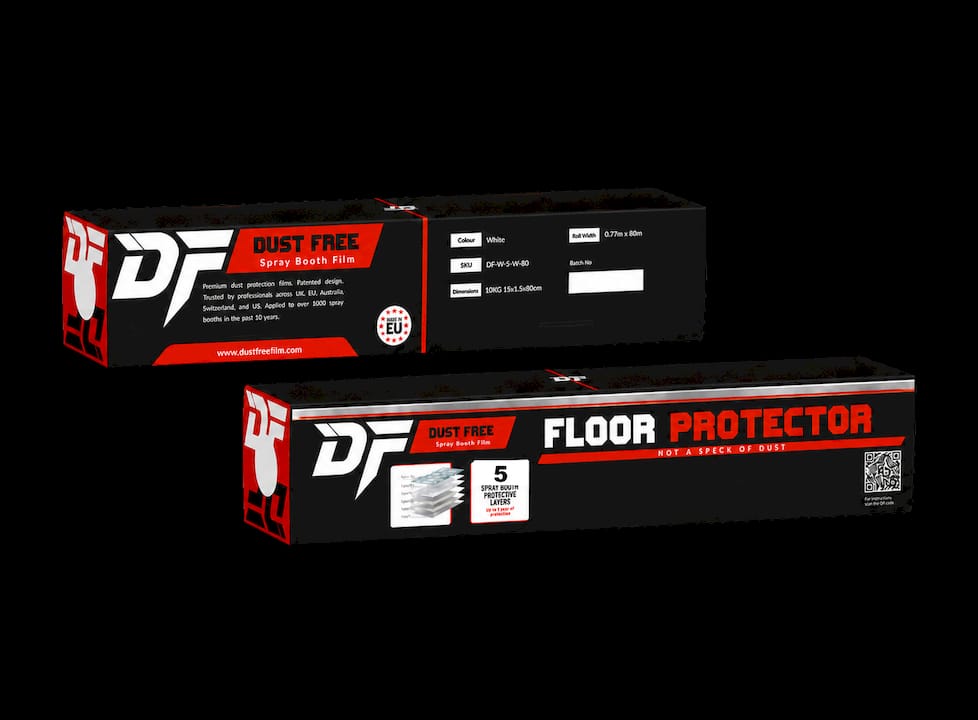
Self-adhesive PE films stick directly to the floor and work well on smooth, hard surfaces. They’re inexpensive and easy to apply in a pinch, but they generally offer less puncture resistance than layered electrostatic systems, and adhesive residue can become a cleanup problem of its own if the film sits too long or the substrate gets hot. Clear film floor coverings primarily reduce dust and overspray, though breathability, tack, and tear strength vary a lot between formulations.
Padded runs and temporary floor protectors trade some of that fine dust control for cushioning. They’re designed to absorb impact rather than just cover a surface, which matters if your crew is dragging engine blocks or rolling heavy carts through the work area. Some temporary padded protectors are rated for up to 100 days of use when installed correctly, making them a reasonable option for longer job runs where puncture risk outweighs contamination concerns.
Rigid protective boards sit at the far end of the durability spectrum. They won’t tear, they handle sustained equipment weight, and they’re the go to for heavy collision repair bays or fabrication zones. The tradeoff is installation time and storage. Boards are not something one person rolls out in five minutes.
Matching category to workload comes down to a few practical questions:
- Is this a standard refinishing booth with routine paint jobs and light foot traffic?
- Does the shop see heavy panel work, frame repair, or equipment rolled directly over the floor?
- Is this a temporary setup for a short-term job site, or a permanent production booth running daily cycles?
- How much does booth downtime cost per hour when the floor needs re-covering?
A comparison of paint booth flooring protection options makes the same point that shows up across the industry: thin film is fine for routine work, but heavy repair environments need something that won’t puncture on the first dropped wrench.
How Do Floor Protection Types Compare on Durability and Cost?
The specs that matter most rarely show up on the front of the packaging. Puncture resistance, heat tolerance, and real-world lifespan tell you far more than a marketing headline about “premium protection.”
| Type | Puncture/tear resistance | Best-for use case | Installation complexity | Heat resistance | Typical lifespan |
|---|---|---|---|---|---|
| Multi-layer electrostatic film | Moderate to high, layer-dependent | Standard refinishing, daily-cycle production booths | Low with a dispenser box, single installer | Up to 80°C on rated products | Days to weeks per layer, months per roll |
| Self-adhesive PE film | Low to moderate | Smooth-floor temporary jobs, light traffic | Low, direct application | Moderate, formulation-dependent | Roughly 30 to 60 days per application |
| Padded floor runs | High, cushioned impact protection | Sites with dropped tools or rolling equipment | Moderate, heavier to position | Moderate | Up to about 100 days |
| Rigid protective boards | Very high | Heavy collision repair, fabrication bays | High, labor-intensive setup | High | Long-term, reusable across projects |
Pro Tip: Don’t judge a film purely on price per roll. A film rated below your booth’s curing temperature will scorch, curl, or release adhesive residue mid-cycle, and the cleanup cost from that mistake usually exceeds what you’d have paid for a properly rated product.
Read this table with your booth’s actual schedule in mind, not just its square footage. A shop running two-hour paint cycles all day needs fast layer changes more than it needs maximum puncture resistance, while a fabrication bay running one job a week can absorb the extra setup time that boards demand. Procurement teams also tend to underestimate overlap waste. A film with wide overlap requirements can quietly add 10 to 15 percent to your material order, so get the actual coverage rate from a sample roll before locking in a bulk quantity.
How Do You Choose the Right Overspray Floor Film?
Picking floor protection by gut feeling is how shops end up ordering the wrong thing twice. Work through this checklist in order, and you’ll land on the right category before you ever request a quote.
- Map your traffic and equipment load. Count the foot traffic, cart weight, and any equipment that gets rolled or dragged across the booth floor during a typical week.
- Check solvent and heat exposure. Confirm your booth’s curing temperature and compare it against the film’s rated heat tolerance, since anything under 80°C risks failure in a hot cycle.
- Set your replacement cadence. Decide whether you want daily layer peels, weekly swaps, or a longer-cycle padded product, based on how much downtime each changeover costs.
- Confirm slip resistance. Ask for the surface texture specs, especially if the booth floor gets wet from cleaning or overspray runoff.
- Decide on dispenser and hardware needs. A single-person dispenser system changes your labor math significantly compared to hand-rolling film.
- Plan disposal and recycling. Ask whether the material is recyclable and what local disposal rules apply to solvent-contaminated film.
When you’re on the phone with a supplier, ask direct questions: How many layers does the roll include? Is the surface electrostatic, tacky, or both? What’s the actual heat rating, not just a marketing claim? Does it come with a dispenser option, and is installation genuinely single-person? Is there a clean-removal guarantee, and what does bulk pricing look like at your volume?
Watch for a few red flags while you evaluate claims. Vague heat ratings (“high temperature resistant” with no number attached) usually mean the product hasn’t been tested against a real standard. Manufacturer specs worth trusting list actual thickness, puncture resistance, and temperature figures, not adjectives. Be equally skeptical of suppliers who can’t explain their overlap system. Tape-heavy seams create trip hazards and add labor time every single changeover.
How Do You Install, Maintain, and Remove Overspray Floor Film?
Getting the film down correctly the first time saves more labor than almost any other step in the process. Rushing installation is how shops end up with bubbled seams, exposed floor patches, and adhesive residue nobody wants to scrape off.
- Clean and check the surface. Sweep debris and confirm the floor is dry, then check the booth’s ambient temperature against the film’s rated range before you start.
- Measure and plan overlaps. Lay out your run direction first and calculate overlap needs so you don’t run short mid-installation.
- Install with a dispenser. A patented dispenser box with a rotating roll and a built-in cutting bar lets one installer steady the unit with a foot and pull a straight, even line, cutting the two-person job down to a solo task.
- Overlap seams correctly. Tape-free overlapping edges reduce trip hazards compared to taped seams, which lift over time and become a hazard themselves.
- Inspect and change layers on schedule. Pull the top layer once contamination buildup starts affecting slip resistance or visibility, not just on a fixed calendar.
- Remove and dispose properly. Roll used layers rather than folding them, to avoid dispersing trapped dust back into the air, and follow local disposal rules for solvent-contaminated material.
Pro Tip: Mark your overlap direction with the airflow pattern of your booth. Installing film against the airflow, instead of with it, is a common mistake that causes edges to lift faster under ventilation pressure.
OSHA’s workplace-safety standards are worth reviewing before any floor-covering changeover, since slip and trip hazards during installation are a real risk, not a theoretical one. A step-by-step installation walkthrough covers the dispenser technique in more visual detail if your crew is installing film for the first time.
What Does Overspray Floor Protection Cost Over Time?
Lifespan varies a lot by category, and that variance is exactly where budgets go wrong. Adhesive PE films typically run 30 to 60 days per application, multi-layer electrostatic film gets replaced layer by layer over days to weeks depending on job volume, padded runs can stretch to roughly 100 days, and rigid boards last across multiple projects with no replacement at all.
The real cost drivers aren’t the sticker price on the roll. Material thickness, whether the product is adhesive or non-adhesive, dispenser hardware investment, and overlap waste all shift the total spend more than the base unit price does.
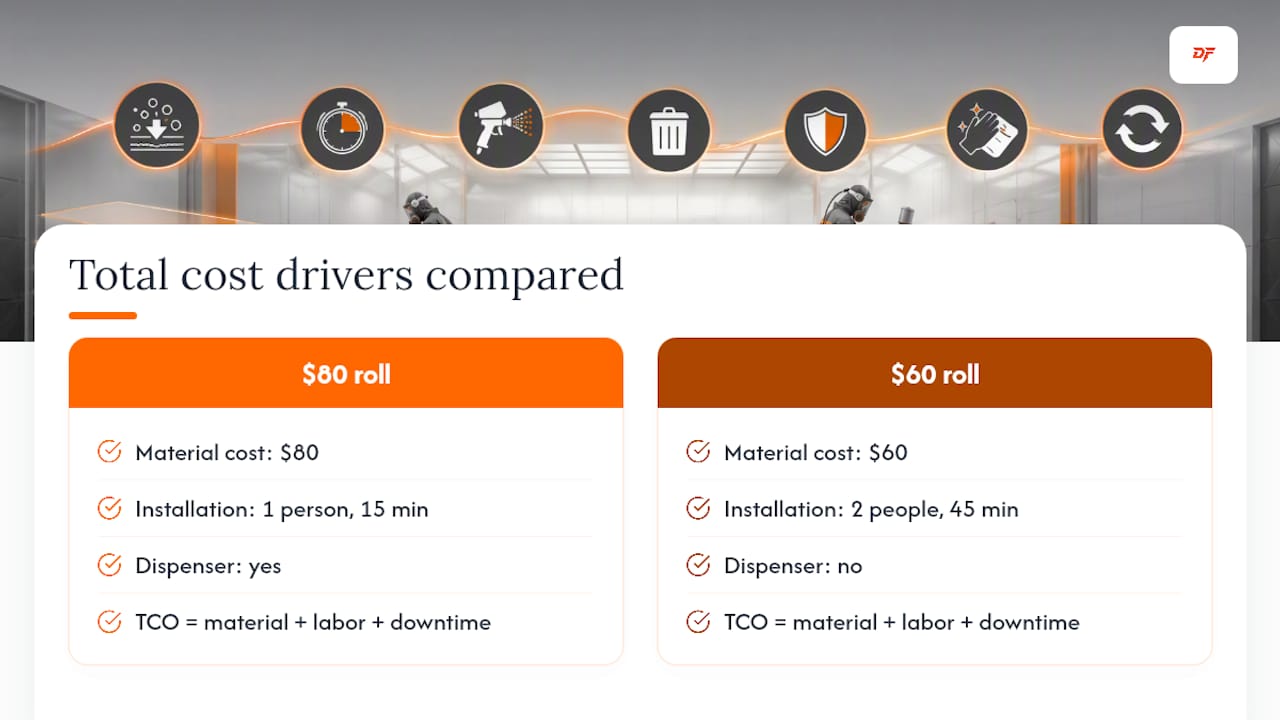
A simple way to calculate total cost of ownership: material cost + labor hours to install and change layers + downtime cost per changeover. If a roll costs $80 and takes one person 15 minutes to install with a dispenser, versus a competing product at $60 that takes two people 45 minutes without one, the cheaper roll often loses on total cost once you factor in labor and the booth sitting idle.
How Dust Free Film’s Design Meets the Professional Checklist
Dust Free Film L.P. has manufactured spray booth protection films in Greece since 2012, supplying body shops, industrial finishers, and coating facilities internationally. The Multiple-Layer Spray Booth Floor Protector is built around a multi-layer, electrostatically charged surface that attracts and holds dust and overspray, so operators peel away a spent layer instead of tearing out and reinstalling the whole system.
A few specifics that address the checklist directly:
- A patented dispenser box with a freely rotating roll and integrated metal cutting bar lets one installer dispense a straight line unassisted.
- Tape-free overlapping edges reduce trip hazards during changeovers, with visible layer numbering and integrated length markings for tracking usage.
- The film is rated for operating temperatures up to 80°C, addressing the heat-exposure question from the checklist above.
- Bulk orders, custom configurations, and worldwide shipping are available for facilities standardizing across multiple booths.
Prioritizing fast, single-person installation over marginal material savings tends to pay off more in booth uptime than in the line-item cost of the roll itself, a pattern that shows up consistently across operational reviews of floor protection in spray booths.
Matching the Product to the Workload, Not the Other Way Around
Multi-layer electrostatic film is the right call for any booth running regular cycles where changeover speed matters more than raw impact resistance. Once your shop deals with routine heavy drops or rolling equipment, that math flips, and padded runs or rigid boards earn their higher installation cost through fewer mid-job punctures.
— Pavlos - Angelos Filippakis
Get the Right Floor Protection for Your Booth
A Multiple-Layer Spray Booth Floor Protector offers a multi-layer electrostatic surface you peel and refresh instead of replacing outright, paired with a dispenser designed to allow one installer to handle the job alone.
If your shop is protecting walls as well as floors, the Multiple-Layer Spray Booth Wall Protector uses the same layered, tape-free approach with a slightly tacky surface tuned for vertical particle capture. Facilities standardizing equipment across several booths, or looking at private-label and bulk configurations, can browse the full spray booth protection product line and request a quote directly from the factory. Reach out for bulk pricing or a custom configuration built around your booth’s actual dimensions and cycle volume.
Sources
FAQ
What Do Painters Put Down on the Floor?
Professional painters typically use multi-layer electrostatic film, self-adhesive PE film, padded runs, or rigid boards, chosen based on traffic levels, equipment weight, and how long the job will run.
What Is the Best Material to Cover Floors When Painting?
For daily-cycle professional booths, multi-layer electrostatic film like Dust Free Film’s Floor Protector is generally the best fit because it captures overspray and allows fast, single-person layer changes. Heavy-impact repair environments do better with padded runs or rigid boards.
What Kind of Sheet Can I Use to Cover My Floor While Painting?
Self-adhesive PE film works for light, short-term jobs on smooth floors, while layered electrostatic film suits recurring professional use where you need to peel away contaminated layers without recovering the whole floor.
What Kind of Plastic Can I Use to Cover My Floor While Painting?
Polyethylene-based films are the standard plastic choice, available as adhesive sheeting for quick jobs or as multi-layer, electrostatically charged rolls for booths that need repeated contamination control without full reinstallation.
How Often Should Spray Booth Floor Film Be Replaced?
It depends on the product. Adhesive PE films are commonly rated for 30 to 60 days, padded protectors can last up to 100 days, and multi-layer electrostatic film gets peeled layer by layer as contamination builds, often within days depending on job volume.