
The best overspray wall film for most spray booths is a multi-layer electrostatic adhesive system rather than a pre-taped poly sheet or a plain static-cling roll. The electrostatic charge pulls airborne paint particles onto the surface instead of the wall, and the peel-away layers let you strip a soiled sheet in seconds and expose a clean one underneath without repainting downtime. That combination cuts rework from overspray contamination and shortens refresh cycles compared to re-taping a wall from scratch. Dust Free Film builds this exact format around a patented dispenser system designed for tape-free, bubble-free application.
Before you spec a roll count or send an RFP, know what you are actually buying:
- Less rework. Fewer paint defects traced back to wall contamination means fewer redo jobs.
- Faster refresh. Peeling a layer takes minutes; retaping a wall from zero can eat an hour or more of booth downtime.
- Supplier fit. Dust Free Film’s dispenser system and multi-layer configurations are built specifically for high-cycle industrial booths, not light remodeling jobs.
Key Takeaways
Multi-layer electrostatic wall film reduces booth downtime by letting operators peel a soiled layer and resume production in minutes instead of re-taping a wall by hand.
| Point | Details |
|---|---|
| Choose electrostatic multi-layer film | The static charge traps airborne paint and the peel-away layers avoid full re-taping. |
| Match layer count to soiling rate | High-volume metallic or solvent-based spraying needs more peel cycles per roll. |
| Verify heat rating against your cure cycle | HDPE-based films can tolerate brief spikes near 107°C, but check your actual bake temperature. |
| Log every install and refresh | Track install date, layers remaining, and coating type to spot replacement patterns early. |
| Dust Free Film supplies dispenser-based systems | Their patented dispenser and custom-width multi-layer films target fast, bubble-free installation for high-cycle booths. |
Table of Contents
- What Makes the Best Overspray Wall Film: Static, Layers, and Heat
- How to Choose the Right Overspray Wall Film for Your Booth
- Installing and Refreshing Overspray Film Without Losing Booth Time
- Setting a Replacement Cadence That Actually Works
- Comparing Film Brands and Pricing for Real Value
- Matching Overspray Film to Your Industry and Paint Type
- What the Data Actually Tells Facility Managers to Prioritize
- How Dust Free Film Supports Your Booth Protection Setup
- Sources
- FAQ
What Makes the Best Overspray Wall Film: Static, Layers, and Heat
Three specs separate a film that survives a working booth from one that fails by week two: static behavior, layer count, and heat tolerance.
Electrostatic cling is the mechanism that actually does the work. A charged film surface attracts fine, aerosolized paint particles the way a balloon pulls hair, holding them on the film instead of letting them settle back into the airflow or bond to the wall. Manufacturers test this static-charge behavior under normal booth conditions, and the better products also carry statements confirming the film does not pose a fire risk in typical booth use, which matters more than most buyers realize until an auditor asks for it.
Layer count determines how often you touch the wall. A 5-layer design gives you five peel-refresh cycles before the entire sheet needs replacing, and a numbered peel-away system creates a visual cue for quality control tags like “Layer 3 next,” reducing the odds someone peels the wrong layer during a shift change.
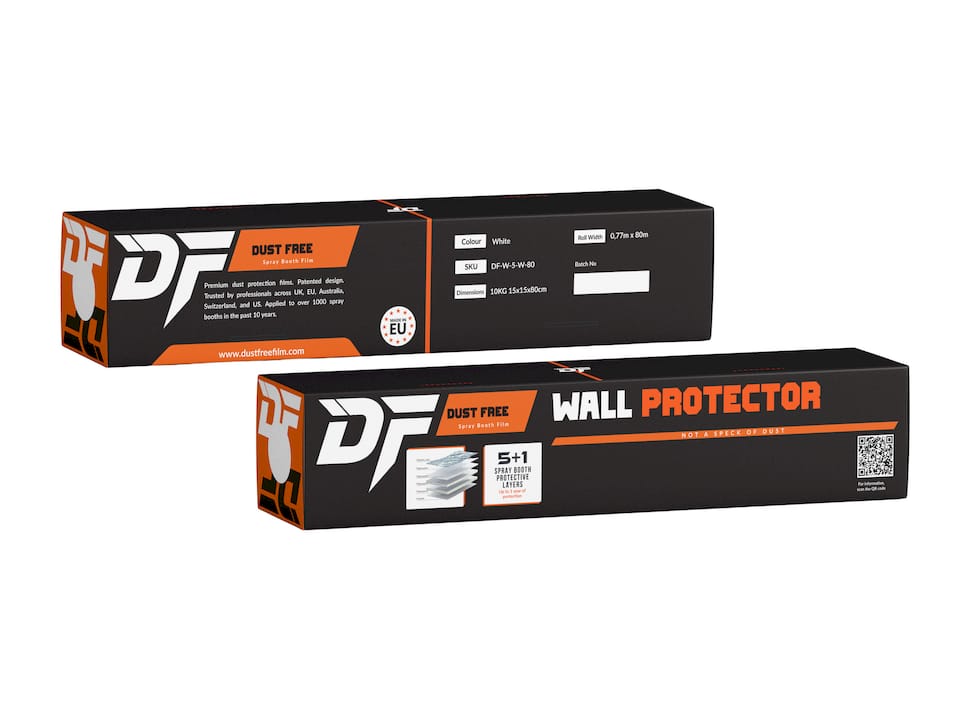
Heat resistance is not a nice-to-have if your process includes bake cycles. HDPE-based overspray sheeting can tolerate short exposures up to 107°C (225°F) for around 30 minutes, which covers most bake-cycle spikes without warping or releasing adhesive residue.
Statistic to know: a film rated for brief 107°C exposure gives you real margin over booths that regularly run bake cycles in the 60 to 80°C range, meaning you are not gambling on the edge of the spec sheet during every cure.
Reflective or white backing also affects how well your quality-control team spots runs, dry spray, and fisheye defects under booth lighting, since a dingy or yellowed wall surface absorbs light your inspectors need.
How to Choose the Right Overspray Wall Film for Your Booth
Match the film to your process, not the other way around. Run through this checklist before you commit to a vendor:
- Count your soiling rate. High-volume booths spraying metallic or solvent-based coatings foul walls faster and need more layers per roll; light-use booths can stretch a lower layer count further.
- Pick your application method. A dispenser-fed multi-layer system installs fast with minimal labor, a pre-taped poly product is quicker for a one-off remodel, and a plain static-cling roll works for short, temporary jobs but was never built for repeated industrial cycles.
- Check the temperature rating against your actual cure cycle, not the average. If your booth spikes above what the datasheet lists, the film is the wrong fit regardless of price.
- Confirm roll size, coverage yield, and custom widths. Facilities with nonstandard booth dimensions or multi-bay operations need a supplier that offers bulk pricing and configurable widths rather than a fixed retail roll.
Pre-taped products speed up masking for short-term or light-duty projects, but they were not engineered for the daily wear of a production booth. High-throughput facilities are consistently better served by dispenser-fed multi-layer films built around longevity and quick refresh, not one-time application.
Pro Tip: Ask any vendor for the exact peak temperature and duration their film is rated for, in writing. A verbal “should be fine” from a sales rep is not a spec you can put in an RFP.
Installing and Refreshing Overspray Film Without Losing Booth Time
Downtime is the real cost of any wall protection system, so the install and refresh process matters as much as the material itself.
Before applying anything, run a quick prep check:
- Confirm the wall surface is dry and free of loose debris.
- Verify the dispenser box is loaded correctly and the film feeds without twisting.
- Check that ambient temperature is within the film’s application range.
A patented dispenser system applies a fresh layer across a standard booth wall in minutes, not the half hour or more that taping and smoothing by hand usually takes, and it does it without trapping air bubbles that later peel and collect overspray unevenly.
When it’s time to refresh:
- Locate the edge tab or numbered layer marker.
- Peel the soiled layer away in one continuous pull, working from a top corner downward.
- Inspect the fresh layer underneath for tears or contamination before resuming work.
- Bag the removed layer for disposal or recycling per your facility’s waste stream rules.
Log the install date, installer name, layer count remaining, and the coating type sprayed that cycle. Those four fields alone make replacement cadence and ROI tracking dramatically easier down the line, a practice detailed further in Dust Free Film’s guidance on film-based finish quality.
Setting a Replacement Cadence That Actually Works
Most facilities either replace film too early, wasting material, or too late, letting contaminated walls compromise finish quality. Set your cadence on visible triggers, not a calendar guess: peel a layer when you see visible buildup, edge lift, or any cloudiness that dulls the wall’s reflectivity under booth lighting.
Statistic to know: a film system with five peel-away layers effectively gives you five separate replacement points from a single install, which is why facility managers tracking total cost of ownership often favor multi-layer systems over single-sheet products that require a full teardown every time.
Log three things every cycle: install date, layers remaining, and paint type sprayed. That record turns a guess into a pattern; after a few cycles you will know almost exactly when your booth needs its next peel.
Watch for these failure signs:
- Edge lift where corners or seams start curling away from the wall, letting overspray bypass the film entirely.
- Heat discoloration or warping, which signals the film exceeded its rated temperature during a bake cycle.
- Reduced tack, where new overspray no longer sticks and starts drifting back into the booth air.
Any of these means it’s time to peel, not patch.
Comparing Film Brands and Pricing for Real Value
Sticker price per roll is the wrong first number to compare. The number that actually predicts value is cost per refresh cycle, since a film with five usable layers can outlast three single-layer rolls at a lower per-cycle price even if its upfront cost looks higher.
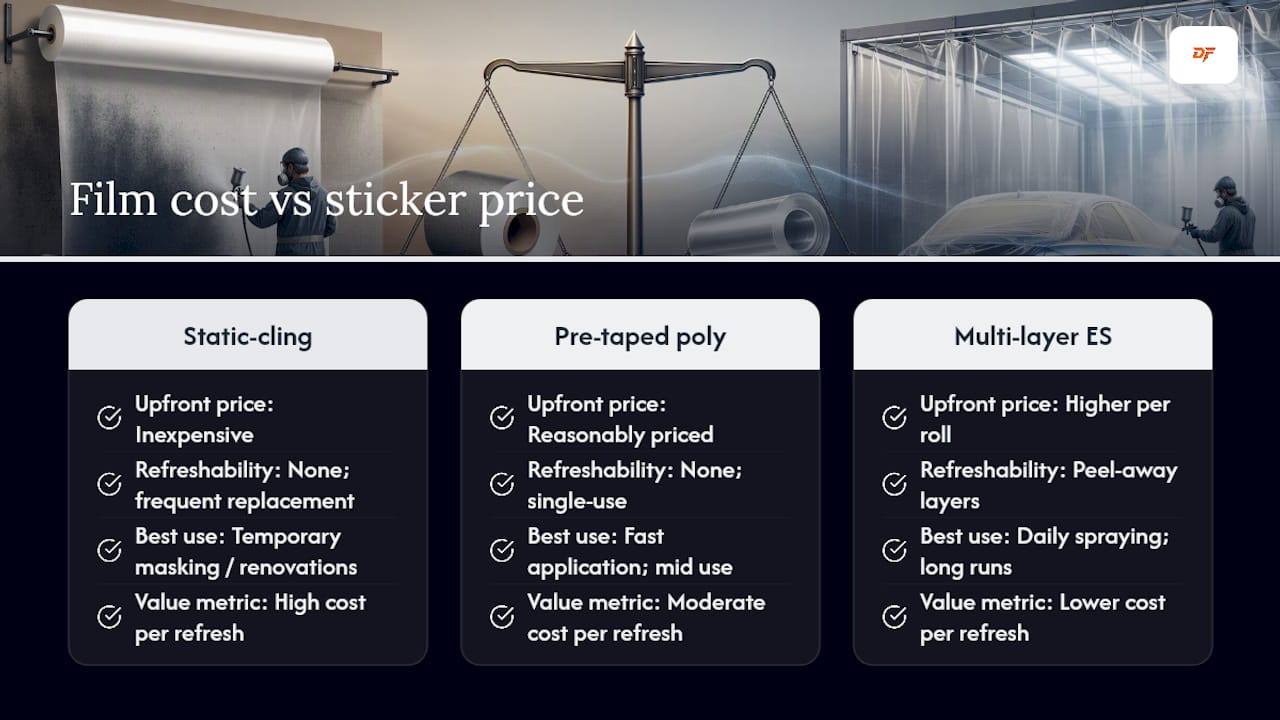
Light-duty static-cling sheeting is inexpensive and useful for temporary masking or remodeling work, but it was never built for the repeated soiling cycles of an industrial booth, and buyers who choose it for full-time production use tend to replace it far more often than the sticker price implies. Pre-taped poly systems sit in the middle: fast to apply, reasonably priced, but still a single-use product with no peel-refresh option.
Multi-layer electrostatic systems, including the configurations Dust Free Film supplies, sit at a higher per-roll cost but spread that cost across every peel-away layer, custom width, and bulk order tier. For a facility spraying daily, that math usually wins. For a shop that sprays occasionally or is protecting a wall during a short renovation, a lighter and cheaper product may be the smarter buy. The right comparison is always use case against total layers delivered, not shelf price against shelf price.
Matching Overspray Film to Your Industry and Paint Type
Automotive refinishing shops running solvent-based basecoats and clearcoats generate fine, sticky overspray that benefits most from strong electrostatic attraction and frequent peel cycles, since metallic particles in basecoat are notoriously good at drifting and settling on any surface that isn’t actively charged to catch them.
Industrial manufacturing plants applying powder coat or heavier enamel finishes tend to generate coarser overspray with less airborne drift, so layer count matters less than raw durability and tear resistance against the physical debris of a high-traffic production floor.
Marine and heavy equipment painting, which often runs longer cure cycles and higher bake temperatures, needs the temperature-rated end of the product range. A film’s actual heat spec should be checked against your worst-case cure cycle, not your average one.
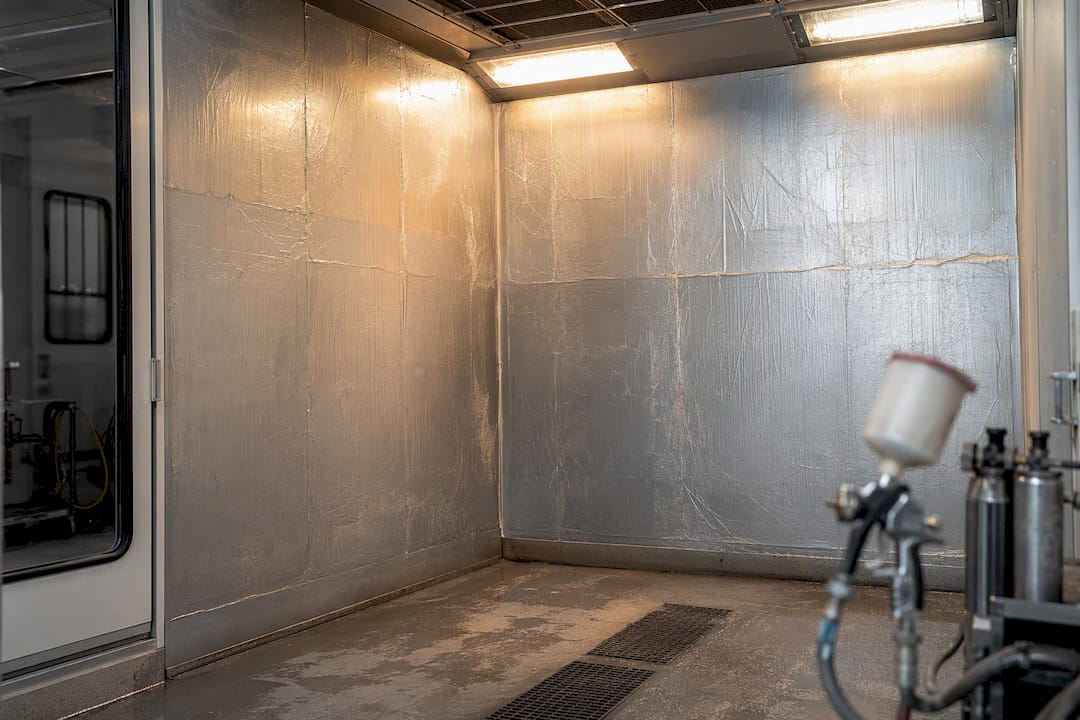
Shops using a PET carrier liner report a secondary benefit worth flagging for any high-end finishing operation: increased wall luminescence, which makes it easier for inspectors to spot fisheye, dry spray, and dirt inclusions before a vehicle leaves the booth. If your finish quality standards are tight, that visibility difference is worth weighing alongside layer count and price.
What the Data Actually Tells Facility Managers to Prioritize
Most guidance on overspray film treats it as a commodity: buy the cheapest roll that covers the wall. That framing misses the actual cost driver, which is downtime per refresh, not material cost per square foot. A facility manager who buys the cheaper single-layer sheet and re-tapes a wall by hand every week is losing more labor hours over a quarter than the price difference on a multi-layer roll ever saved.
The conventional advice also underweights heat rating. Plenty of procurement checklists treat temperature tolerance as a footnote, but a film that warps mid bake cycle doesn’t just fail, it can contaminate the very finish it was supposed to protect. That is a specification failure, not a maintenance issue, and it should be caught before the purchase order goes out.
If you take one thing from this: prioritize layer count and heat rating over unit price, and build your replacement log from day one. Facilities that track install date, layer count, and coating type consistently catch replacement timing patterns that a gut-feel schedule always misses.
— Pavlos Filippakis
How Dust Free Film Supports Your Booth Protection Setup
Dust Free Film builds multi-layer electrostatic wall protectors specifically for the downtime problem outlined above. The films use a patented dispenser system for tape-free, bubble-free application, carry heat resistance suited to standard bake cycles, and come in custom widths with bulk ordering for facilities running multiple booths.
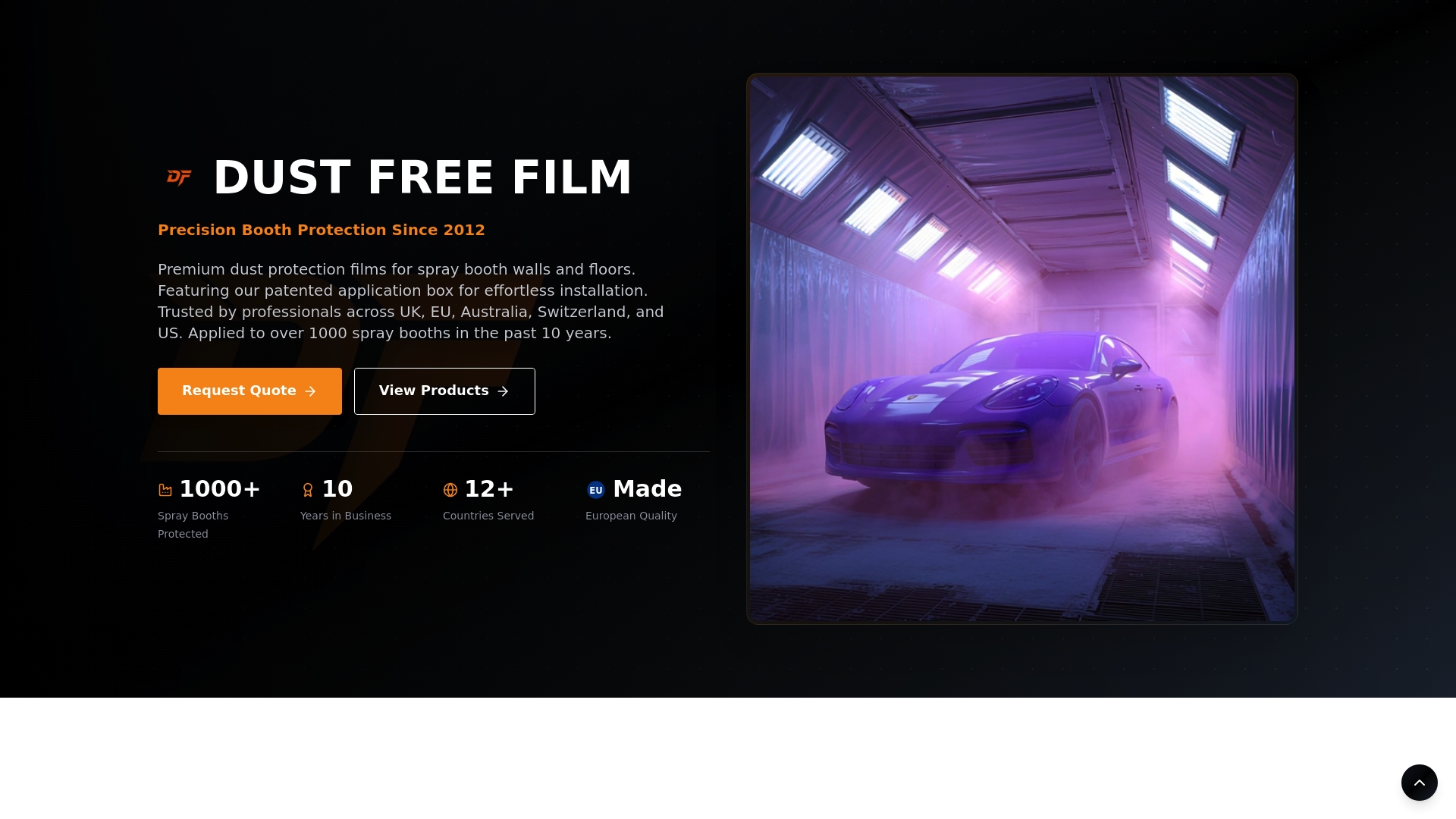
If your current wall protection means re-taping every week or fielding complaints about wall-contaminated finishes, the fix is usually a spec change, not a bigger cleaning budget. Compare your booth’s soiling rate and cure temperatures against the available wall protection configurations and see where a multi-layer system would cut your refresh time. Facilities weighing a full shortlist can also check the top wall film picks for 2026 before requesting a quote. Request a sample roll or ask for an install demo to see the dispenser system in action on your own wall before you commit to a bulk order.
Sources
- BAXT LAYERSHIELD WP10 5-Layer Spray Booth Wall Protector | DTC
- 3M™ Overspray Protective Sheeting | 3M United States
- Rapid Wall Cover™ Pre-Taped Poly | Americover
- Drytac Spray Booth Liners: Perfect Finishes for Supercars
FAQ
Is It Better to Spray or Roll Textured Walls?
Spraying gives more even coverage on textured surfaces and reduces the streaking rollers leave in deep texture, but it also generates more overspray, which is exactly why wall protection film matters more in sprayed applications than rolled ones.
How Do You Reduce Overspray With an HVLP Gun?
Lowering fluid pressure, keeping the gun at a proper distance from the surface, and using proper fan pattern control all cut overspray at the source, but no gun technique eliminates drift entirely, which is why booth walls still need protective film behind the operator.
What Is the Best Spray Tip for Painting Walls?
The right tip size depends on the coating viscosity, with finer tips suited to thin finishes like lacquer and larger orifice tips needed for thicker primers or enamels; check your paint manufacturer’s tip-size chart rather than guessing.
What Is the Best Paint for Spraying Walls in a Booth Setting?
That depends on the substrate and finish requirements, but regardless of paint type, any sprayed coating produces overspray that settles on booth walls, which is the core reason a multi-layer film like the ones Dust Free Film supplies exists in the first place.
How Often Should You Replace Overspray Wall Film?
Replace a layer when you see visible buildup, edge lift, or reduced tack rather than on a fixed calendar, and log each replacement so you can spot your facility’s actual cadence over a few cycles.