

A protective film melts when your booth’s peak surface temperature and bake duration exceed the film’s rated temperature and time on the technical data sheet, period. If you don’t know both numbers for your booth and your film, you’re guessing. Check the TDS now, and if it doesn’t list a duration rating that matches or beats your bake cycle, swap to a heat-rated, multi-layer film before your next run.
Two things to do before you read further:
- Pull the TDS for whatever film is currently in your booth and confirm it lists a specific temperature and a duration (not just a peak number).
- If your bake cycle runs hotter or longer than that rating, pull the film now, even mid-shift, rather than risk adhesive transfer onto fresh paint.
If you need a heat-rated alternative, Dust Free Film can walk you through matching a film to your booth’s actual cycle, covered later in this guide.
Key Takeaways
Booth film melts when peak surface temperature and bake duration exceed the film’s rated TDS specs, so matching both numbers before installation prevents the softening, adhesive transfer, and contamination that follow a mismatch.
| Point | Details |
|---|---|
| Check both numbers | Confirm your film’s TDS lists a temperature rating paired with a duration, not just a peak figure. |
| Measure actual surface heat | Use an infrared thermometer during a full bake cycle since metal often runs hotter than the air setpoint. |
| Build in a margin | Specify film rated 10°C to 20°C above your measured peak to absorb seasonal drift and measurement error. |
| Choose multi-layer construction | Peel-away, electrostatic films reduce trapped overspray and localized adhesive hotspots. |
| Install with a proper dispenser | Dust Free Film’s patented dispenser system reduces bubbling and uneven contact that trigger early softening. |
Table of Contents
- Why Booth Film Melting Happens: Materials, Adhesives, and Failure Points
- How to Confirm Your Film Is Rated for Your Booth’s Bake Cycle
- Stopping Booth Film Melting Before It Starts
- Why Multi-Layer Film and Dispenser Systems Reduce Melting Risk
- What Shops Get Wrong About Booth Film Ratings
- Get a Film Matched to Your Booth’s Actual Bake Cycle
- Sources
- FAQ
Why Booth Film Melting Happens: Materials, Adhesives, and Failure Points
Film failure comes down to chemistry meeting heat it wasn’t built for. Polypropylene, the base material in most modern booth films, softens well before it liquefies, and that softening point is exactly where trouble starts. Standard protective films typically resist temperatures in the 80°C to 120°C range, while high-performance masking films rated for baking cycles push into the 155°C to 180°C range for a one-hour cure. Paper based masking still shows up in some shops, but it flakes under heat and sheds fibers that land right in your finish. That’s the opposite of what a dust protection film exists to do.
Here’s how a failure actually plays out on the booth floor:
- Softening happens first, as the polymer loses rigidity and starts to sag or tack against the surface it’s covering.
- Adhesive transfer follows, where the backing chemistry breaks down and leaves residue on booth walls, floors, or fresh paint.
- Shrinkage and flaking show up on films pushed past their rating repeatedly, leaving gaps that expose surfaces to overspray.
- Particulate release happens last, when degraded film sheds fragments into the air stream, contaminating the very paint job the film was protecting.
A “resists 155°C for one hour” spec means exactly that: the film held at that temperature for that duration without failing in testing. Push it to 90 minutes, or run it 10 degrees hotter, and you’re outside the tested envelope. Modern polypropylene doesn’t carry the fire risk that plagued early nitrate-based films in projection booths decades ago, but heat tolerance is still a hard boundary, not a suggestion.
How to Confirm Your Film Is Rated for Your Booth’s Bake Cycle
Matching a film to your booth starts with two numbers: your actual peak surface temperature and your dwell time at that peak. Most facility managers check the booth’s air setpoint and assume that’s the number that matters. It isn’t. Metal surfaces, hooks, and fixtures inside the booth often run hotter than the ambient air setpoint, so relying on the control panel alone is how shops get surprised.
- Pull the film’s TDS and confirm it lists a specific “resists X°C for Y hours” rating, not just a vague heat tolerance claim.
- Use an infrared thermometer or a data logger with a surface probe to record actual metal temperature during a full bake cycle, not just at the peak moment.
- Run a small patch test: apply a scrap of film to a low-visibility panel, run one full cycle, and inspect for softening, tack, or edge lift before committing the whole booth.
- If your measured peak and dwell exceed the film’s published rating, contact the manufacturer’s technical support line before assuming a “close enough” match will hold.
3M’s high-temperature masking products are a useful industry reference point here. 3M’s Ultra High Temperature film line is engineered for 155°C to 180°C bake cycles, which shows how wide the gap can be between a standard film and one actually built for baking ovens.
Pro Tip: Run your patch test on the hottest point in the booth, usually near overhead lights or ductwork, not the easiest spot to reach. A film that survives the mild zones will still fail where it matters.
Stopping Booth Film Melting Before It Starts
Preventing film failure is mostly a procurement decision made before the film ever touches your booth wall.
- Buy above your peak, with margin. A common industry practice is specifying film rated 10°C to 20°C above your measured peak surface temperature, which absorbs measurement error and seasonal booth drift without forcing a mid-cycle swap.
- Choose multi-layer, electrostatic construction over single-ply adhesive film. Multi-layer peel-away systems extend protection life and let you strip a damaged outer layer without exposing bare wall, and electrostatic cling reduces the trapped overspray that creates localized adhesive hotspots.
- Use a proper dispenser system during installation. Bubbles and wrinkles from rushed hand-application create uneven surface contact, and uneven contact means uneven heat transfer, which is exactly the kind of hotspot that triggers early softening. A step-by-step application process matters more here than most shops assume.
- Keep film off hot metal wherever the layout allows. Fixtures and hooks run hotter than open wall space, and covering them with the same film rated for ambient surfaces is a common, avoidable mistake.
- Adjust cycle staging if you’re running older equipment. Slower ramp rates or added ventilation during the hottest phase can pull surface temps down enough to keep a marginal film inside its rating.
If a film does fail mid-cycle, let the booth cool fully before removing it. Peeling hot film spreads adhesive residue further than a controlled removal after cooldown, and forcing brittle, overheated film off a surface risks tearing sections into the fresh finish. Once removed, use a manufacturer-approved adhesive remover rather than aggressive solvents that can attack the paint underneath.
Pro Tip: Keep a spare roll of your heat-rated film on hand at all times. The cost of a backup roll is nothing compared to a scrapped paint job from a mid-cycle swap to whatever’s on the shelf.
Adhesive-backed “tacky” films deserve a separate warning here. Some tacky booth protection products list heat resistance around 80°C, noticeably lower than non-adhesive high-temp films. If your workflow puts adhesive-backed film anywhere near hot surfaces, confirm that specific product’s adhesive limit rather than assuming it matches the base film’s rating.
Why Multi-Layer Film and Dispenser Systems Reduce Melting Risk
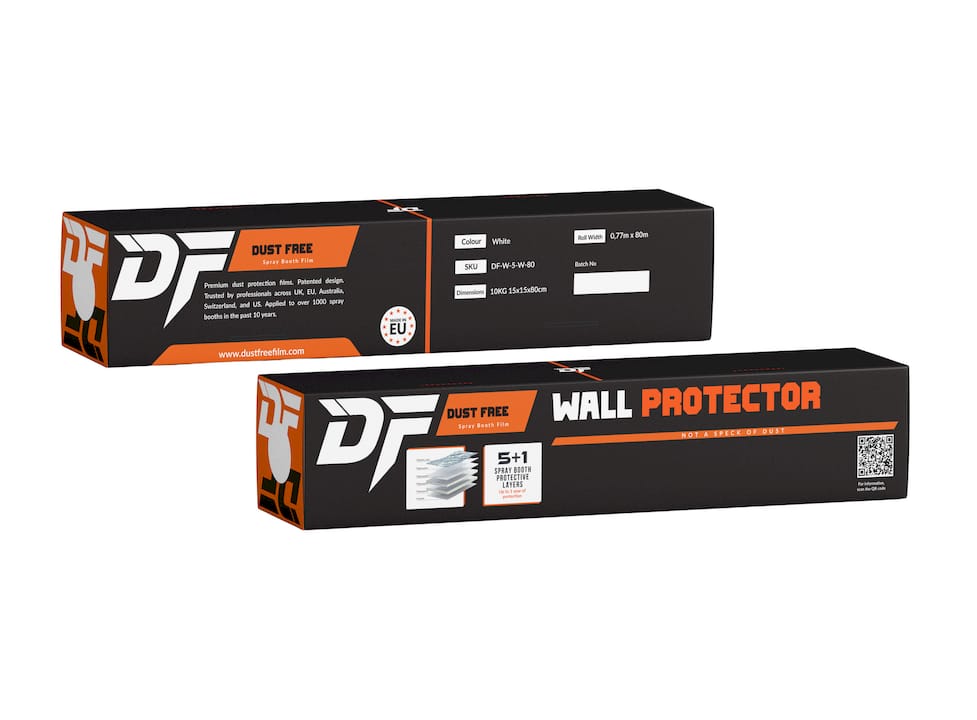
Dust Free Film has manufactured multi-layer electrostatic booth protection since 2012, built specifically around the failure points shops run into during real bake cycles.
- Multi-layer construction means a damaged or heat-stressed outer ply peels away without exposing the wall or floor underneath, so one localized hotspot doesn’t force a full re-wrap.
- The patented dispenser system applies film without hand-stretching or taping, which cuts the bubbling and wrinkling that create uneven, heat-vulnerable contact points.
- Static-free surface properties reduce the trapped overspray and debris that can concentrate heat and accelerate softening in specific spots.
- Custom configurations and bulk ordering suit facilities running continuous multi-shift bake cycles where downtime for a mid-run film swap isn’t an option.
Installation quality is a heat-resistance factor, not a separate concern. A film applied with air bubbles trapped underneath heats unevenly, and uneven heating is how a technically-rated film still fails in practice.
What Shops Get Wrong About Booth Film Ratings
Most guidance on this topic treats the temperature number on a spec sheet as the whole story, and that’s the mistake that actually burns shops. A film rated for 155°C means nothing on its own if you don’t know whether your bake cycle runs 45 minutes or 90. Duration matters as much as peak temperature, and I’d argue it matters more, because it’s the number shops skip when they’re comparing products on price.
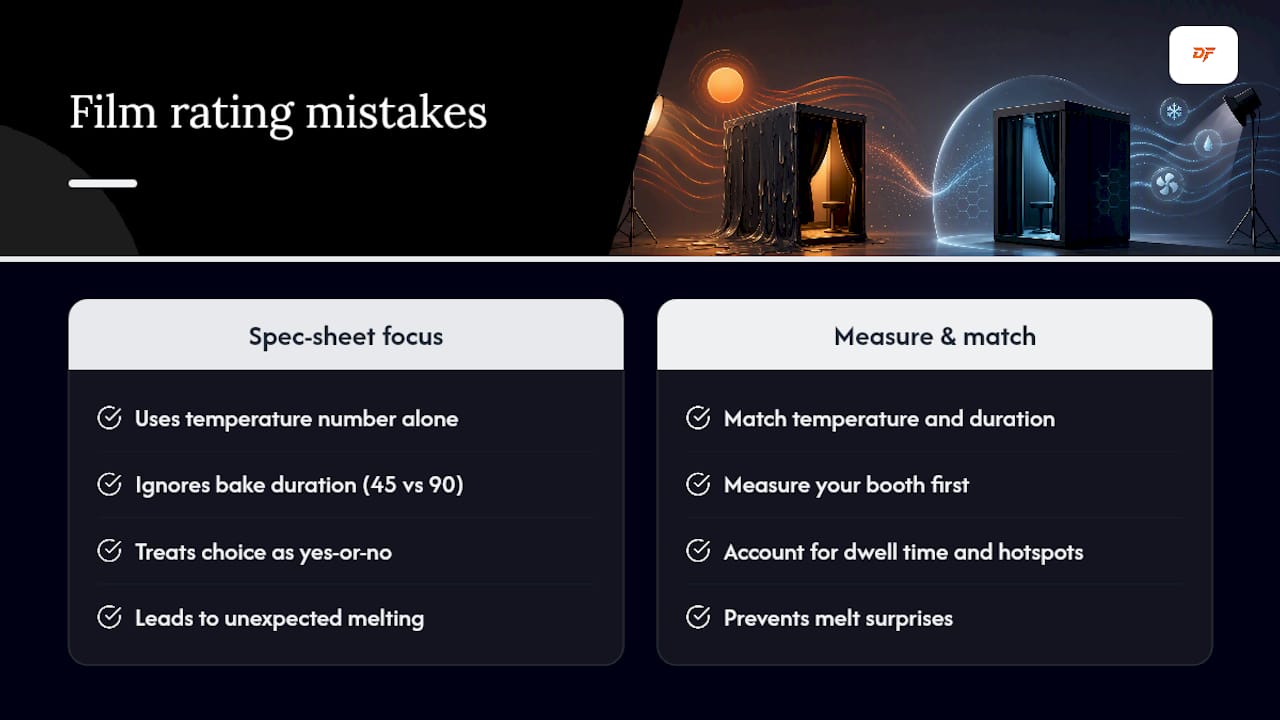
The conventional advice, “buy a heat-resistant film,” treats film selection like a single yes-or-no decision. It isn’t. It’s a matching exercise between two numbers you control (temperature and duration ratings) and two numbers your booth generates on its own (actual peak surface temp and dwell time), and skipping the measurement step is where most failures start. A film that’s technically capable of handling your cycle still fails if it’s applied with trapped air pockets creating hotspots the spec sheet never accounted for.
If you take one thing from this: measure your booth before you shop for film, not after something melts. Everything else, the margin you buy, the construction you choose, the dispenser you use, follows from having that real number in hand.
— Pavlos Filippakis
Get a Film Matched to Your Booth’s Actual Bake Cycle
You’ve seen how a mismatch between film rating and real bake conditions causes softening, adhesive transfer, and contamination that costs you rework time. Dust Free Film manufactures multi-layer electrostatic booth protection built to hold up under sustained heat, applied through a patented dispenser system designed for fast, bubble-free installation that avoids the hotspots hand-applied film creates.
If you’re not sure whether your current film matches your booth’s real numbers, request a technical data sheet, a sample roll, or a custom quote through the Dust Free Film product line. When you reach out, have your booth’s peak surface temperature and bake duration ready. That’s the information that determines whether standard film will hold or a high-temp, multi-layer configuration is worth specifying for your operation.
Sources
- Colad Film4Booth technical data sheet (Colad / ABE)
- 3M™ Ultra High Temperature Paint Masking Film 7305 (3M)
- BoothWrap® 4X High Temp - Baking Booth (Auto Paint Supply)
- JTAPE Tacky Booth Protection Film technical data sheet (JTAPE)
FAQ
What Temperature Does Booth Film Typically Melt At?
Standard protective films often soften starting around 80°C to 120°C, while high-temp films rated for baking cycles hold up to 155°C to 180°C for roughly one hour.
How Do I Know If My Booth’s Film Rating Is Adequate?
Measure your booth’s actual peak surface temperature and dwell time with an infrared thermometer, then compare both numbers against your film’s TDS rating, since duration matters as much as peak temperature.
Is Masking Paper a Safe Substitute for Booth Film in High-Heat Cycles?
No. Masking paper can flake and shed fibers under heat, creating the exact contamination risk that engineered polypropylene film is designed to prevent.
What Should I Do If Booth Film Starts Melting Mid-Cycle?
Let the booth cool fully before removing the film to avoid spreading adhesive residue, then use a manufacturer-approved remover rather than aggressive solvents that can damage the paint underneath.
Does Installation Method Affect Film Heat Resistance?
Yes. Film applied with trapped air bubbles or wrinkles heats unevenly, creating hotspots that cause failure below the film’s rated temperature, which is why patented dispenser systems that ensure flush, bubble-free application matter for heat performance.