

Booth grate protection, in the context that matters to procurement, means multi-layer removable film applied to booth walls and floors and dispensed from an application box, not a metal grate cover. For any booth running regular cycles, the recommended solution is professional multi-layer peelable film paired with a single-person dispenser, sized to your bake temperatures and throughput. This guide, put together with manufacturing input from Dust Free Film and written by Pavlos - Angelos Filippakis, walks through how to choose, install, and maintain it without losing production time.
TL;DR:
- Multi-layer peelable film is ideal for high-throughput booths with frequent bake cycles that cannot tolerate downtime for cleaning.
- Ensure the film’s temperature rating matches your booth’s maximum cycle temperature, especially for heated curing processes up to 80°C.
- Prioritize dispenser features like integrated cutting bars and roll rotation to support single-person installation and reduce application errors.
- Replace film layers when reflectivity dulls or overspray buildup is visible; use built-in layer markings to track remaining material accurately.
- Proper surface prep and avoiding layering over old film are critical to ensure proper adhesion and clean removal of the protective film.
Table of Contents
- When Does Multi-Layer Peelable Film Make Sense?
- What Features Actually Matter When Comparing Films?
- How Should You Specify and Buy Booth Protection Film?
- How Do You Install and Remove Protector Film Without Mistakes?
- When Should You Replace a Layer or Reorder Film?
- Why Dispenser Design Is the Detail Most Buyers Underrate
- Get the Right Wall and Floor Protector for Your Booth
- Sources
- FAQ
When Does Multi-Layer Peelable Film Make Sense?
Multi-layer peelable film earns its cost fastest in booths that run frequently and can’t afford downtime for scraping or repainting walls. If your booth cycles through several jobs a day, a system where you peel one contaminated layer and expose a clean one underneath beats stopping the line for a full cleaning pass.
A few situations point clearly toward this product class:
- High-throughput booths with frequent bake cycles. Quick-refresh systems keep pace with turnover without shutting the booth down between jobs.
- Heated cure processes. Check the film’s rated operating temperature against your booth’s peak cycle temperature before you buy anything. A film rated below your bake temperature will fail early.
- Color-critical work. Booths handling metallics, pearls, or tight color matches depend on stable wall reflectivity. Faded or contaminated protection introduces glare and shadow inconsistencies that skew inspection under booth lighting, and preserved reflectivity has been linked to more accurate color-matching outcomes in industry reporting on protective film performance.
- Lower-volume shops. Weigh the film’s upfront cost against what you’re currently spending on solvent, labor, and rework from booth contamination. For a shop running two or three jobs a week, the math sometimes favors a simpler cleaning routine instead.
What Features Actually Matter When Comparing Films?
Specification sheets from different vendors can look similar at a glance. The differences that actually affect your operation show up in six areas.
- Particle-capture mechanism. Wall films typically rely on an electrostatic charge, a light tackiness, or both to pull overspray out of the air rather than letting it settle and drift. Technical datasheets for multi-layer wall systems describe this static-and-tack combination as standard for wall-grade product.
- Temperature tolerance. Get the maximum rated operating temperature in writing. Some wall and floor protector film lines are rated to withstand operating temperatures up to 80°C, which covers most standard bake cycles.
- Layer count and markings. Rolls with visible layer numbering and integrated length markings let an operator know exactly how much material is left and which layer is exposed, without guesswork.
- Tape-free overlapping edges. Seams that overlap without tape install faster and pull away cleanly, without leaving adhesive residue on the substrate underneath.
- Dispenser ergonomics. A rotating roll, an integrated cutting bar, and reinforced sides let one person brace the box with a foot and run a straight line solo, which is the difference between a five-minute job and a two-person, twenty-minute one.
- Floor-specific attributes. Floor film needs slip resistance and puncture resistance that wall film doesn’t, since it takes foot traffic, dropped tools, and rolling carts.
Pro Tip: Ask any vendor for the exact wording of their temperature rating, not just a marketing claim of “heat resistant.” A number in degrees Celsius or Fahrenheit is the only spec you can actually hold them to.
How Should You Specify and Buy Booth Protection Film?
Buying grate protection systems well starts with numbers from your own floor, not a vendor’s brochure. Pull together your operational profile before you request a single quote.
- Collect your operational inputs first. Know your daily or weekly throughput, your booth’s maximum bake temperature, shift patterns, and how much foot and cart traffic the floor sees.
- Build a specification checklist for the RFQ. List roll width, layer count per roll, temperature rating, dispenser type, packaging format, and expected lead time. Vague requests get vague quotes back.
- Ask suppliers pointed questions. Do they offer installation guidance or training for new staff? Can they provide samples before a bulk commitment? Do they support custom roll widths for nonstandard booth dimensions? What’s the actual price break at volume?
- Review the contract terms, not just the price. Confirm warranty coverage, return policy on unopened rolls, and whether the supplier offers private-label packaging or works through a distributor network in your region. If you’re a distributor or large operator, ask directly about custom configurations and factory-direct bulk pricing, since terms here vary widely between manufacturers and resellers.
Getting these four steps right before you contact a vendor turns a generic quote into one you can actually compare, apples to apples, against a competing bid.
How Do You Install and Remove Protector Film Without Mistakes?
Installation problems almost always trace back to two things: a dirty substrate or stacking film on top of film. Both are avoidable with a short prep routine.
- Prep the surface first. Remove dust and grease, let the surface dry fully, and smooth any old adhesive residue or bumps before applying new film. Skipping this step is the single most common cause of poor adhesion.
- Use the dispenser box as designed. A rotating-roll box with an integrated cutting bar lets one installer brace the box with a foot and pull a straight, even line without a second set of hands.
- Never layer new film over old film. Full removal of the existing system before reinstalling is essential. Industry guidance is direct on this point: applying fresh protective film over an existing set risks adhesive failure and makes both layers harder to peel later, as product guidance on spray booth protective film points out.
- Overlap edges without tape. Line up the tape-free overlapping seam, trim carefully around light fixtures, vents, and hardware, and avoid leaving gaps where overspray can sneak behind the film.
- Watch your bake cycles. Remove layers before repeated heat exposure hardens the adhesive, since a film left too long through multiple cure cycles becomes harder to strip cleanly.
Pro Tip: Keep a utility knife and a spare roll near the booth entrance. Operators are far more likely to peel a saturated layer promptly if the tools are within arm’s reach instead of stored in a supply closet.
When Should You Replace a Layer or Reorder Film?
Replacement timing is part visual judgment, part schedule discipline. Watching for saturation and thinning reflectivity on walls, and buildup or grit on floors, tells you when a layer has stopped doing its job even before it looks obviously dirty.
- Visual triggers. Dulled reflectivity, visible overspray buildup, or a floor surface that’s lost its texture all signal it’s time to peel.
- Throughput-based schedules. High-volume booths often benefit from a fixed peel schedule tied to job counts rather than waiting for a visual cue that arrives too late.
- Use the built-in tracking features. Visible layer numbering and length markings make it simple to log which layer is exposed and how much roll length remains, supporting basic inventory control without a separate system.
- Keep a simple log. Track roll ID, install date, number of layers removed, and rough bake-cycle or contact-event counts. This small habit ties replacement cadence directly to defect rates and cleaning costs over time.
Preserved reflectivity does more than look good under booth lighting. It keeps inspection conditions consistent, which matters directly for defect counts and rework on color-critical jobs.
Why Dispenser Design Is the Detail Most Buyers Underrate
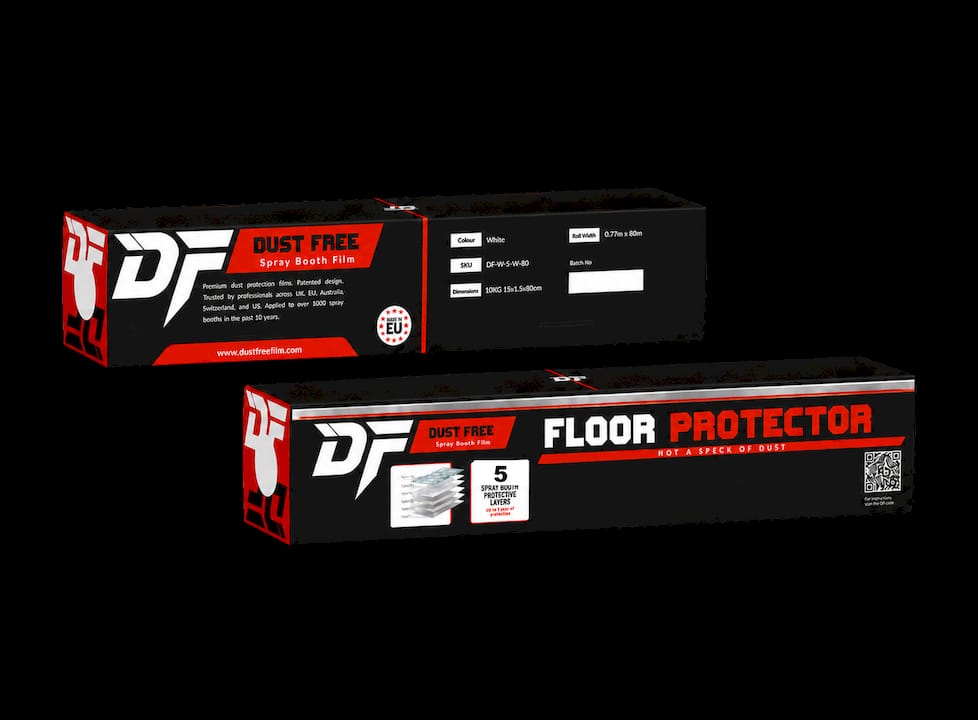
Most buyers evaluate film on temperature rating and price, and almost skip past dispenser design entirely. That’s backward. A poorly designed dispenser turns a two-minute job into a two-person struggle with crooked seams, and crooked seams mean gaps where overspray gets through anyway.
A patented box with a rotating roll and integrated cutting bar isn’t a convenience feature. It’s what makes single-person installation realistic on a busy shift, cutting labor cost on every single application, not just the first one. For high-volume shops, that argues for a higher layer count per roll to stretch time between full changeovers. Lower-volume shops can run fewer layers and lean more on visual inspection than a fixed schedule. Either way, the upfront cost of a well-built dispenser system pays back through fewer install errors and less rework, not through the sticker price of the roll itself.
— Pavlos - Angelos Filippakis
Get the Right Wall and Floor Protector for Your Booth
Some manufacturers build directly to a checklist like this, with design priorities including electrostatic and tacky capture on wall protectors, slip-resistant durability on floor protectors, single-person dispenser boxes, tape-free overlapping seams, visible layer numbering, and operating temperature ratings up to 80°C. These products may be manufactured in Europe and shipped worldwide with support for bulk orders, custom widths, and private-label configurations, so the specs you write into an RFQ correspond to what you receive.
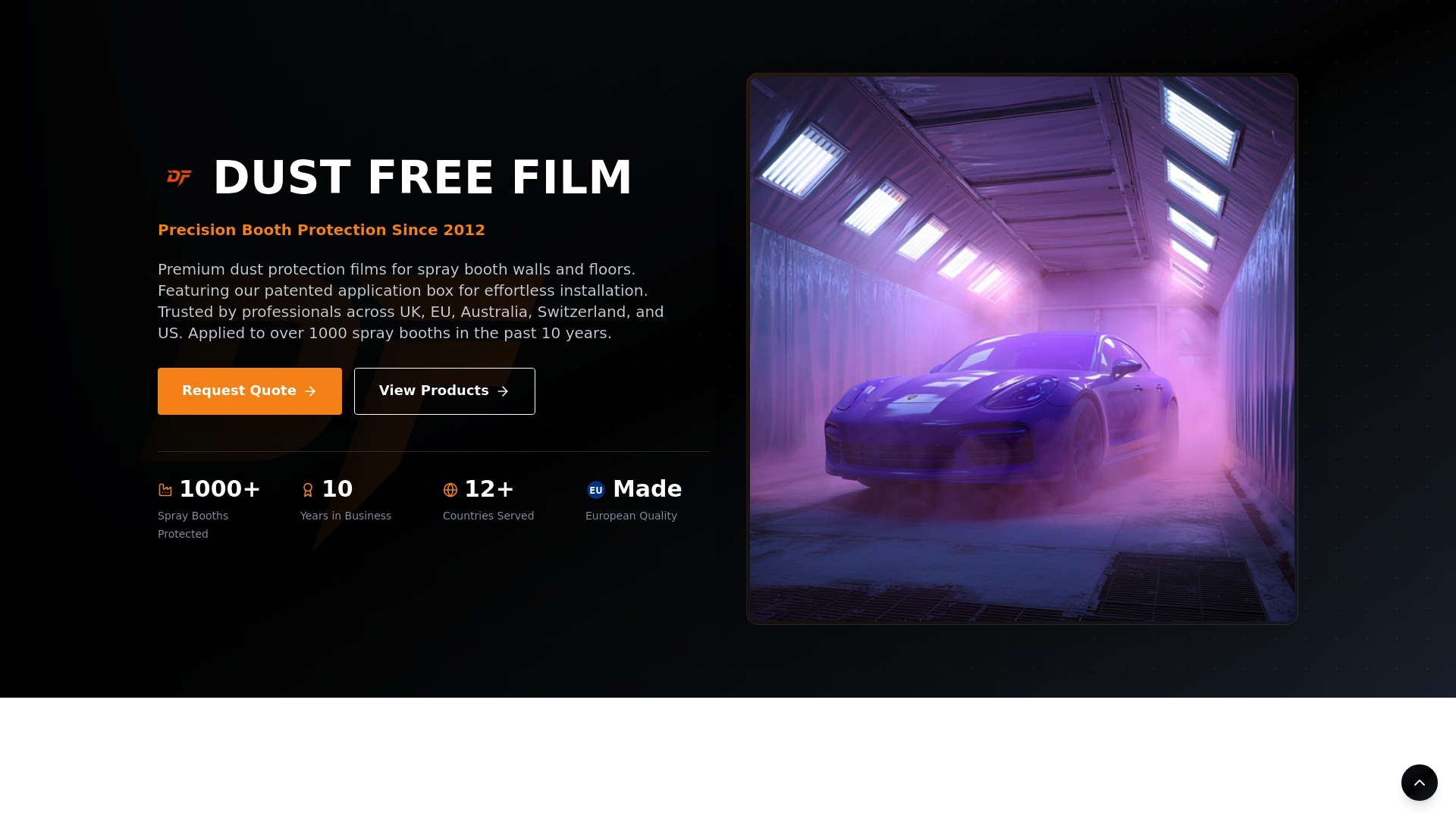
If you’re ready to move past comparison shopping, the Multiple-Layer Spray Booth Wall Protector and Multiple-Layer Spray Booth Floor Protector product pages have full specs and ordering details. Facility managers in Germany can also check the regional distributor page for local support and faster lead times. Request a sample roll, ask for a bulk quote, or start a custom-configuration conversation directly through either product page today.
Sources
For deeper technical detail, review the multi-layer wall protection datasheet covering static charge and temperature guidance, and this piece on why protective film matters for booth floors and walls. Dust Free Film’s own overspray protection guide covers related booth setup questions, and shops sourcing broader booth equipment may find this industrial machinery manufacturer overview useful for cross-referencing equipment specs.
FAQ
What Is Booth Grate Protection?
In a procurement context, it refers to multi-layer removable film applied to spray booth walls and floors, dispensed from an application box, rather than a metal grate cover. The film captures overspray electrostatically or through light tackiness, and operators peel away a used layer to expose a clean one underneath.
How Often Should You Replace a Protector Film Layer?
Replace a layer when reflectivity dulls or overspray buildup becomes visible, or on a fixed schedule tied to job throughput in high-volume booths. Visible layer numbering and length markings, a feature built into Dust Free Film’s product lines, make tracking which layer is active straightforward.
Can You Apply New Film Over an Old Layer?
No. Stacking new film over an existing set risks adhesive failure and makes both layers difficult to remove cleanly, according to industry guidance on spray booth protective film application. Always strip the old system fully and apply to a clean, dry surface.
What Temperature Rating Do I Need for a Heated Booth?
Match the film’s maximum operating temperature to your booth’s peak bake cycle temperature, not just a general “heat resistant” claim. Some wall and floor protector lines are rated for operating temperatures up to 80°C, which covers most standard automotive and industrial cure cycles.
How Much Does Dust Free Film’s Protection System Cost?
Pricing depends on roll width, layer count, and order volume, so current pricing is available directly through the Wall Protector and Floor Protector product pages. Bulk and custom-configuration quotes are available on request for larger facilities and distributors.