

For reliable booth panel film adhesion in a Greek spray booth, choose a multi-layer electrostatic peelable film from Dustfreefilm. The core reasons are straightforward:
- Adhesion reliability: Electrostatic films grip panel surfaces without aggressive PSA tack, so they hold through bake cycles without leaving residue.
- Heat and cycle resistance: Dustfreefilm’s films are rated for the temperature demands of automotive ovens, surviving repeated cure cycles without delaminating or bubbling.
- Clean peelability: Multi-layer construction means you strip one contaminated layer and the next clean surface is ready immediately, with no scraping or solvent cleaning.
Request a sample kit or quote at Dustfreefilm, then run a 10-minute test patch on your booth panels before full installation.
Key Takeaways
Reliable booth panel film adhesion starts with the right film type, proper surface prep, and a test patch before full installation.
| Point | Details |
|---|---|
| Choose electrostatic film | Multi-layer electrostatic films hold through bake cycles and release cleanly, leaving no residue on booth panels. |
| Prep the surface first | Clean with IPA, check for silicone contamination, and confirm panel temperature is between 15°C and 30°C before applying. |
| Always run a test patch | Apply a 300 mm × 300 mm strip, simulate a bake cycle, and inspect the peel before committing to a full booth installation. |
| Replace layers on a schedule | Inspect after every 5–7 bake cycles or 3–5 working days; replace when overspray is heavy or edge lift exceeds 50 mm. |
| Dustfreefilm for Greek shops | Dustfreefilm supplies multi-layer electrostatic films, patented dispensers, and full EU compliance documentation with delivery to Greece. |
Table of Contents
- What does booth panel film adhesion actually depend on?
- How to apply booth film so it actually sticks
- How to test adhesion before committing to a full booth installation
- How to store rolls and protect adhesion before installation
- When and how to remove layers without damaging panels
- What safety and compliance documents to request before buying
- What to ask suppliers before you place an order
- Why Dustfreefilm is a practical choice for Greek spray booths
- The part most shops get wrong
- Dustfreefilm supplies Greek booths with films, dispensers, and local support
- Sources
What does booth panel film adhesion actually depend on?
The term “booth panel film adhesion” covers two distinct adhesive technologies, and confusing them is the most common purchasing mistake. Pressure-sensitive adhesive (PSA) films bond through direct contact pressure. Electrostatic films use static charge to cling to smooth surfaces without a wet adhesive layer. For spray booth panels, electrostatic is almost always the right call: it holds firmly during bake cycles yet releases cleanly, leaving no sticky residue on the panel substrate.
Key specs to read on any datasheet:
- Tack level / adhesive type: Electrostatic or low-tack PSA. Avoid high-tack PSA on painted or powder-coated panels; residue risk is real.
- Heat resistance / max temperature: Look for a continuous rating above 60°C and a short-cycle peak above 80°C to cover standard automotive bake profiles.
- Layer count: Single-layer films require full removal and reapplication each cycle. Multi-layer films let crews peel one layer at a time, extending the interval between full reapplications.
- Roll width and coverage: Standard rolls run 1.0 m to 1.5 m wide. A 50 m roll at 1.2 m wide covers 60 m² per roll. Measure your booth wall area and divide by that figure to calculate roll count.
- Stretchability: A film with moderate elongation (typically 100–150%) conforms to panel edges and seams without tearing during application.
Dustfreefilm’s multi-layer electrostatic films are described by the company as heat-resistant and static-free, manufactured to European standards. That combination covers the two failure modes most Greek shops encounter: adhesion loss during bake and residue left on panels after removal.
| Spec | What to look for | Red flag |
|---|---|---|
| Adhesive type | Electrostatic or low-tack PSA | High-tack PSA on painted surfaces |
| Heat resistance | Continuous >60°C, peak >80°C | “Room temperature use only” |
| Layer count | 3+ layers for busy booths | Single-layer only |
| Peel test data | Lab results on datasheet | No peel data provided |
| MSDS / CE / REACH | All three present | Missing any one of them |
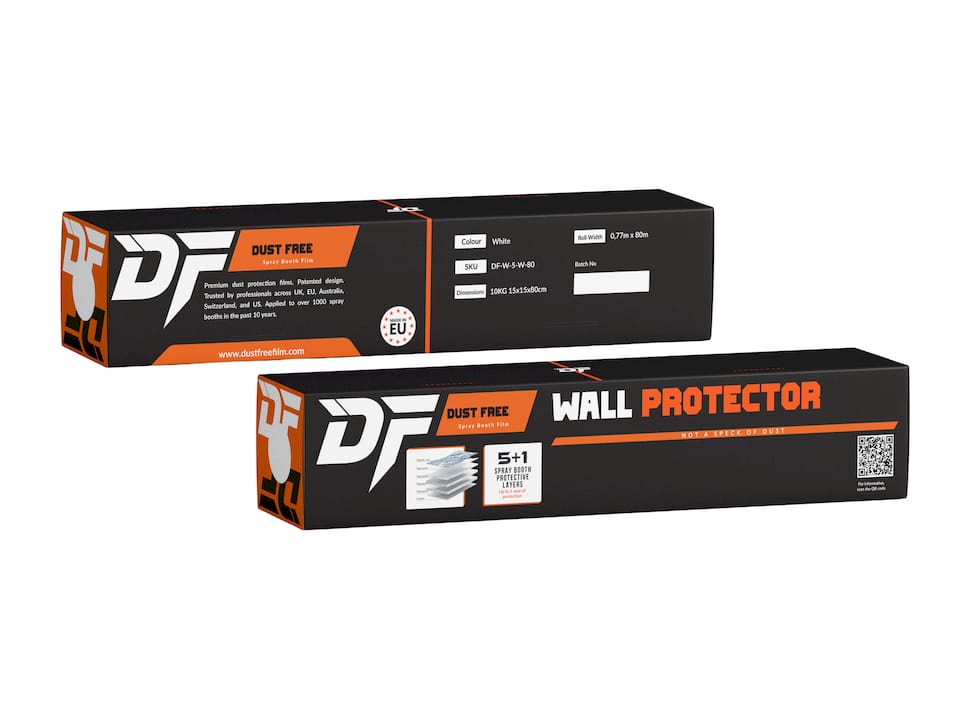
Pro Tip: When comparing datasheets, the peel-force figure (measured in N/25mm) tells you more about residue risk than any marketing claim. Ask every supplier for this number before ordering.
How to apply booth film so it actually sticks
Adhesion failures almost always trace back to surface prep, not the film itself. Follow this sequence every time.
What you need before you start:
- Lint-free cleaning cloths and isopropyl alcohol (IPA) at 70% or higher
- IR thermometer
- Soft rubber squeegee or foam roller
- Dustfreefilm patented dispenser box (or a manual core holder for smaller panels)
- Masking knife and straight edge
- Clean nitrile gloves
Step-by-step application:
- Clean the panel surface. Wipe with IPA and a lint-free cloth. Remove all dust, silicone, and grease. Let the surface dry completely; residual solvent under the film is a common cause of edge lift.
- Check surface temperature. Use the IR thermometer. The panel should be between 15°C and 30°C. Cold panels (below 10°C) reduce initial tack; hot panels (above 35°C) can cause the film to stretch unevenly during application.
- Measure and cut. Cut film to panel dimensions with a 20–30 mm overlap at edges and seams. Pre-plan your roll layout for complex multi-panel walls — sequencing panels from one corner outward prevents alignment gaps. This kind of preplanning, familiar from complex multi-panel installations, avoids the partial-peel overlaps that cause edge lift later.
- Load the dispenser. Thread the roll into the Dustfreefilm dispenser box. The dispenser maintains consistent tension across the full panel width, which is the single biggest factor in bubble-free adhesion on large walls.
- Apply from top to bottom. Start at the top edge, press the film against the panel, and draw the dispenser downward in a single steady pass. Overlap adjacent strips by 10–15 mm.
- Roll out bubbles immediately. Use the squeegee or foam roller in overlapping horizontal strokes from the center outward. Work within 60 seconds of laying the film; the electrostatic charge sets quickly.
- Seal edges. Press all edges and seams firmly with your fingertip or a soft roller. On panel seams, apply a narrow strip of low-tack masking tape over the film edge if the seam gap exceeds 2 mm.
Dispenser vs. manual application: The Dustfreefilm dispenser system reduces training time significantly for crews covering large wall panels, and it produces more consistent tension than manual unrolling. Manual application works for small panels or touch-up areas, but on a full booth wall (typically 15–25 m²), the dispenser pays for itself in reduced rework within the first installation.
Pro Tip: Map your panel seams on paper before you open the first roll. A simple sketch showing which strip goes where, and in what order, cuts installation time by roughly a third on a standard four-wall booth.
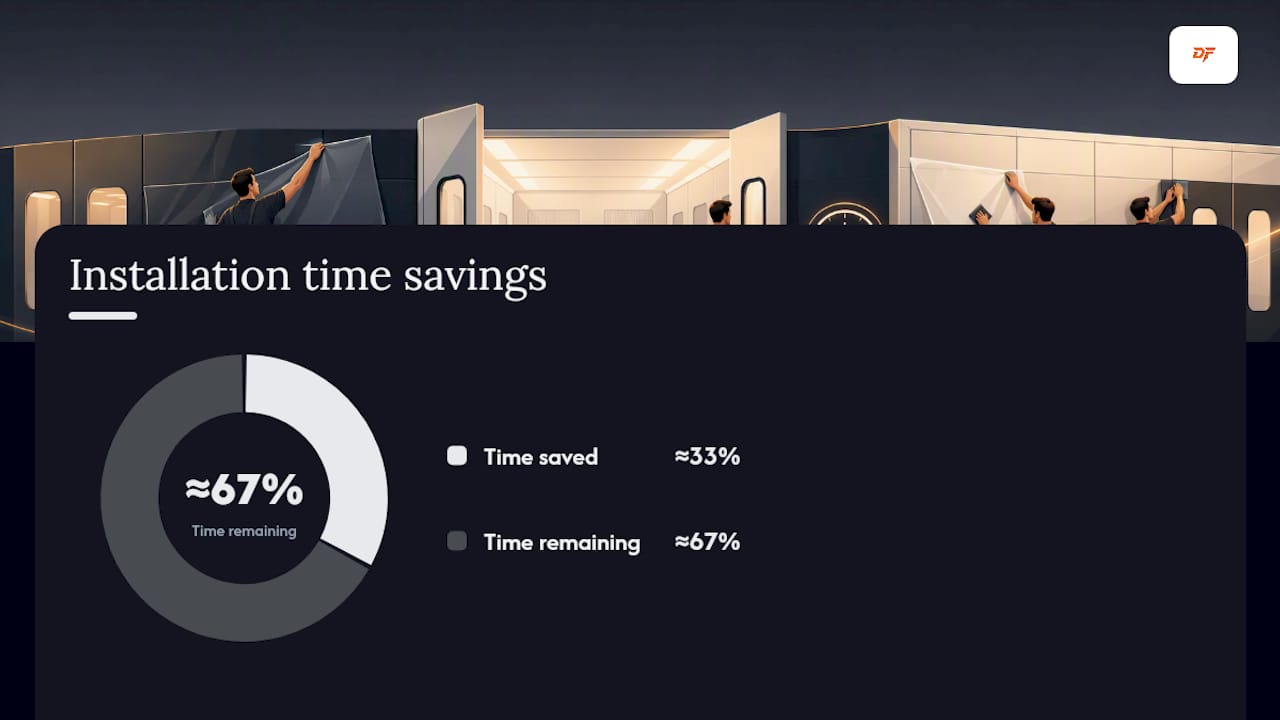
How to test adhesion before committing to a full booth installation
Running a test patch takes 10–30 minutes and prevents a costly full-booth redo. Think of it as the field equivalent of a prototype mockup that verifies fit and adhesion before you commit to the final install.
Test patch checklist:
- Clean a 300 mm × 300 mm area with IPA and let it dry for 5 minutes.
- Apply a single strip of film and press firmly with a squeegee.
- Wait 30 minutes at room temperature (the “hold time” for initial tack to develop).
- Simulate a bake cycle: run the booth at your standard cure temperature for one full cycle, or use a heat gun to bring the test area to your oven peak temperature for 10 minutes.
- Peel the strip at a 45° angle with a slow, steady pull.
- Inspect the panel for residue, substrate damage, or adhesive transfer.
High-risk substrates to watch for:
- Porous or chalky paint: Old booth panels with degraded coatings absorb adhesive and make clean removal difficult. Sand lightly and seal before applying film.
- Recently cured coatings (under 24 hours): Solvents still off-gassing from fresh paint interfere with electrostatic adhesion. Wait at least 24 hours after any panel repaint.
- Silicone-contaminated surfaces: Silicone is invisible and catastrophic for adhesion. If the booth has been used with silicone-based products, clean with a dedicated silicone remover before the IPA wipe.
- Galvanized or bare metal panels: These work well with electrostatic films but may need a light scuff with 400-grit paper to remove mill scale.
Do not apply film to uncured paint or any surface that shows silicone contamination. If the test patch leaves residue or lifts at the edges after a single bake cycle, contact your supplier for a modified adhesive formulation or a surface pretreatment recommendation before proceeding.
Note: Dustfreefilm’s product guidance specifically recommends test patches and specification checks for adhesion in coastal or high-humidity environments — both common conditions in Greek shops near the Aegean or Ionian coasts.
How to store rolls and protect adhesion before installation
Film that arrives in perfect condition can lose tack before it ever touches a panel if storage is handled carelessly. The adhesive layer is the most vulnerable part of the roll.
Storage rules:
- Store rolls upright (on end), never flat. Flat storage deforms the core and creates uneven tension zones that show up as wrinkles during application.
- Maintain storage temperature between 10°C and 25°C and relative humidity below 65%. Greek summers push warehouse temperatures well above this; a shaded, ventilated storeroom is the minimum.
- Keep rolls in their original protective packaging until the moment of use. The packaging blocks dust, UV, and humidity from reaching the adhesive surface.
- Check the lot/date code on each roll before use. Most peelable booth films carry a shelf life of 12–18 months from manufacture. Rolls beyond that window may show reduced tack or edge curl.
- Handle rolls with clean nitrile gloves. Skin oils transfer to the adhesive surface and create localized low-tack spots that appear as bubbles after installation.
Coastal Greek shops face an additional challenge: salt air accelerates adhesion degradation on exposed roll ends. If your facility is within a few kilometers of the coast, humidity and salt air can cause edge lift unless rolls are sealed between uses.
Pro Tip: Bring rolls into the booth area at least 2 hours before application. Letting them acclimatize to booth temperature reduces dimensional stress in the film and cuts edge-lift incidents, especially in summer when the temperature difference between a cool storeroom and a warm booth can exceed 15°C.
When and how to remove layers without damaging panels
Multi-layer peelable films restore a clean booth surface by removing contaminated layers rather than washing or recoating the panel. The technique matters as much as the timing.
How to peel cleanly:
- Grip the film at a corner and pull at a 45° angle to the panel surface. Steeper angles (close to 90°) increase the risk of tearing the layer mid-panel. Shallower angles (below 30°) can drag adhesive across the substrate.
- Pull at a slow, steady speed. Fast peeling generates heat and static that can lift the next layer prematurely.
- If the film resists at a seam or edge, apply gentle warmth with a heat gun at 40–50°C for 5–10 seconds to soften the adhesive slightly before continuing.
Replacement cadence:
- Check the film surface visually after every 5–7 bake cycles or every 3–5 working days, whichever comes first.
- Replace a layer when you see heavy overspray buildup that obscures the panel beneath, visible tack reduction, or any significant edge lift.
- For high-volume booths running two or more jobs per day, plan a full layer removal on a weekly schedule regardless of visual condition.
- After removing the final layer of a multi-layer film, inspect the panel substrate for residue before applying a fresh roll. A clean panel is the foundation of good adhesion on the next cycle.
Disposal and planning for large-scale replacement:
- Peel waste is generally non-hazardous film and adhesive, but check your local Greek municipal waste guidelines for plastic film disposal. Some industrial facilities in Greece use contracted waste collectors for bulk film waste.
- For booths with large wall coverage, schedule layer removal during planned downtime rather than reactive replacement. A spray booth maintenance checklist helps coordinate removal with other booth servicing tasks.
What safety and compliance documents to request before buying
Procurement and safety managers in Greece operate under EU regulatory requirements. Any film going into an active spray booth must meet those standards, and the burden of proof sits with the supplier.
Documents to request from every supplier:
- Material Safety Data Sheet (MSDS / SDS): Required under EU REACH regulation. Confirms chemical composition, flammability class, and safe handling procedures.
- CE declaration of conformity: Confirms the product meets applicable EU directives.
- REACH compliance statement: Confirms the film does not contain substances of very high concern (SVHCs) above threshold limits.
- Flammability class / max temperature rating: Critical for booths with gas-fired ovens. The film must not ignite or off-gas toxic fumes at your oven’s peak temperature.
- Lab peel-test results: Confirms the adhesion level is within the stated range. A supplier who cannot provide peel-test data and heat-tolerance figures on a datasheet is a red flag.
Fire and heat safety in the booth:
Keep film edges at least 150 mm away from any radiant heat source, burner port, or exhaust duct. Film that contacts a direct heat source above its rated maximum can shrink, bubble, or in extreme cases ignite. Never apply film over electrical panels, light fixtures, or ventilation grilles.
Greek coastal and humidity considerations:
Greece’s Aegean and Ionian coastlines expose many shops to salt-laden air. Salt air accelerates edge lift and can degrade adhesive chemistry over time. When ordering for a coastal facility, specify this on your purchase order and ask the supplier whether the adhesive formulation is rated for high-humidity or salt-air environments.
Safety note: During installation and removal, wear nitrile gloves and safety glasses. In an active booth with residual solvent vapors, ensure ventilation is running at full capacity before handling film. Avoid skin contact with the adhesive surface on PSA-type films.
What to ask suppliers before you place an order
A purchase checklist prevents the two most common procurement mistakes: buying a film that fails adhesion in your specific booth conditions, and ordering a roll size that wastes material.
Evaluation dimensions to score each supplier on:
| Dimension | What to specify | Minimum acceptable |
|---|---|---|
| Adhesion / tack level | Electrostatic or low-tack PSA; peel force in N/25mm | Peel-test data on datasheet |
| Heat tolerance | Continuous and peak temperature ratings | Continuous >60°C |
| Peelability | Clean removal with no residue after bake cycle | Confirmed by test patch |
| Roll coverage | Width × length in meters; m² per roll | Matches booth wall dimensions |
| Applicator compatibility | Fits your dispenser model or supplier’s dispenser | Confirmed before order |
| Durability | Layers per roll; cycles per layer | 3+ layers per roll |
| Price / configuration | Per-roll price, bulk discount, custom widths | Quote with delivery to Greece |
Questions to ask every supplier:
- Can you provide an MSDS, CE declaration, and REACH statement for this film?
- What is the peel force (N/25mm) and at what temperature was it measured?
- What is the maximum continuous operating temperature and the short-cycle peak?
- What roll widths and layer counts are available, and can you supply custom widths for our booth dimensions?
- Is this film compatible with your dispenser system, and is the dispenser available for purchase or rental in Greece?
- What is your delivery timeline to our location in Greece, and do you offer sample kits before bulk order?
- Do you offer any warranty or performance guarantee on adhesion?
Red flags in quotes and datasheets:
- No MSDS or a generic SDS that does not name the specific film product.
- Heat rating stated as a range with no test method cited (e.g., “suitable for warm environments”).
- Missing peel-test data or a note that “results vary by substrate” with no further detail.
- No local delivery option or distributor in Greece, meaning long lead times and no technical support.
For complex booth walls with multiple panel sections, sequencing your film layout before placing the order helps you calculate exact roll counts and avoid mid-installation shortfalls. Pair this with workflow planning guidance to minimize booth downtime during installation.
Why Dustfreefilm is a practical choice for Greek spray booths
Dustfreefilm has supplied multi-layer electrostatic protective films and patented dispenser systems since 2012, manufacturing to European standards and serving industrial and automotive paint facilities across multiple countries, including Greece.
What Dustfreefilm offers Greek buyers:
- Multi-layer electrostatic booth wall and floor protectors, described as heat-resistant and static-free, with patented dispenser systems for fast, tape-free installation.
- Custom roll widths and bulk order configurations to match non-standard booth dimensions common in Greek industrial facilities.
- Technical datasheets, MSDS, and CE documentation available on request.
- On-site demos and technical support for adhesion testing in Greek shop conditions.
- Sample kits available before bulk commitment, so you can run the 10-minute test patch described above before placing a full order.
For buyers evaluating high-durability film options or comparing peelable films against sprayable booth coatings (which can protect for up to 150 bake cycles from a single application but require full recoating when depleted), Dustfreefilm’s multi-layer approach offers a faster surface restoration path: peel one layer, and the next clean surface is immediately ready.
Case studies and installation testimonials from Greek facilities are available directly from Dustfreefilm on request. Ask for references from automotive refinishing shops or industrial paint facilities in your region when you contact the team.
The part most shops get wrong
The adhesion conversation almost always focuses on the film itself, and that is the wrong place to start. In practice, the substrate condition at the moment of application determines whether a film holds or fails. A premium electrostatic film applied to a panel with residual silicone contamination will lift within one bake cycle, regardless of its spec sheet. A mid-range film applied to a properly cleaned, temperature-conditioned panel will outperform it every time.
The second thing shops underestimate is the value of the test patch. It takes 30 minutes and costs one strip of film. Skipping it to save time is the most expensive shortcut in booth maintenance. Run the patch, simulate the bake cycle, inspect the peel, and only then order in bulk.
Dustfreefilm supplies Greek booths with films, dispensers, and local support
Greek paint shops running tight production schedules need a film supplier who can deliver quickly, provide full compliance documentation, and support installation without a long back-and-forth. Dustfreefilm covers all three.
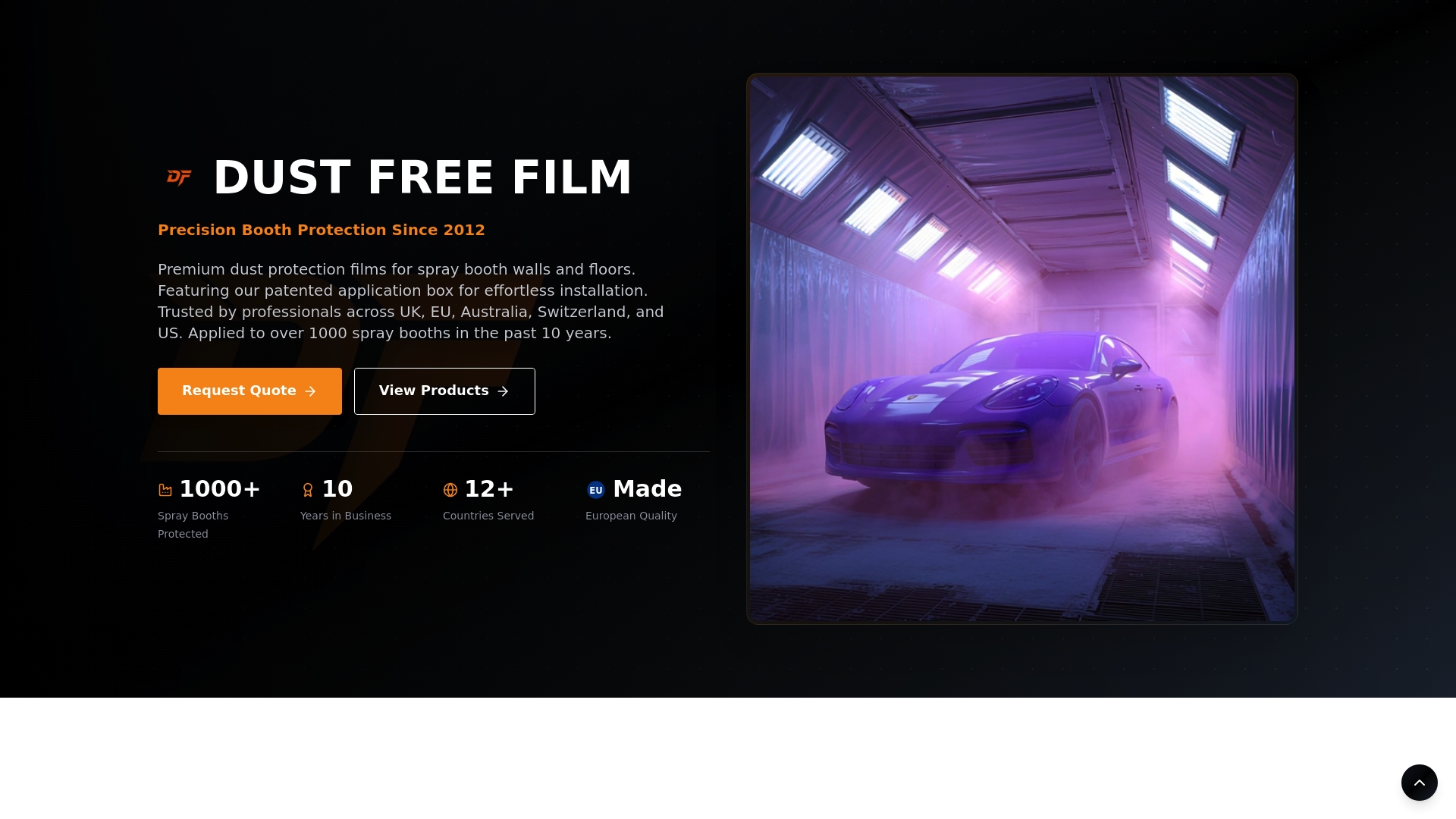
The product line includes multi-layer electrostatic wall and floor protectors, patented dispenser systems, and custom-width rolls for non-standard booth configurations. Every order comes with access to technical datasheets, MSDS, and CE declarations. For shops new to peelable film, sample kits are available before any bulk commitment.
To get a quote or request a sample kit, contact Dustfreefilm at Dustfreefilm. Include your booth dimensions (wall area in m²), expected weekly bake cycles, and panel substrate type (painted steel, galvanized, powder-coated) so the team can recommend the right film weight and layer count for your operation.
Sources
Before placing a bulk order, collect the following from your supplier:
For background on how material durability affects long-term adhesion performance under repeated bake cycles, Dustfreefilm’s technical blog covers the subject in detail. For surface treatment context relevant to metal panel substrates, the chem film vs. anodize comparison from WJ Prototypes is a useful reference for understanding how surface chemistry affects adhesion interactions on aluminum or treated-metal panels.