
Custom size booth film makes sense for any shop where standard rolls leave gaps, waste material, or force extra labor at changeover. If your booth has irregular dimensions, fixtures, heated curing cycles, or high daily throughput, multilayer wall and floor protector film cut to your exact measurements will save labor hours and protect finish quality. Multilayer products and patented dispenser systems are built for exactly this kind of fit.
TL;DR:
- Custom booth film eliminates gaps and seams caused by irregular booth shapes, fixtures, and heated cure zones, saving labor and protecting surfaces more effectively than standard rolls.
- Film rated for temperatures up to roughly 200°F is common, but always verify the maximum operating temperature with the manufacturer before installation in heated booths.
- Using a patented application box with a single technician can reduce application time from around 45 minutes to approximately 8 minutes for booth refreshes.
- Replacing film based on spray volume and residue buildup prevents fire risks and ensures consistent protection, especially in high-throughput or heated environments.
- Precise measurements, clear obstructions, and overlap allowances are essential for accurate custom sizing, preventing delays and unnecessary costs from incorrect orders.
Table of Contents
- What Is Custom Size Booth Film, and When Do You Need It?
- What Specs Matter When You Order Custom Booth Film?
- How Do You Measure a Booth for Custom Film Sizing?
- Which Installation Method Gets Film Up Fastest?
- What Time and Cost Savings Should You Expect?
- What Safety and Maintenance Rules Apply?
- What Should You Ask Suppliers Before You Order?
- Why Standardizing on Removable Multilayer Film Makes Sense
- Dust Free Film’s Custom Wall and Floor Protector Systems
- Sources
- FAQ
What Is Custom Size Booth Film, and When Do You Need It?
Multilayer spray booth film is a stacked protective sheet, usually five to ten layers deep, applied to walls, ceilings, and floors inside a paint or coating booth. Each layer captures overspray and dust. When a layer gets saturated, operators peel it away to expose a clean surface underneath instead of stripping and relining the entire booth.
Standard precut rolls work fine in a box-shaped booth with no obstructions. Most booths are not that simple. Downdraft floors, mounted light banks, exhaust plenums, curved ceiling transitions, and heated cure zones all create dimensions that a generic roll either overshoots or comes up short on. That’s where custom booth film earns its cost. A wall run cut to your booth’s actual height means no seams patched with tape and no six-inch strip of exposed drywall collecting dust nobody notices until the next paint job shows it.
The electrostatic charge built into the film surface is what does the real work. It attracts airborne particulate before it settles on a wet finish, and the tacky top layer traps contamination on contact rather than letting it drift back into the air on the next fan cycle.
What Specs Matter When You Order Custom Booth Film?
Temperature rating is the first thing to confirm, and the one buyers skip most often. A booth running heated bake cycles needs film rated for that ceiling, not just ambient spray temperatures. Floor film in particular takes direct heat from cure lamps and hot tire contact after a vehicle rolls out, and ratings up to roughly 200°F are common in industrial-grade products.
Beyond heat tolerance, work through these before you send an RFQ:
- Layer count: more layers mean fewer full relining events, but each layer adds thickness that can affect how film sits at corners and trim.
- Surface type: electrostatic and tacky formulations perform best against fine overspray; non-tacky options suit dustier, drier environments where tack would just attract debris.
- Floor thickness and slip resistance: floor protector needs enough puncture resistance for foot traffic and rolling equipment, plus a textured surface so wet floors don’t become a hazard.
- Layer identification: visible numbering and printed length markings tell technicians exactly how much film remains, which matters for scheduling replacements before a shift runs out mid-job.
- Seam design: tape-free overlapping edges save the labor of taping every seam and reduce the chance of a gap opening during a shift.
Pro Tip: Confirm the manufacturer’s stated max operating temperature in writing before you order for a heated booth. A film rated below your cure cycle will soften or shift, and you won’t find out until it fails mid production run.
How Do You Measure a Booth for Custom Film Sizing?
Getting dimensions right the first time avoids reorders, and reorders cost more than the film itself in lost booth time. Work through the booth in this order:
- Measure wall height and width at multiple points. Booths settle and framing varies; measure at both ends and the middle, then use the largest figure so you’re not short.
- Note every obstruction. Light fixtures, intake vents, control panels, and hose reels all interrupt a flat run and need to be marked on your sketch before you call in an order.
- Add overlap allowance. Tape-free seam systems still need a few inches of overlap at each joint, so build that into your total footage rather than ordering to the exact wall dimension.
- Measure floor coverage around fixed elements. Grating, floor drains, and door thresholds all interrupt a straight floor run and often require field-trimmed pieces rather than one continuous sheet.
- Decide roll width versus field trimming. Wider custom rolls reduce seams but cost more to cut precisely; narrower rolls trim faster on site but multiply seam count.
The most common mistake is measuring once, from one spot, and applying that number to the whole wall. The second most common is forgetting ceiling transitions, which almost never match wall height exactly.
Which Installation Method Gets Film Up Fastest?
Manual tape-up is the slowest method available and the one most prone to wrinkles, because every seam depends on a technician holding tension by hand while a second person tapes behind them. Spray-on peel coatings avoid seams entirely but add drying time and cost more per application cycle. Multilayer peel film systems dispensed from a proper box split the difference: fast application, no drying wait, and no repeat spray cost.
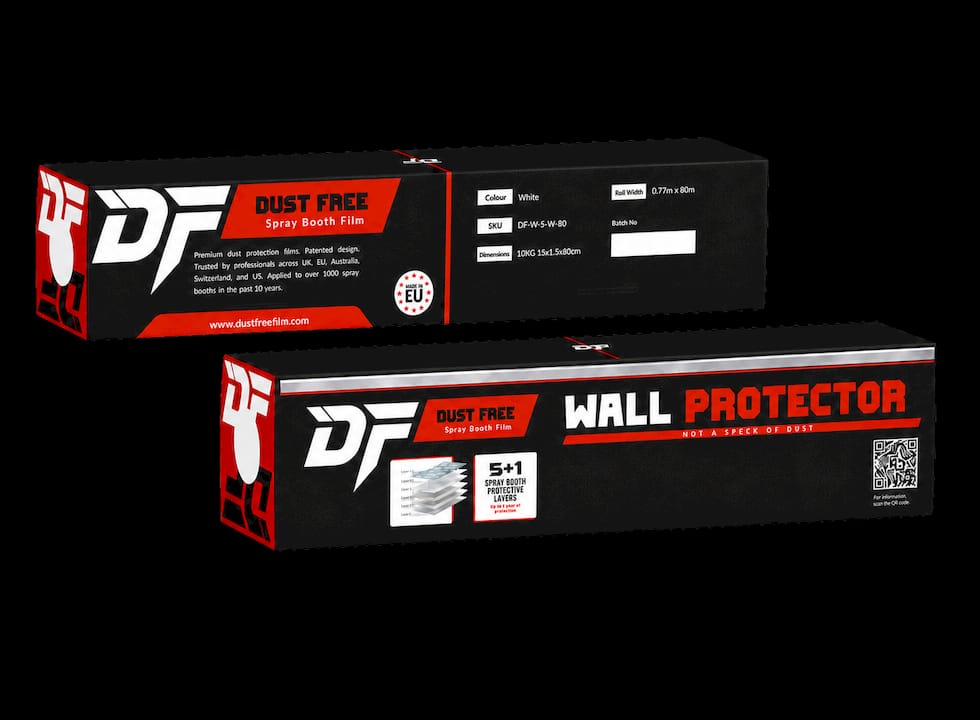
The dispenser itself decides how fast that application actually goes. Dust Free Film’s patented application box uses a freely rotating roll, reinforced wooden sides, and a built-in metal cutting bar, so one installer can brace the box with a foot and unroll a straight line without a second set of hands holding the far end.
That single-person design matters more than it sounds:
- No second technician pulled off another job just to hold film taut.
- A straighter line reduces wrinkles that would otherwise trap dust in folds.
- The integrated cutting bar gives a clean edge without scissors or a utility knife on site.
Pro Tip: For long wall runs, stage pre-cut lengths against the wall before you start dispensing. Walking a full roll the length of a 40-foot booth wall while trying to keep tension even is how most wrinkles happen.
What Time and Cost Savings Should You Expect?
Booth refresh speed is where custom multilayer film pays for itself fastest. Dust Free Film has reported shops cutting refresh time from around 45 minutes down to roughly 8 minutes once they moved to multilayer peel systems paired with the dispenser box, a brand-reported figure worth validating against your own booth’s dimensions and throughput.
Third-party evidence points the same direction. A Pregis case study documented lower labor hours and material costs after a facility switched to a more durable protective film that needed replacing less often.
- Material cost per roll is easy to compare; the labor hours saved on changeover are usually the bigger line item.
- A clean, bright booth surface preserves light output, which supports accurate color matching and cuts rework tied to misjudged finishes.
- High-throughput shops and heated booths see the fastest payback, since both categories replace film on tighter cycles where labor savings compound.
What Safety and Maintenance Rules Apply?
NFPA 33 Section 7.5 flags overspray residue as combustible, which means film buildup left too long is a fire risk, not just a cosmetic one. Removing saturated layers on schedule, rather than waiting until they’re visibly caked, is a fire-prevention step as much as a quality one.
- Set replacement cadence by spray volume, not a fixed calendar date. High-volume booths may need a fresh layer weekly; lower-volume shops can stretch longer.
- Inspect walls and floor film during routine booth checks, not just at scheduled changeovers.
- Remove used film with hand tools only. Spark-producing equipment near accumulated overspray residue is a hazard NFPA guidance specifically warns against.
- Recheck the temperature rating any time booth cure settings change, since a film approved for one cycle may not hold up under a hotter one.
What Should You Ask Suppliers Before You Order?
Walk into a custom film quote request with these answers ready:
- Exact measurements and tolerances for every wall, ceiling section, and floor zone, including obstruction cutouts.
- Required layer count and temperature rating, plus whether you need tacky or non-tacky surface for your dust environment.
- Slip resistance specs for floor film, especially if the booth sees foot traffic on wet or freshly coated surfaces.
- Dispenser compatibility, so the roll width and mounting match hardware you already own or plan to buy.
- Lead times, minimum order quantities, and any custom-configuration fees, since bespoke sizing sometimes carries a setup charge smaller shops don’t expect.
- Case-study or measured performance references, if the supplier has documented time-savings data from comparable facilities.
Getting these answers in writing before you order prevents the most expensive kind of mistake: film that arrives, doesn’t fit, and sits in a corner while your booth stays exposed.
Why Standardizing on Removable Multilayer Film Makes Sense
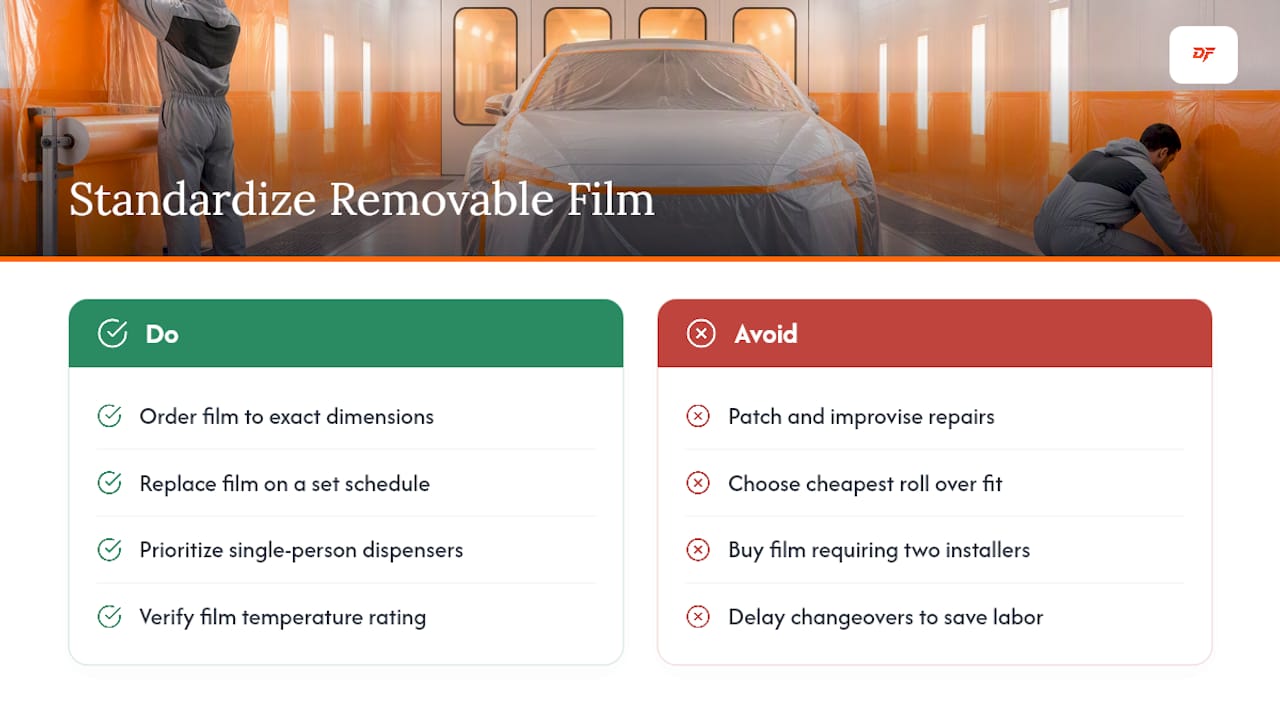
Booths that treat protective film as a routine supply item, ordered to exact dimensions and replaced on a set schedule, run fewer surprise shutdowns than booths that patch and improvise. The safety case and the efficiency case point the same direction here: NFPA guidance on residue removal and a shop’s own labor budget both reward frequent, low-effort changeovers over rare, labor-intensive ones.
If you’re setting procurement priorities, put single-person dispenser compatibility and a verified temperature rating above price per roll. A cheaper film that needs two people to install or fails under your cure cycle costs more than it saves.
— Pavlos - Angelos Filippakis
Dust Free Film’s Custom Wall and Floor Protector Systems
Dust Free Film manufactures two core product lines built around the sizing and installation issues covered above: the Multiple-Layer Spray Booth Wall Protector and the Multiple-Layer Spray Booth Floor Protector. Both ship in custom configurations sized to your booth rather than forcing your booth to fit a standard roll.
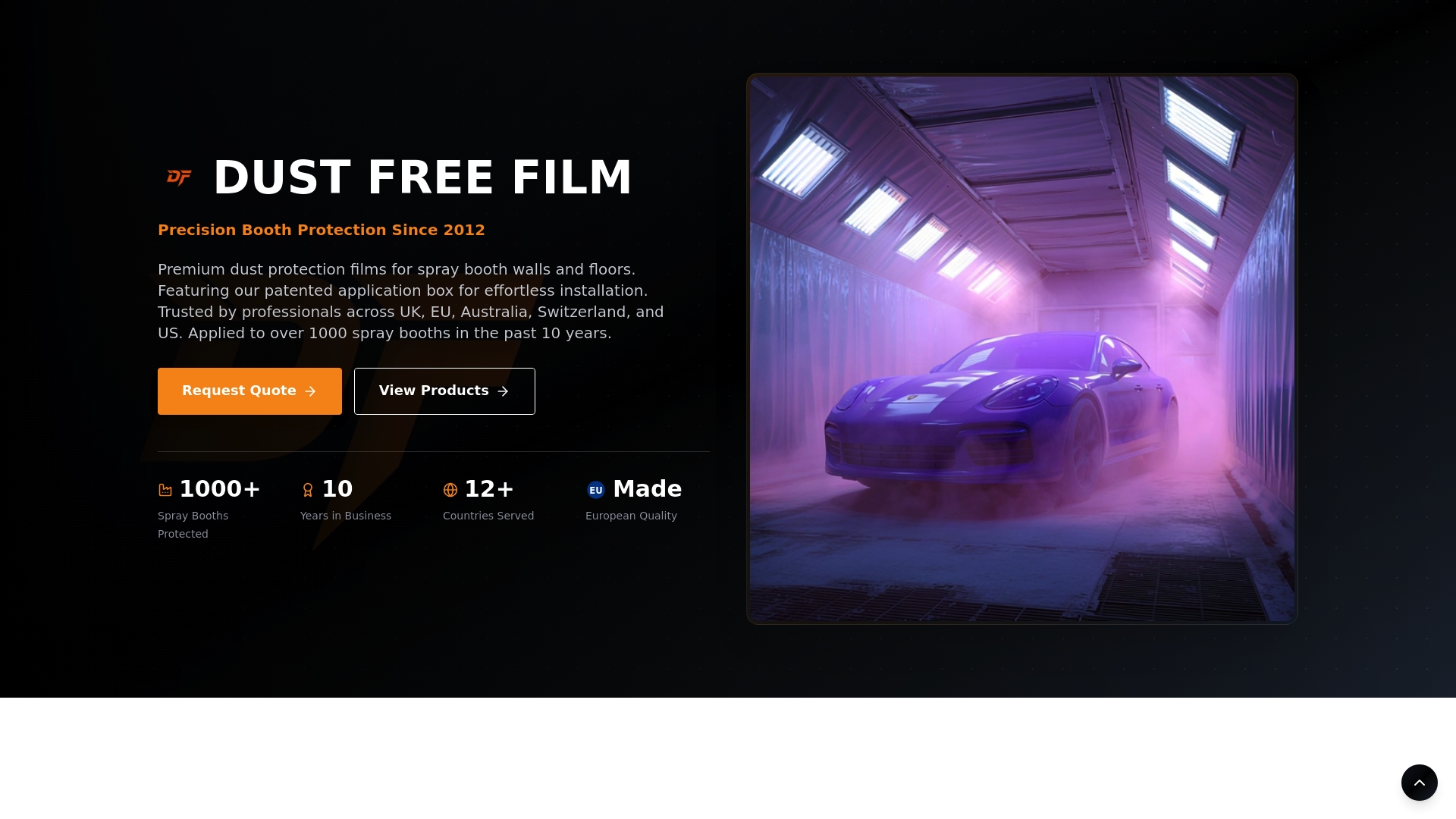
The wall protector uses a tacky electrostatic surface built to trap overspray on contact, while the floor protector adds slip resistance and puncture resistance for heavy foot and equipment traffic. Both are designed to work with a patented application box that lets one technician brace, unroll, and cut a straight run without a second person on hand. If your booth’s dimensions don’t match a stock roll, request a custom quote through the full product lineup or reach out to a regional distribution partner for bulk pricing and lead times.
Sources
- Paint Booth Maintenance: Daily, Weekly & Monthly Tasks | PaintBoothDoctors
- Case study: Pregis PolyMask SprayMask protective film solution offers cost savings
- Paint Booth Protective Film: Why It’s Essential For Your Floor And Walls - The DailyMoss
FAQ
What Is Custom Size Booth Film?
Custom size booth film is multilayer electrostatic protective film cut to a specific booth’s wall, ceiling, or floor dimensions rather than sold as a fixed standard roll. It’s designed to eliminate gaps and seams caused by irregular booth shapes, fixtures, or heated cure zones.
How Often Should Booth Film Be Replaced?
Replacement cadence depends on spray volume rather than a fixed calendar schedule, with high-throughput booths often needing weekly changeovers. NFPA 33 guidance treats overspray residue as a combustible hazard, so film should come down before it visibly builds up.
Can One Person Install Custom Booth Film?
Yes, with the right dispenser hardware. Dust Free Film’s patented application box uses a freely rotating roll and a foot-stabilized design that lets a single technician dispense a straight, wrinkle-free run without a second set of hands.
What Temperature Rating Do I Need for a Heated Booth?
Confirm the manufacturer’s maximum operating temperature against your booth’s actual cure cycle before ordering, since floor and wall film ratings vary by product. Industrial floor films are commonly rated up to around 200°F, but heated booths running hotter cycles need written confirmation from the supplier.
How Much Does Custom Booth Film Cost?
Pricing depends on layer count, roll dimensions, and custom-configuration requirements, so Dust Free Film does not publish a flat rate. Contact Dust Free Film directly or a regional distribution partner through the product page for a quote based on your booth’s specific measurements.