
Use booth-rated, multi-layer electrostatic protective film installed via a patented dispenser system to stop booth dust at the source, preserve laminar airflow, and protect your lighting’s color rendering index (CRI). That single decision does more for finish quality than any housekeeping schedule. The film captures overspray particles before they settle on panels or recirculate through the airstream, which means fewer reworks, shorter cleaning windows, and a booth that stays production-ready. As a first step, audit your current wall and ceiling coverage this week, identify any non-rated or makeshift film, and order a trial roll with a compatible dispenser. Dustfreefilm’s dust control strategies for spray booths lay out the full strategic case if you want the broader picture before committing to a procurement decision.
- Multi-layer electrostatic film captures overspray and fine particulates that standard cleaning misses.
- Preserved laminar airflow means consistent air pressure across the booth floor, which directly affects how paint atomizes and lands.
- Stable lighting CRI lets technicians match color accurately without pulling the vehicle into daylight.
Key Takeaways
Booth-rated, multi-layer electrostatic protective film installed with a compatible dispenser system is the single highest-impact dust control measure available to spray booth operators.
| Point | Details |
|---|---|
| Use booth-rated film only | Non-rated alternatives create fire hazards and adhesive residue; always verify the heat-resistance rating against your bake cycle. |
| Test before bulk purchase | Apply a trial roll to one booth panel, run a bake cycle, and confirm adhesion and residue-free removal before ordering at scale. |
| Track replacement cadence | Log layer removals by date and condition; three months of data supports accurate consumable budgeting and procurement planning. |
| Train staff on peel technique | Bottom-to-top, slow peel prevents adhesive residue; untrained removal is the leading cause of panel contamination. |
| NFPA 33 compliance | Remove overspray accumulations on a defined schedule; booth-rated film replaced regularly satisfies this requirement more reliably than manual cleaning. |
| Dustfreefilm for procurement | Multi-layer electrostatic film with a patented dispenser, custom widths, and bulk options; request a trial kit and MSDS to complete your safety file. |
Table of Contents
- What are the best dust control tips for facilities running spray booths?
- Why booth-rated protective films are worth the investment
- How do you choose the right booth-rated protective film?
- How do you install booth film correctly the first time?
- When should you replace a layer of booth film?
- What safety and compliance rules apply to booth film?
- What mistakes do facility managers make with booth film?
- Why Dustfreefilm is the recommended solution for facility managers
- What the multi-layer film approach gets right that most facilities miss
- Dustfreefilm makes it easy to pilot and scale
- Sources
What are the best dust control tips for facilities running spray booths?
Eight actions, ranked by urgency:
- Inspect existing film (today, supervisor). Walk the booth walls and ceiling. Look for lifted edges, heavy overspray build-up, or any film that isn’t labeled booth-rated. Flag it for removal.
- Remove non-rated film immediately (today, technician). Makeshift alternatives, including standard painter’s plastic or household sheeting, are a fire hazard in a heated spray environment and often leave adhesive residue on panels.
- Order booth-rated multi-layer electrostatic film (today, purchaser). Confirm the product carries a heat-resistance rating that covers your bake cycle temperature. Request the technical datasheet and MSDS before purchase.
- Confirm dispenser availability (today, purchaser). A compatible dispenser system is not optional. Without it, you lose the bubble-free application advantage and risk uneven adhesion.
- Prep surfaces before install (within 24 hours, technician). Solvent-wipe panel surfaces, remove loose overspray debris, and verify the booth is at a stable temperature before laying film.
- Run a short bake cycle before install (within 24 hours, technician). A brief empty bake cycle drives off residual moisture and stabilizes panel temperature, improving adhesion consistency.
- Apply with correct overlap technique (install day, technician). Overlap adjacent film strips by at least 2 inches. This closes the gap where overspray most commonly infiltrates behind the film.
- Schedule staff training (within 72 hours, supervisor). Layer removal, overlap technique, and replacement cadence are skills. Untrained staff peel incorrectly and cause the adhesive residue problems they were trying to prevent.
Pro Tip: When removing a spent layer, peel from the bottom upward in a slow, controlled motion. A fast or diagonal pull tears the layer and can drag adhesive residue onto the panel beneath. If a layer has been left past its recommended cycle, warm the surface slightly with a heat gun before peeling to soften the adhesive bond.
Why booth-rated protective films are worth the investment
Facility managers routinely treat protective film as a consumable line item rather than booth-capital protection. That framing costs money. A spray booth represents a significant capital investment in filtration, lighting, and airflow engineering. Every layer of makeshift or degraded film that disrupts laminar airflow forces the booth to work harder, increases overspray recirculation, and raises the probability of a contaminated finish.
Multi-layer electrostatic films work differently from standard plastic sheeting. The electrostatic charge actively attracts and holds fine overspray particles against the film surface rather than letting them drift. That keeps the airstream cleaner between coats and reduces the particulate load on your exhaust filters, extending filter life alongside finish quality. Dustfreefilm’s overview of protective film quality benefits details how this translates to fewer visual inspection failures and less downtime for deep cleaning.
The ROI case has three legs:
- Labor savings. Replacing a spent film layer takes minutes. A full booth deep-clean to remove baked-on overspray from unprotected panels can take hours and pulls a technician off billable work.
- Rework reduction. Contaminated finishes that require sanding and recoating are the single largest quality cost in most auto body and industrial paint operations. Film that captures overspray before it settles cuts that rate directly.
- Asset life extension. Booth panels, lighting fixtures, and window glass degrade faster under repeated overspray accumulation. Film keeps those surfaces clean and extends replacement intervals.
Operational note: NFPA 33 requires that overspray residue accumulations be removed frequently enough to prevent fire hazard. Booth-rated protective film, removed and replaced on schedule, satisfies this requirement more consistently than manual scraping.
How do you choose the right booth-rated protective film?
| Spec | What to check | Why it matters |
|---|---|---|
| Heat resistance | Rated above your bake cycle peak | Film that softens under bake heat lifts at edges and releases adhesive |
| Electrostatic properties | Confirmed static-charge layer in product datasheet | Passive film does not capture fine overspray; it only blocks large particles |
| Layer count | Number of peelable layers per roll | More layers per roll reduces changeover frequency and cost per square foot |
| Adhesive behavior | Low-tack, residue-free adhesive confirmed in MSDS | Residue on booth panels requires solvent cleaning and can damage finishes |
| Dispenser compatibility | Supplier-matched dispenser box or applicator | Incompatible dispensers cause film feed problems and uneven application |
| Clear-layer options | Available for light fixtures and windows | Opaque film over lights kills CRI; clear-rated film maintains color accuracy |
| Roll width and custom sizing | Available in widths matching your booth panel dimensions | Mismatched widths force awkward overlaps and increase waste |
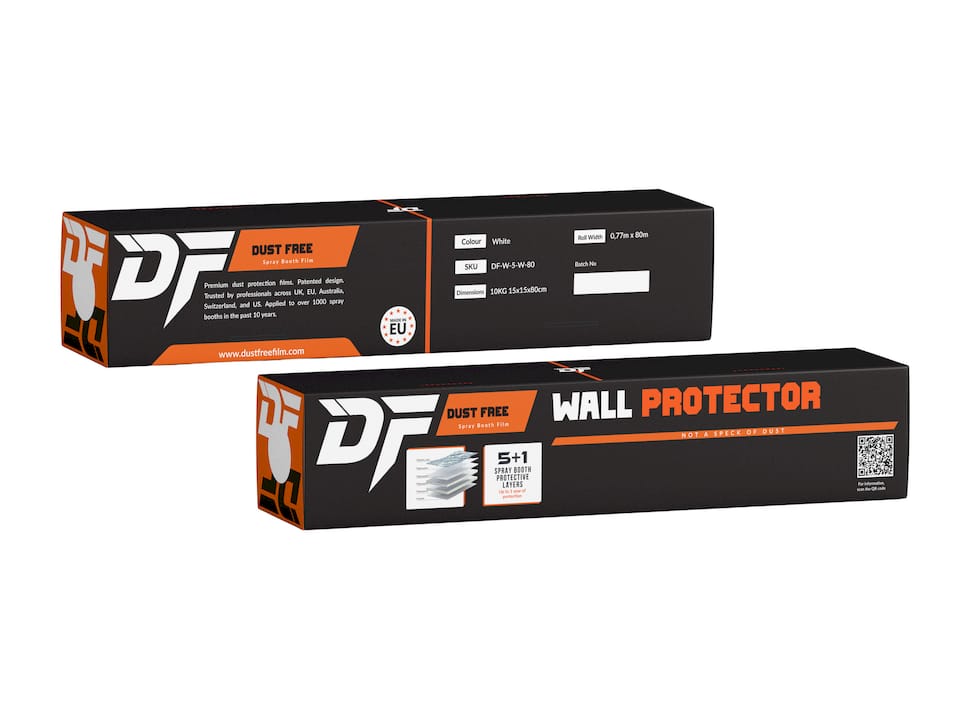
Selection steps, in order: test adhesion on a small panel section before full install; confirm the supplier’s heat-cycle guidance matches your bake profile; request the MSDS and full technical datasheet; verify dispenser availability and whether the supplier offers installation training; and ask about custom roll widths if your booth geometry is non-standard. Dustfreefilm’s film selection checklist covers each of these procurement checks in detail.
How do you install booth film correctly the first time?
Surface prep is where most failed installs begin. Before touching the film roll:
- Remove all loose overspray debris from panel surfaces using a dry brush or vacuum.
- Solvent-wipe panels where the adhesive will contact the surface. Allow full dry time before proceeding.
- Confirm booth temperature is within the manufacturer’s recommended application range. Cold panels reduce adhesive tack; hot panels cause premature bonding before you can smooth the film.
- Run a short empty bake cycle if the booth has been idle, then allow it to cool to application temperature.
Installation steps, following Dustfreefilm’s step-by-step application guide:
- Align the dispenser box at the top edge of the panel.
- Feed the film from the dispenser, peeling the backing halfway as you go rather than fully before application.
- Press the film to the panel starting from the center and smoothing outward toward the edges to push air out.
- Overlap adjacent strips by at least 2 inches, pressing the overlap firmly.
- Trim edges with a straight blade, leaving no lifted corners.
Pro Tip: Around light fixtures, use clear-rated film and cut to fit before applying. Trying to trim around a fixture after the film is down causes tears and leaves gaps where overspray enters. For high ceilings, a second technician holding the dispenser at height while the first smooths from a platform ladder cuts application time significantly and reduces bubbles.
When should you replace a layer of booth film?
Inspect film at the start of every shift. Replace a layer when you see any of these:
- Heavy, opaque overspray build-up that reduces light transmission through the film
- Visible lifted edges or corners that allow overspray infiltration behind the film
- Reduced light output at the booth ceiling, indicating CRI degradation through coated film
- Any sign of film softening, wrinkling, or adhesive bleed after a bake cycle
Log each layer removal by date, booth section, and the condition that triggered replacement. That record tells you your actual replacement cadence per booth, which feeds directly into consumable budgeting and purchasing cycles. Dustfreefilm’s dust prevention best practices recommend tracking downtime hours saved and rework incidents alongside film usage to build a full ROI picture over time.
Metrics worth tracking monthly: film layers consumed per booth, hours of deep-cleaning avoided, and rework jobs linked to booth contamination. Three months of that data makes the next procurement conversation straightforward.
What safety and compliance rules apply to booth film?
Spray booths are classified hazardous locations under NFPA 33. That classification governs everything stored, applied, or removed inside the booth, including protective film.
- Use only booth-rated film. Non-rated plastics and makeshift sheeting can ignite in the presence of overspray vapors or during a bake cycle. The fire risk is not theoretical.
- Store film per manufacturer guidance. Most rolls require storage away from direct heat, UV exposure, and high humidity. Degraded film loses adhesive performance and electrostatic properties before it ever reaches the booth.
- Control ignition sources during application and removal. Never apply or remove film while spraying is active or while ignitable vapor concentrations are present. Ventilate the booth fully before starting.
- PPE for installers. Gloves prevent skin oils from contaminating the adhesive surface. Eye protection is standard when trimming with a blade.
- Dispose of coated layers safely. Heavily overspray-coated film is a combustible waste material. Follow your facility’s hazardous waste disposal protocol, not general trash.
NFPA 33 requires that spray booth interiors be kept free of residue accumulations that could present a fire hazard. Protective film that is removed and replaced on a defined schedule satisfies this requirement more reliably than periodic manual cleaning. PaintBoothDoctors’ maintenance guide outlines the daily, weekly, and monthly tasks that keep booths compliant and safe.
What mistakes do facility managers make with booth film?
Using non-rated film. The fix: remove it immediately using the correct solvent for any adhesive residue, then re-prep the surface before applying booth-rated film. Do not reapply over residue.
Poor overlap. Gaps between strips are where overspray gets behind the film and onto panels. Fix: pull the existing film, clean the panel, and re-apply with a minimum 2-inch overlap pressed firmly at the seam.
Leaving layers past their cycle. Baked-on adhesive residue is the result. Fix: warm the surface with a heat gun, peel slowly from the bottom up, then clean with the manufacturer’s recommended solvent before re-applying.
Skipping surface prep. Film applied over dust or residue lifts within days. Fix: strip, clean, dry, and re-apply from scratch.
Audit checklist for supervisors:
- Confirm all film in use carries a booth-rated designation.
- Check overlap at every seam, minimum 2 inches.
- Verify no lifted edges or corners on any panel.
- Confirm film over light fixtures is clear-rated.
- Check the layer-removal log for cadence compliance.
- Confirm spent layers are disposed of per the facility’s hazardous waste protocol.
For residue that won’t release with standard solvent, contact your film supplier’s technical support before attempting abrasive removal. Abrasive methods on booth panels can damage the surface and create adhesion problems for future film applications. Dustfreefilm’s practical application examples show correct configurations for different booth geometries and are a useful reference when troubleshooting unusual layouts.
Why Dustfreefilm is the recommended solution for facility managers
Dustfreefilm’s product line addresses every procurement criterion covered in this article:
- Multi-layer electrostatic design captures fine overspray particles and keeps the airstream clean between coats.
- Heat-resistant film rated for standard automotive and industrial bake cycles, confirmed in the technical datasheet.
- Patented dispenser system for bubble-free, tape-free installation that any trained technician can execute consistently.
- Clear-layer options for light fixtures and windows, preserving CRI for accurate color matching.
- Custom roll widths and bulk ordering for production-scale operations with non-standard booth geometries.
The ROI case is direct: less deep-cleaning downtime, fewer rework jobs, and longer life for booth panels and lighting. When requesting a quote, ask for a trial kit for one booth, a dispenser demo, and the full MSDS and technical datasheet. That gives you everything needed for a procurement sign-off and a compliant safety file.
Pro Tip: Pilot the film in your highest-throughput booth first. That’s where the ROI shows up fastest and where you’ll get the most useful data on replacement cadence before scaling to the full facility.
Request a quote or trial kit directly from Dustfreefilm to get started.
What the multi-layer film approach gets right that most facilities miss
Most facilities treat booth contamination as a cleaning problem. It isn’t. It’s an airflow and surface-protection problem that cleaning can only partially address after the fact. The real leverage is upstream: seal the surfaces before overspray lands, capture particles at the wall rather than letting them recirculate, and replace the contaminated layer in minutes rather than scrubbing for hours.
The facilities that get the most from multi-layer electrostatic film are the ones that treat it as a system, not a product. That means matching film spec to bake cycle, using the correct dispenser, training staff on peel technique, and logging replacement cadence. When all four are in place, the film stops being a consumable cost and starts functioning as a quality control mechanism. That shift in framing is what separates shops with consistent first-pass approval rates from the ones perpetually chasing contamination.
Dustfreefilm makes it easy to pilot and scale
Dustfreefilm has supplied booth-rated multi-layer electrostatic protective films to auto body shops, industrial paint operations, and manufacturing facilities since 2012. The patented dispenser system means your team can install correctly from day one, without a specialist on-site.
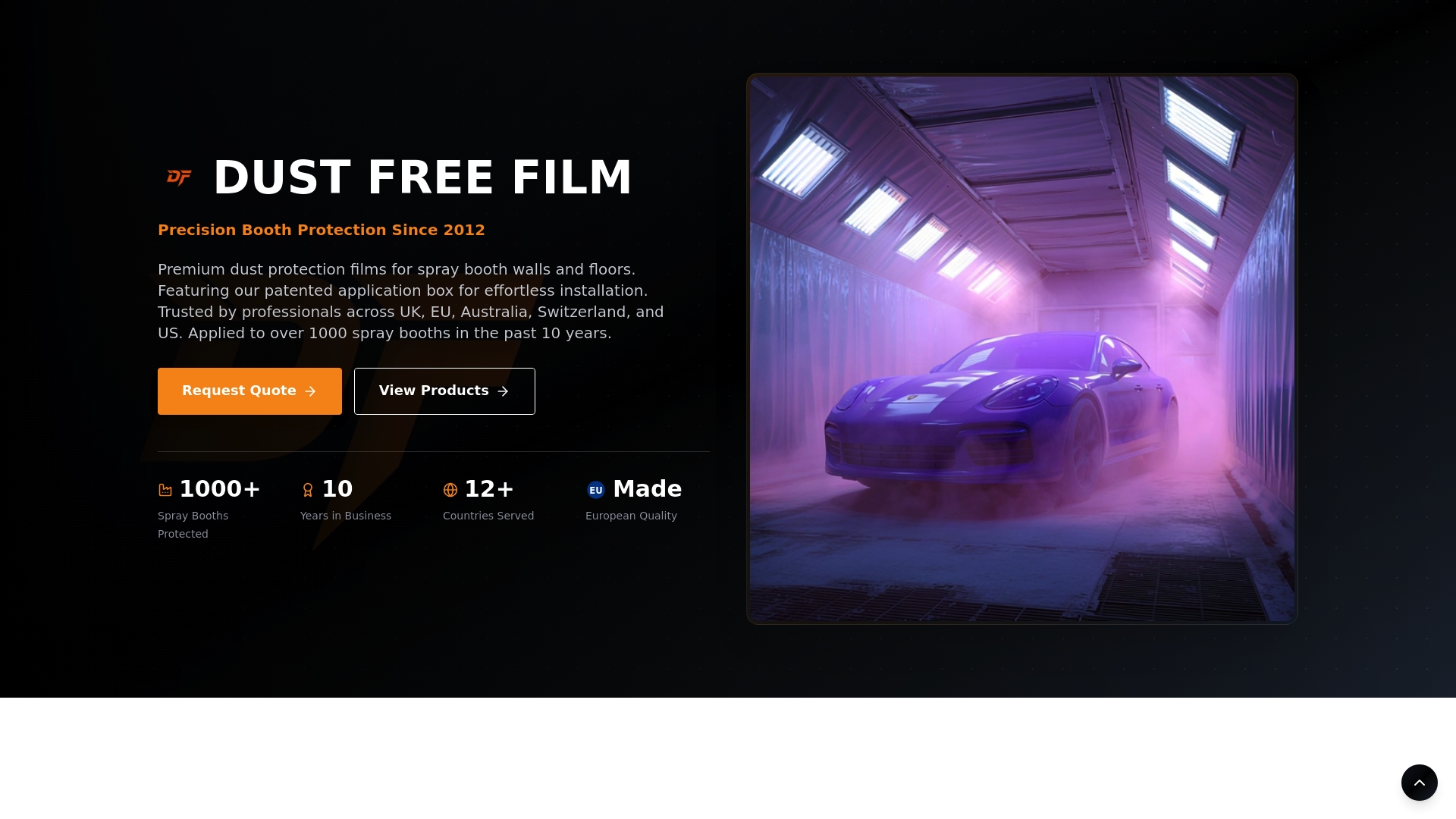
For production-scale buyers, bulk pricing and custom roll widths are available. For facilities evaluating the product for the first time, a single-booth trial kit with a dispenser lets you measure the impact on cleaning time and rework rate before committing to a full facility order. Coating quality and additive compatibility also matter at scale; ASTRA CHEMICAL’s coating additives are worth reviewing alongside your film selection if you’re optimizing the full coating process.
Get a quote or request a trial kit and ask for the technical datasheet and MSDS at the same time.
Sources
- Paint Booth Maintenance: Daily, Weekly & Monthly Tasks | PaintBoothDoctors