

TL;DR:
- Neglecting booth wall protection leads to overspray buildup, contamination, and costly rework. Regular inspection and maintenance of filters, walls, and airflow are essential for consistent, high-quality finishes. Using the right peelable film systems and adhering to structured routines improves booth performance, reduces waste, and boosts operational efficiency.
One batch of parts returns from the paint line covered in texture defects. Your team spends hours repainting, your customer is unhappy, and you’re staring at a preventable loss. Neglected booth wall protection is behind more rework incidents than most facility managers realize. Preventive maintenance for paint spray booths requires regular inspection and servicing of filters, booth pressure monitoring, and interior wall checks. This guide walks you through every step of maintaining booth wall protection so you get consistent, flawless finishes job after job.
Table of Contents
- Understanding booth wall protection and its challenges
- Essential tools and materials for wall protection upkeep
- Step-by-step guide to maintaining booth wall protection
- Troubleshooting and common mistakes in booth wall protection maintenance
- What to expect: Results and ROI from consistent maintenance
- Why smart maintenance beats expensive repairs every time
- Upgrade your booth wall protection with Dust Free Film
- Frequently asked questions
Key Takeaways
| Point | Details |
|---|---|
| Routine inspections matter | Regularly checking booth walls, filters, and airflow prevents costly defects. |
| Proper supplies simplify maintenance | Having the right tools and wall films on hand keeps upkeep quick and effective. |
| Proactive care saves money | Investing in preventive maintenance reduces downtime and extends booth life. |
| Documentation is key | Keeping maintenance records helps troubleshoot issues and ensures regulatory compliance. |
Understanding booth wall protection and its challenges
Booth wall protection is the system that shields your spray booth’s interior surfaces from overspray, airborne dust, and chemical contamination. Without it, raw booth walls accumulate paint deposits that become nearly impossible to clean without damaging the surface. Over time, that buildup flakes, circulates as debris, and lands directly on your fresh coatings.
The threats are predictable if you know where to look. Paint buildup on unprotected walls gets reactivated by solvent vapors during subsequent jobs, releasing particles into the air exactly when you need a clean environment most. Improper cleaning methods, like using harsh solvents that soften cured overspray instead of lifting it, spread contamination instead of removing it. And clogged filters don’t just hurt airflow efficiency. They force airflow to drag particles back across your newly coated surfaces.
A solid preventive approach, as outlined in booth maintenance best practices, includes inspecting for paint buildup, cleaning overspray deposits, checking intake and exhaust filters for clogging, and measuring airflow balance and booth pressure. These aren’t optional extras. They’re the foundation of a functional spray environment.
When choosing booth wall protectors, understanding the root threats helps you match the right film or barrier system to your actual conditions. Here’s what consistently undermines booth wall protection across facilities:
- Paint buildup and reactivation: Dried overspray on bare walls becomes a contamination source with every new job.
- Airflow imbalances: Pressure issues push overspray into corners and against walls at higher velocities, accelerating buildup.
- Improper cleaning techniques: Abrasive scrubbing or the wrong chemicals damage protective films and booth surfaces.
- Film wear in high-traffic areas: Door frames, corners, and frequently touched panels wear faster than open wall sections.
- Delayed maintenance cycles: Waiting too long between cleanings lets deposits harden, making removal far more labor intensive.
“The quality of your paint finish is directly linked to the cleanliness of your booth environment. Walls that collect overspray become part of your contamination problem.”
Essential tools and materials for wall protection upkeep
Knowing the challenges, you’ll need the right materials and tools to tackle maintenance effectively. Running into a maintenance session without the correct supplies wastes time and risks making things worse. Facility managers who build a dedicated maintenance kit for their booth wall systems report faster turnaround and fewer errors.
Cleaning tools and safety supplies you need:
- Plastic scrapers (avoid metal on film surfaces)
- Lint-free microfiber cloths
- Mild, booth-approved solvent or degreaser
- Soft-bristle brushes for corner details
- Respirator rated for solvent vapors
- Nitrile gloves and safety glasses
- Booth lighting or inspection flashlight for detailed surface checks
Wall protection films vary widely in their composition and intended applications. Filters and airflow issues can cause overspray settling and defects, which means the film you choose must be compatible with your booth’s airflow pattern and heat levels. The right film selection matters as much as the cleaning routine.
| Film type | Best for | Key benefit | Replacement cycle |
|---|---|---|---|
| Multi-layer electrostatic film | Automotive refinishing booths | Peelable layers, static-free surface | Per layer, as needed |
| Single-layer adhesive film | Light industrial painting | Easy application, low cost | Weekly to monthly |
| Heat-resistant heavy-duty film | High-temperature industrial booths | Withstands curing temperatures | Monthly to quarterly |
| Clear non-adhesive film | Low-volume shops | Fast install, no residue | As soiled |
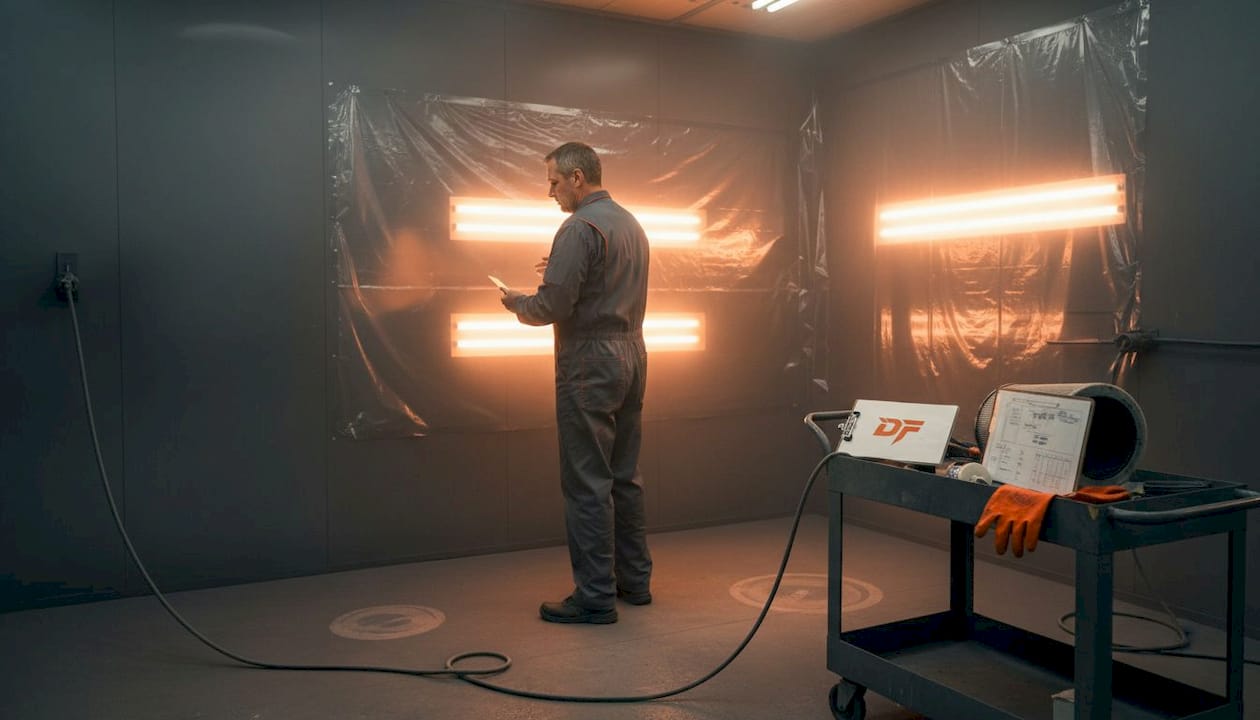
Understanding using wall film for dust control gives you a sharper view of how different films perform under real spray conditions. Your choice affects not just protection level but how quickly your team can refresh the booth between jobs.
You can review the full range of spray booth protection products to match your specific volume, temperature requirements, and budget. Bulk purchasing options make high-volume facilities far more cost-efficient per square meter of coverage.
Pro Tip: Schedule your supply inventory checks on the same day as your filter replacements. Both tasks involve the same booth access, and combining them saves your team from running separate maintenance windows.
Step-by-step guide to maintaining booth wall protection
With your tools gathered, follow these key steps, simplified into daily, weekly, and monthly actions to streamline your workflow. Structured intervals prevent the “reactive scramble” that costs shops hours of downtime when a job reveals contamination problems mid-cycle.
Daily tasks:
- Visually inspect wall film surfaces for visible overspray buildup, tears, or lifting edges before the first job of the day.
- Wipe down door frames and high-contact surfaces with a lint-free cloth lightly dampened with booth-safe solvent.
- Check the booth floor for accumulated dust or debris that could become airborne during spraying.
- Confirm the air pressure gauge reads within your booth’s specified operating range.
Weekly tasks:
- Remove and inspect all intake and exhaust filters. Replace any that show more than 25% blockage.
- Monitor booth pressure with calibrated gauges, comparing readings against your baseline measurements.
- Peel worn film layers (for multi-layer systems) from high-buildup zones such as corners and upper wall sections.
- Clean exposed wall surfaces using plastic scrapers for heavy deposits, followed by solvent wipe-down.
- Apply fresh film sections where layers have been removed or where the existing protection shows significant wear.
- Review spray booth cleaning best practices and compare your process against proven standards.
Monthly tasks:
- Perform a full booth inspection including ceiling panels, light fixtures, and door seals.
- Test airflow velocity at multiple points across the booth cross-section to identify dead spots.
- Replace all wall film if you run multi-layer film and the base layer shows any adhesive lifting.
- Review maintenance logs to identify repeat problem areas that may need engineering solutions rather than more frequent cleaning.
- Use an industrial equipment safety checklist to confirm your booth still meets applicable safety standards.
Comprehensive guidance on preventing contamination in paint booths shows how maintenance intervals connect directly to contamination rates. Facilities that skip monthly deep inspections see contamination incidents spike significantly in the following quarter.
For a broader view of how wall protection fits into overall booth hygiene, ensuring cleaner, safer spray booths covers the full system approach that leading shops use.
Pro Tip: Log every maintenance action with time, date, the specific area serviced, and findings. This record serves as proof of compliance during inspections and as a diagnostic tool when finish defects appear. Pattern recognition from good logs has saved facilities from costly repeat problems.
| Maintenance type | Frequency | Average time | Skills required |
|---|---|---|---|
| DIY daily checks | Daily | 15 to 20 minutes | Basic (any trained staff) |
| DIY weekly film and filter | Weekly | 60 to 90 minutes | Intermediate (trained technician) |
| DIY monthly deep inspection | Monthly | 2 to 4 hours | Advanced (experienced staff) |
| Professional service | Quarterly or as needed | 4 to 8 hours | Certified booth technician |
Troubleshooting and common mistakes in booth wall protection maintenance
Consistent checks will minimize errors, but real-world operations can still run into problems. Here’s how to fix them fast.
Knowing what to look for is half the battle. The most common signs of deteriorating booth wall protection include visible paint buildup at wall joints and corners, patches of dust that appear on finished surfaces shortly after spraying, airflow that feels weaker at the exhaust side than normal, and film edges that have lifted and started curling away from the wall surface.
The mistakes that cause these problems are nearly always avoidable:
- Skipping filter checks between busy production runs: Airflow issues from clogged filters directly cause overspray to settle on walls and work surfaces rather than being captured.
- Using the wrong cleaning chemicals: Harsh paint strippers or aggressive ketone-based solvents can soften and dissolve protective films, destroying the protection you’re trying to maintain.
- Cleaning without proper ventilation: Solvent vapors during cleaning are just as hazardous as during spraying. Always run booth fans in exhaust mode when cleaning.
- Ignoring corner buildup: Corners and recesses accumulate overspray at twice the rate of open flat wall sections. Skipping them invites contamination from these concentrated deposit zones.
- Reusing old film sections: Peeling back a film layer and trying to reapply it elsewhere creates uneven adhesion and air pockets that trap dust.
For more detailed guidance on resolving specific film issues, wall protector film troubleshooting covers the most common installation and performance problems by film type.
“Every skip in your maintenance log is a deposit in your contamination account. The balance always comes due on your most important job.”
Quick fixes when you spot problems mid-operation: if a film edge is lifting, press it back with a clean gloved hand and apply a strip of booth-safe tape to the edge as a temporary hold until you can replace the section. If you see dust contamination on a freshly sprayed surface, stop, clean and inspect the booth fully before continuing, because the source of that dust is still active.
What to expect: Results and ROI from consistent maintenance
Now that you know the how, let’s look at why it’s worth the investment to stay on top of booth wall care.
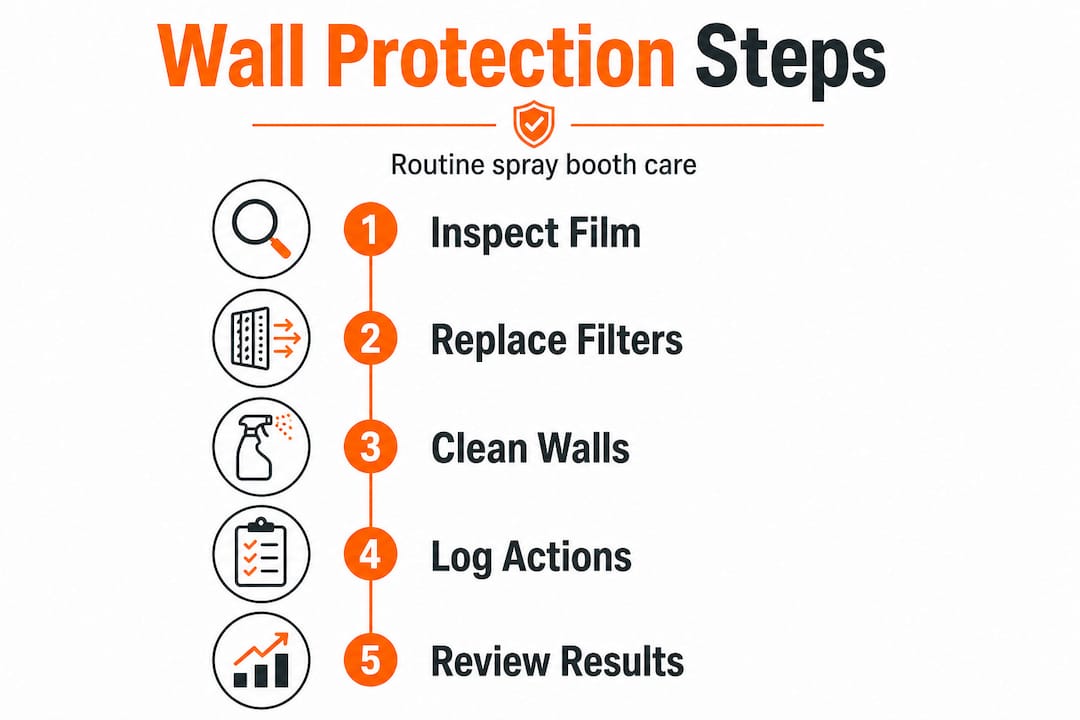
Facilities that commit to structured booth wall protection maintenance consistently report measurable improvements across several key performance areas. The payoff isn’t abstract. It shows up in your rework rate, your material consumption, and your throughput.
Quantifiable benefits of consistent wall protection maintenance:
- Fewer repaints per month due to contamination-related defects
- Reduced solvent and paint material waste from quality failures
- Lower labor costs tied to rework and booth cleaning emergencies
- Extended service life of booth walls and interior components
- Improved compliance record during regulatory audits
- Faster turnaround times because the booth is always ready to operate at spec
Inspecting and servicing filters regularly and monitoring booth pressure are not just maintenance tasks. They’re direct investments in finish quality and equipment longevity.
A useful reference point for comparing booth protection approaches is the comparison of wall vs floor protectors, which breaks down where contamination risk is highest in a typical spray environment and how to allocate your protection budget accordingly.
ROI callout: A facility running 20 paint jobs per week with a 10% rework rate spends significant labor and material costs on defect correction. Cutting that rework rate in half through consistent maintenance translates directly to recovered revenue, faster customer delivery, and a reputation for quality that drives repeat business. The cost of proper wall film and weekly maintenance time is a fraction of what a single bad rework cycle costs in both materials and customer relationships.
Why smart maintenance beats expensive repairs every time
Here’s a perspective that many facility managers only arrive at after a painful experience: reactive booth maintenance is essentially paying a penalty fee every time. You don’t notice the cost because it’s distributed across labor hours, wasted coatings, and delayed deliveries, rather than arriving as a single invoice. But add it up at the end of the quarter, and the number is rarely comfortable.
We’ve seen shops where a filter check was repeatedly pushed back during a busy production stretch. Three weeks later, a high-value industrial job came back with fish-eye defects across the entire panel run. The root cause traced directly to a blocked exhaust filter that had been forcing recirculation of contaminated air. The emergency professional cleaning, the repaint materials, the labor, and the customer discount to retain the account cost several times more than a season’s worth of consistent maintenance would have.
The real lesson isn’t just about saving money. It’s about control. Facilities that run proactive maintenance schedules rarely face production surprises. Their booth performance is predictable because they’ve taken out the main variables: contaminated walls, compromised airflow, and unpredictable filter performance.
Ensuring dust-free painting isn’t a luxury for high-end shops. It’s the baseline standard that separates facilities that grow from those that constantly fight fires. The shops we work with that have made multi-layer wall film and structured maintenance routines standard practice report not just fewer defects, but measurably higher staff confidence and lower stress during complex jobs. That’s not a small thing. A team that trusts their environment performs better.
Upgrade your booth wall protection with Dust Free Film
Consistent maintenance becomes significantly faster and more effective when your wall protection system is designed for real-world spray environments. Dust Free Film’s multi-layer electrostatic booth wall protectors give you peelable protection that refreshes in minutes, not hours. Our patented dispenser system means installation is quick, bubble-free, and repeatable, so your team spends time painting, not wrestling with film application.
If you’re ready to simplify your maintenance routine and raise your finish quality standard, explore Dust Free Film solutions built specifically for automotive refinishing and industrial painting facilities. Our products are heat-resistant, static-free, and manufactured to European quality standards so they perform in demanding, high-volume environments. Whether you need a single facility solution or bulk supply for a multi-site operation, you can get a quote tailored to your setup and production volume.
Frequently asked questions
How often should booth wall protection be inspected?
Wall protection should be inspected at least weekly, but high-volume facilities may require daily checks. A preventive maintenance approach includes checking for paint buildup, filter clogging, and airflow balance every time you assess booth readiness.
What are the signs of deteriorating booth wall protection?
Visible paint buildup, increased dust accumulation, or finish defects signal wall protection failure. Inspecting booth interiors for overspray deposits and checking filter condition are the fastest ways to diagnose deterioration before it affects your output.
How does filter maintenance impact booth wall protection?
Clogged or dirty filters reduce airflow, leading to more overspray buildup on booth walls. Filters and airflow issues are directly linked to overspray settling patterns, meaning filter neglect is wall protection neglect.
Can shop staff perform all wall protection maintenance themselves?
Most routine maintenance, including film inspection, cleaning, layer peeling, and filter replacement, can be handled by trained in-house staff. Severe structural damage to booth walls or complex airflow problems may require a certified booth technician.
What’s the biggest mistake facilities make with booth wall protection?
Skipping routine filter checks is the most common and costly mistake, because clogged filters cause overspray to settle on walls and finished surfaces rather than being properly exhausted. This single oversight drives the majority of contamination-related rework events in busy facilities.