
For marine spray booths, Dustfreefilm’s multi-layer electrostatic peelable wall film with patented dispenser is the clearest answer. It stops overspray from bonding to booth surfaces, holds up against salt air and high humidity, and cuts post-job cleanup to a fraction of what scrubbing or repainting takes. If you manage a marine finishing operation and need a solution you can install fast and replace without downtime, request a sample or quote from Dustfreefilm before your next production cycle.
Three reasons this product category earns its place in marine booths:
- Overspray containment: Peelable wall film catches antifouling coatings, gelcoat dust, and primer overspray before they bond to booth panels.
- Salt and humidity resistance: Marine environments accelerate corrosion on unprotected surfaces; a properly rated film creates a barrier between aggressive chemistry and your booth walls.
- Cleanup speed: Peel the film, roll it up, done. No solvent wiping, no scrubbing, no booth downtime waiting for roll-on coatings to dry.
Compliance context matters here. NFPA-33 governs spray application of flammable and combustible materials, and OSHA’s respiratory guidance applies directly to marine coatings work where isocyanates and antifouling compounds are in use. Any wall protection system you choose must not interfere with booth ventilation or fire suppression access.
Pro Tip: Before ordering bulk film, request a spec sheet confirming heat resistance, solvent resistance, and adhesive transfer rating. A film that checks all three boxes for marine coatings will outlast a generic automotive product by months in a salt-air facility.
Key Takeaways
Multi-layer electrostatic peelable wall film with a patented dispenser is the most practical and durable solution for marine spray booth wall protection across light, medium, and heavy finishing workloads.
| Point | Details |
|---|---|
| Prioritize marine-grade specs | Confirm solvent resistance, 180–200°F heat rating, and zero adhesive transfer before ordering. |
| Match film thickness to workload | Heavy gelcoat sanding requires thicker multi-layer film; light finishing can use thinner single-layer options. |
| Use a dispenser for every install | Patented dispenser boxes cut application to one person and eliminate bubbles that manual rolling causes. |
| Plan replacement cadence by use | Heavy marine use means replacement every 2–3 months; light use can extend to several months. |
| Dustfreefilm for marine booths | Custom widths, bulk pricing, and marine-rated specs available; request a sample before bulk purchase. |
Table of Contents
- What specs matter most for marine booth wall protection?
- Which types of booth wall protection fit marine work?
- How do you apply and remove marine booth wall protection?
- Marine-specific risks that change your selection priorities
- What does marine booth wall protection actually cost?
- How to buy the right film: sizing, dispensers, and ordering
- Proof points procurement teams should request
- What field experience reveals about installation mistakes
- Dustfreefilm wall protection for marine booths
- Sources
What specs matter most for marine booth wall protection?
Marine finishing puts wall protection through conditions most automotive films were never designed for. Here is what to evaluate before you buy.
Essential specs to verify:
- Material construction: Multi-layer co-extruded films outperform single-layer options for puncture resistance and grit retention during heavy gelcoat sanding.
- Electrostatic / static-dissipative finish: Reduces dust cling on the film surface, keeping walls cleaner between replacements.
- Adhesive type: Self-adhering or dispenser-applied adhesives designed for metal surfaces; must leave zero transfer on removal.
- Thickness: Measured in mils; thicker films (3–6 mil) handle grinding grit better than thin films (1–2 mil) used in light-duty automotive work.
- Heat resistance: Cure ovens in marine shops can reach elevated temperatures; target films rated to at least 180–200°F.
- Chemical/solvent resistance: High-solids antifouling coatings are aggressive; the film must not soften, blister, or delaminate on contact.
- UV stability: Relevant for booths with high-intensity inspection lighting or any outdoor-adjacent finishing areas.
- Puncture resistance: Large vessel components with sharp edges will test film integrity during maneuvering.
PFS Spray Booths engineers marine finishing environments with ETL and NFPA-33-aware features, which means the wall protection you choose must be compatible with corrosion-resistant booth construction and controlled ventilation systems.
For booth wall protector selection guidance, matching these specs to your specific coating chemistry is the starting point, not an afterthought.
Which types of booth wall protection fit marine work?
Not every product category suits every marine task. Here is how the main types stack up.
Peelable single-use films are the workhorse option. Apply, use, peel, replace. They work well for light to medium overspray and are the fastest to change out between jobs.
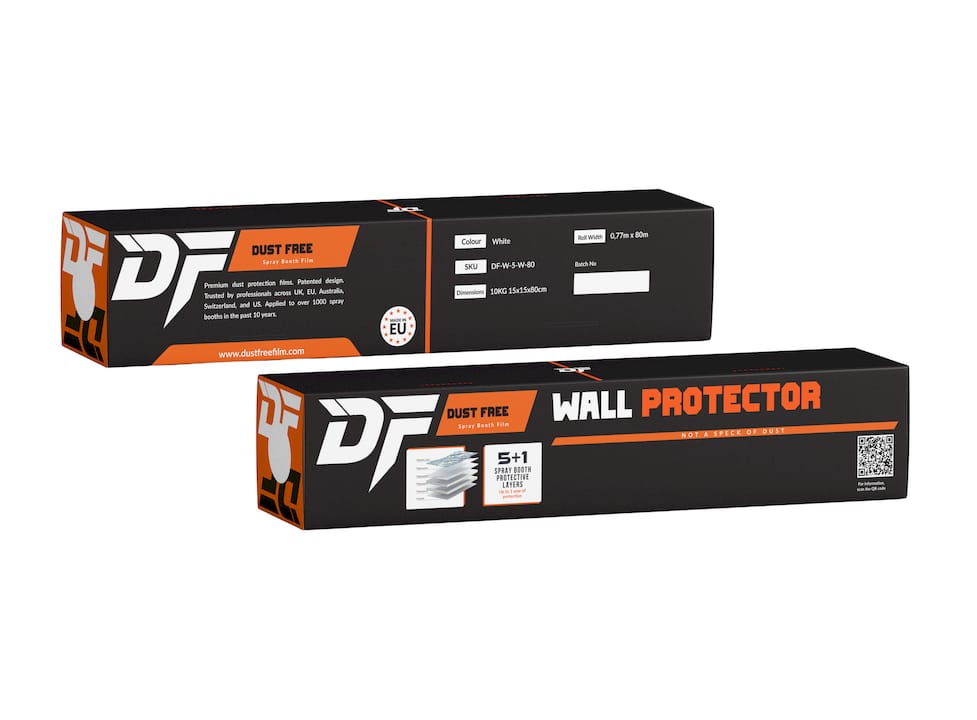
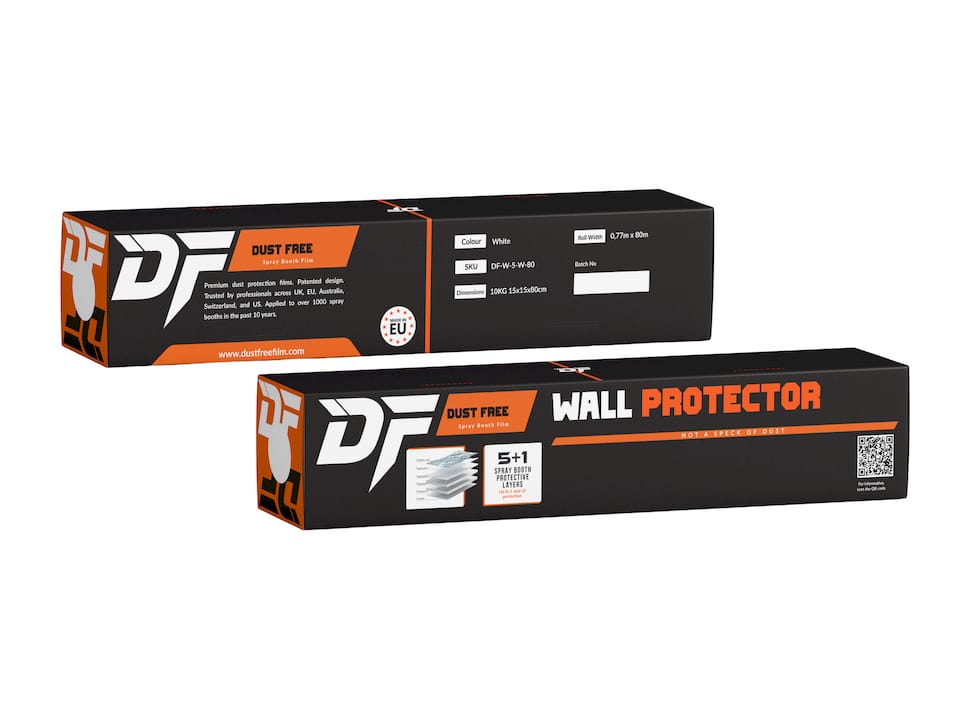
Multi-layer electrostatic films are the right call for heavy sanding environments. The layered construction resists grit penetration, and the electrostatic finish actively reduces dust adhesion to the film surface. For marine shops doing regular gelcoat work, this is the category to prioritize.
Adhesive liners bond more firmly to the wall and suit situations where the film needs to stay in place through multiple aggressive coating cycles without shifting. Removal requires more care to avoid adhesive transfer.
Reusable roll-on peelable coatings are liquid-applied and peeled off as a sheet. They conform to irregular surfaces but take time to apply and cure, making them a poor fit for high-turnover marine operations.
Clear vs. opaque white film: Opaque white film reflects booth lighting back into the workspace, which improves inspection visibility on dark hull surfaces. For marine finishing where color accuracy and defect detection matter, white film is the practical choice.
Pro Tip: Never use light-box or glass film on metal booth walls. Light-box film adhesives are formulated for glass surfaces and will leave residue on metal panels that is difficult to remove without solvents. Use wall-specific films designed for metal adhesion and clean removal.
How do you apply and remove marine booth wall protection?
The recommended workflow: clean the surface, apply film with a dispenser for bubble-free coverage, inspect seams, then peel cleanly at the end of the job cycle.
Preparation:
- Clear the booth of all parts, equipment, and debris.
- Wipe walls with a clean, dry cloth to remove loose dust and sanding residue.
- Inspect for corrosion spots, loose fasteners, or damaged panels; address before applying film.
- Check temperature (ideally 60–80°F) and humidity (below 70% RH) per WERCS marine booth service guidance.
- Put on appropriate PPE: nitrile gloves, safety glasses, and respiratory protection per OSHA guidelines for the coatings in use.
- Confirm ventilation is operational before starting.
Application:
- Load the film roll into the patented dispenser box.
- Align the dispenser at the top corner of the wall panel.
- Draw the film down in a single pass, letting the dispenser tension prevent bubbles.
- Overlap seams by 1–2 inches; press seams flat by hand.
- Trim around light fixtures, ventilation grilles, and door frames with a utility knife.
- Do a final visual pass for lifted edges or air pockets before starting coating work.
Removal:
- Peel film from a corner at a low angle (roughly 30–45 degrees) to minimize adhesive stress on the panel.
- Roll the used film as you peel to contain overspray and dust.
- Inspect the wall surface for adhesive residue; wipe with a manufacturer-approved cleaner if needed.
- Bag contaminated film separately. Antifouling coatings and isocyanate-containing primers may classify the used film as hazardous waste under EPA guidelines; check your local requirements before disposal.
Safety note: Marine coatings, particularly antifouling paints and two-part polyurethanes, require supplied-air or half-face respirators with organic vapor cartridges. Ventilation must be running at full capacity during application and curing. Follow OSHA 1910.94 for spray finishing operations.
Pro Tip: A patented dispenser box pays for itself in the first installation. It eliminates the second person typically needed to hold the roll, cuts application time per panel significantly, and produces a bubble-free result that manual rolling rarely matches.
For a detailed surface prep process before film application, Dustfreefilm’s professional guide covers the steps that most teams skip and later regret.
Marine-specific risks that change your selection priorities
Marine finishing is not automotive work with a boat in the room. The environmental and chemical differences are significant enough to change which products you specify.
- Salt corrosion: Coastal facilities see accelerated corrosion on booth hardware, dispenser components, and any unprotected metal. Choose films with corrosion-resistant dispenser hardware and inspect booth fixtures more frequently. WERCS recommends pre-season inspection and marine-grade service intervals specifically because salt-air exposure degrades booth components faster than inland automotive environments.
- High humidity: Marine shops near water often run at 70–90% RH without active dehumidification. High humidity affects adhesive performance and can cause film edges to lift prematurely. Apply film only when RH is below 70% and the surface is dry.
- Heavy gelcoat sanding dust: Gelcoat grit is abrasive and heavy. Single-layer films tear during removal when loaded with sanding dust. Multi-layer electrostatic films handle this load significantly better.
- High-solids antifouling coatings: These are chemically aggressive and can soften adhesives not rated for solvent exposure. Verify solvent resistance before specifying any film for antifouling work.
- Irregular part geometry: Large hulls and irregular vessel shapes disrupt airflow patterns inside the booth. Spray Systems notes that clean booth walls help maintain uniform airflow by preventing particulate buildup that would otherwise create turbulence around large marine components, directly affecting finish quality.
Ventilation and filtration requirements for toxic antifouling coatings go beyond standard automotive booth specs. NFPA-33 and OSHA respiratory guidance both apply, and USI Italia’s ship painting booth configurations reflect how seriously marine finishing professionals treat temperature, humidity, and ventilation control as non-negotiable variables.
What does marine booth wall protection actually cost?
Lifespan in a marine environment varies depending on usage intensity and coating conditions, potentially from a few months in high-volume gelcoat sanding shops to up to a year in lighter-use finishing facilities. The variables are coating chemistry, sanding frequency, and how carefully film is applied and removed.
Cost drivers to account for:
- Material price per roll (width, thickness, and layer count all affect unit cost)
- Dispenser amortization (a one-time purchase that reduces labor cost per installation)
- Labor time for application and removal
- Hazardous waste disposal for film contaminated with antifouling or isocyanate coatings
- Lighting and inspection benefits from opaque white film (fewer rework cycles)
Modular booth configurations affect how much wall area you need to cover per project, which directly drives material consumption and replacement cadence.
For guidance on material durability in protective films, the thickness and layer count you choose at purchase directly determines where your operation lands on that cadence table.
How to buy the right film: sizing, dispensers, and ordering
Measuring your booth wall area:
- Measure height and width of each wall panel separately; booths with high ceilings or segmented walls often need custom-width rolls rather than standard 48-inch or 60-inch widths.
- Add 10% to your total square footage for seam overlaps and trim waste.
- Custom booth configurations for large vessels sometimes require film widths beyond standard catalog sizes; request custom widths when your ceiling height exceeds 10 feet.
Dispenser vs. manual application:
A patented dispenser box is worth the investment for any booth running more than one job per week. It applies film in a single pass, eliminates bubbles without a second operator, and pays back in labor savings within the first few installations. Manual application works for occasional use or very small booths, but the quality and speed gap is real.
Ordering checklist:
- Measure all wall panels and calculate total square footage.
- Request a sample roll before committing to bulk quantity.
- Confirm specs in writing: thickness in mils, solvent resistance rating, heat resistance, and adhesive transfer rating.
- Ask about lead times for custom widths; standard sizes typically ship faster.
- Inquire about bulk pricing tiers and whether a dispenser is included or sold separately.
- Verify the film is compatible with your specific coating chemistry before the first full installation.
Proof points procurement teams should request
Before signing a purchase order for wall protection film, ask the supplier for these items:
- Product data sheet confirming thickness, heat resistance, solvent resistance, and adhesive transfer rating
- Installation video demonstrating the patented dispenser in use
- Dispenser description including dimensions, roll compatibility, and maintenance requirements
- NFPA-33 and OSHA references showing the product does not interfere with fire suppression or ventilation compliance
- Case outcome data showing cleanup time reduction or maintenance savings from a comparable marine or industrial installation
Dustfreefilm’s multi-layer electrostatic wall film, applied with the patented dispenser, has helped marine finishing facilities reduce booth turnaround time by eliminating the scrubbing and solvent-wiping cycles that follow unprotected overspray. The dispenser makes a two-person job a one-person job, and the clean-peel adhesive leaves panels ready for the next film application without surface prep between cycles.
Pro Tip: Ask for a case study from a marine or shipyard customer specifically. Automotive case studies do not reflect the gelcoat dust loads, antifouling chemistry, or humidity levels your booth actually faces.
For product data sheets and ordering details, the Dustfreefilm product catalog covers wall protection options, dispenser systems, and custom configuration requests.
What field experience reveals about installation mistakes
The three problems that show up most often in marine booth film installations are not product failures. They are application errors.
Bubbling almost always traces back to applying film over a surface that was not fully dry or had residual dust. A quick wipe-down and a five-minute wait after cleaning eliminates most of it. The dispenser helps too, but it cannot compensate for a wet or dirty wall.
Adhesive residue happens when the wrong film type is used (light-box film on metal walls is the most common culprit) or when film is left in place too long under high-solvent conditions. Use wall-specific film rated for metal adhesion, and replace on schedule rather than waiting until the film is visibly degraded.
Tearing during removal in heavy gelcoat environments is a sign the film is too thin for the grit load. Moving to a thicker multi-layer electrostatic film solves it. Peeling at a low angle and rolling as you go also reduces tearing significantly.
For large orders, Dustfreefilm provides application support and training guidance to help facility teams get installation right from the first roll.
Dustfreefilm wall protection for marine booths
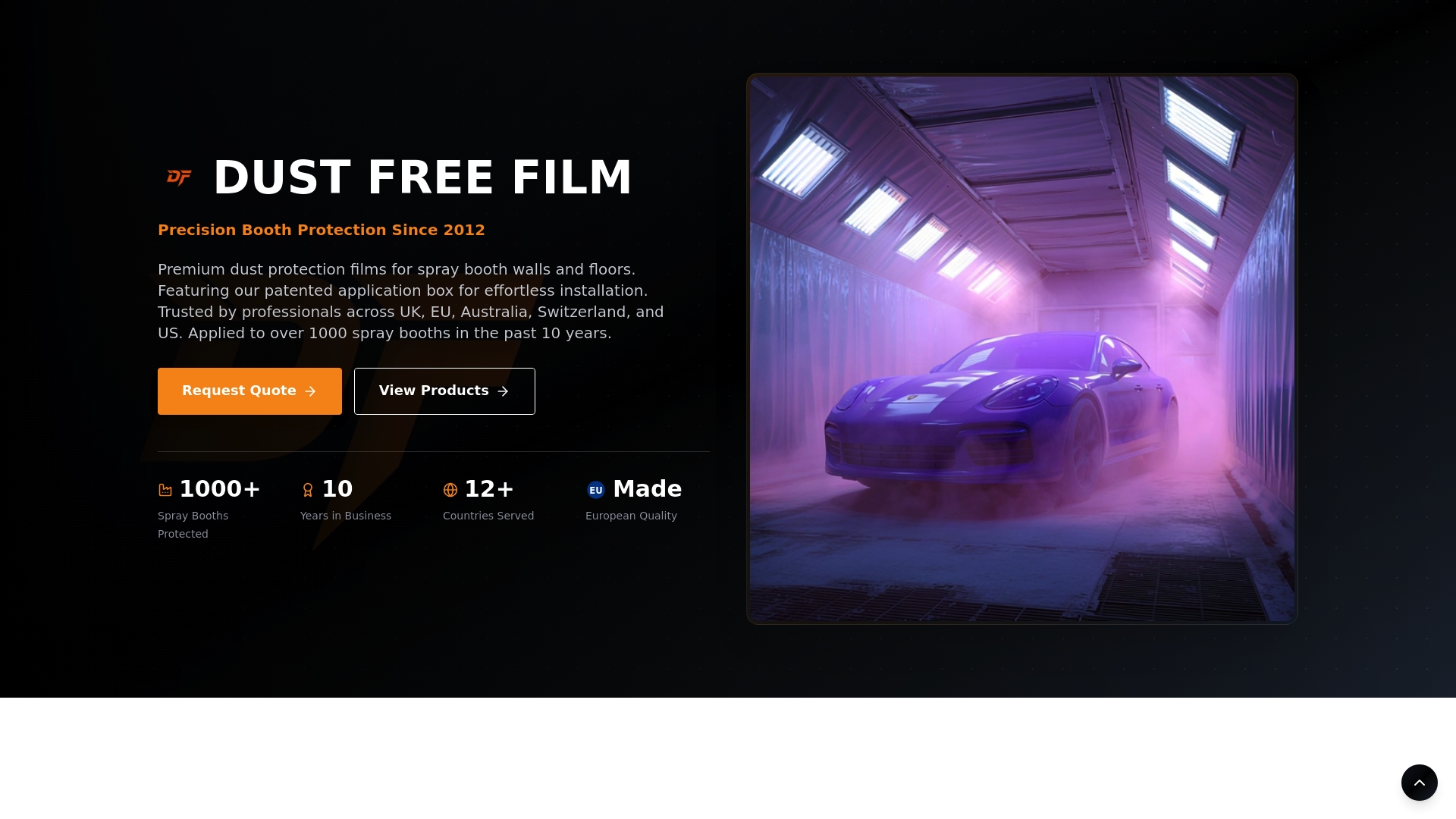
Marine finishing facilities deal with conditions that generic booth film was not built for. Dustfreefilm’s multi-layer electrostatic wall protectors are manufactured to handle salt-air exposure, high-solids antifouling coatings, and heavy sanding grit without adhesive transfer or premature failure. The patented dispenser cuts installation to a one-person task and delivers bubble-free coverage on the first pass, every time.
Custom widths are available for high-ceiling booths and segmented wall configurations. Bulk pricing applies to large orders, and sample rolls are available before you commit. Request a quote or sample from Dustfreefilm’s wall protection page and ask about lead times for your booth dimensions.
Sources
- Spray Systems — Marine & Yacht
- Marine Paint Booth Service | WERCS Inc
- PFS Spray Booths — Marine & Yacht Paint Booths
- USI Italia — Ship painting booths
- Masterflo — Marine paint spray booths