
The fastest way to reduce wall repainting in a spray booth is a multi-layer electrostatic or strippable protective film applied with a dispenser system. It works because each numbered layer intercepts overspray and dust before it ever touches the wall, and once a layer saturates, you peel it away and expose a fresh, reflective surface underneath instead of scheduling a repaint.
That single mechanism replaces most of what drives repaint frequency in the first place: dulled reflectivity, chemical buildup, and grime that eventually forces a full recoat. Before you buy, check three things:
- The film’s heat and bake-cycle rating against your booth’s actual cure temperatures
- The number of peelable layers per roll relative to your throughput
- Dispenser compatibility with your roll width and wall height
TL;DR:
- Using multi-layer electrostatic or strippable film significantly reduces the frequency of repainting by trapping overspray and dust on removable layers instead of wall surfaces.
- Each film layer should be peeled before saturation or the manufacturer’s bake temperature limit to avoid difficult removal and solvent cleanup.
- White film maintains wall brightness for better color matching, whereas clear film allows visibility of underlying markings or wall condition.
- A pilot installation for thirty days, analyzing cleaning hours, chemical costs, and peel cycles, helps determine the best configuration before full deployment.
- Proper surface prep, application, and maintenance logging are critical to ensure adhesion, extend film lifespan, and optimize ROI.
Table of Contents
- Benefits That Cut Repaint Frequency and Improve Booth Performance
- How Multi-Layer Electrostatic and Strippable Films Actually Work
- Buying Checklist: What to Require in a Film and Dispenser Quote
- Installing and Removing Film Without Adhesion Failures
- Scheduling Replacements and Measuring the Real ROI
- Why Dust Free Film’s Specs Hold Up Under Procurement Scrutiny
- The Rollout I’d Actually Recommend
- Get a Film and Dispenser Quote for Your Booth
- Key Takeaways
- Sources
- FAQ
Benefits That Cut Repaint Frequency and Improve Booth Performance
Booth walls lose their value long before the paint job actually fails. Overspray dulls reflectivity, and dulled reflectivity means technicians misjudge color and coverage under weaker light. Protective film keeps that surface bright by capturing the buildup on a removable layer instead of the wall itself, which is the core reason strippable protective coatings reduce the need for chemical cleaning or repainting.
Three benefits show up almost immediately after installation:
- Preserved light reflectivity — walls stay bright, so techs get truer color matching without a repaint.
- Lower cleaning labor and chemical use — peeling a layer takes minutes; scrubbing overspray with solvent takes hours.
- Reduced fire and inhalation risk — trapped wet paint under dry buildup is a flammability concern, and strippable coatings let crews remove accumulation before it becomes hazardous.
Pro Tip: High-throughput booths running multiple shifts see the fastest payback, since every peeled layer avoids a cleaning cycle that would otherwise happen weekly. Low-volume shops still benefit, just on a longer replacement interval.
How Multi-Layer Electrostatic and Strippable Films Actually Work
Think of the film as a stack of disposable wall surfaces. Each layer is bonded to the one below it, and when the top layer saturates with overspray, you strip it off and the booth wall looks new again, no drying time, no cure window, no downtime waiting on paint. Multi-layer booth protection films are built specifically so each numbered layer peels away cleanly, which is what makes the “instant refresh” claim real rather than marketing shorthand.
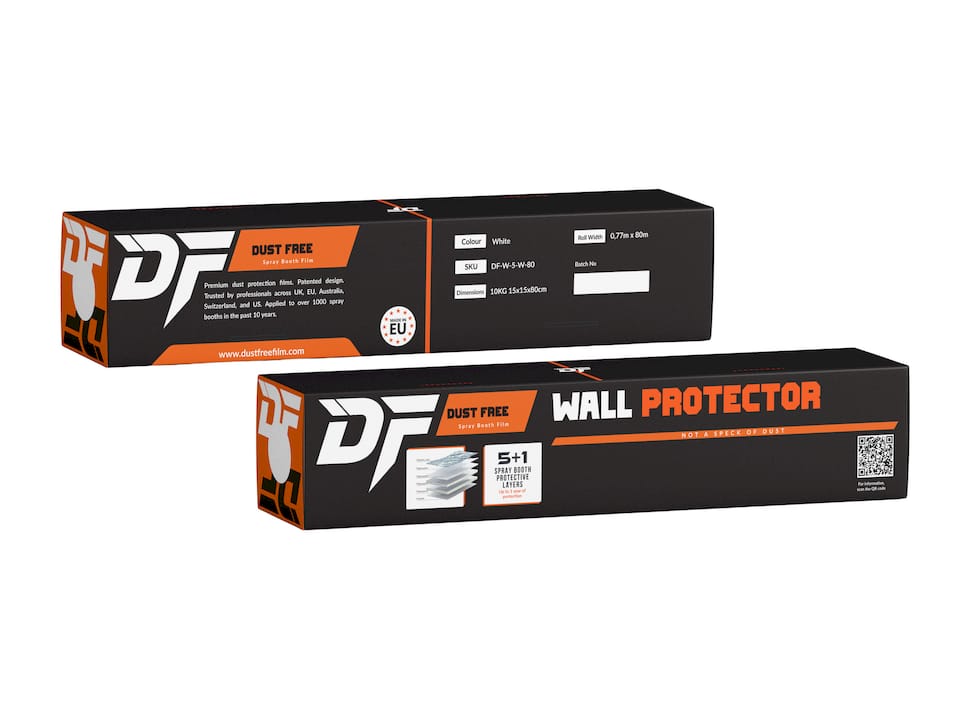
The static charge or tackifier coating is what does the real work. It gives the film a slight electrostatic pull that grabs airborne overspray and dust particles before they settle on the booth wall or drift back into the finish.
Color choice matters more than most buyers assume:
- White film preserves lighting output and is the default for booths where color matching depends on ambient brightness.
- Clear film lets existing wall color or markings show through, useful where operators need to see underlying signage or wall condition.
Heat tolerance is the spec people skip and regret. A film rated below your bake-cycle temperature can blister or release adhesive residue mid-cycle, so match the rating to your actual booth cure temperature before ordering, not after installation.
Buying Checklist: What to Require in a Film and Dispenser Quote
A quote that skips specs leaves you guessing until the film underperforms. Build your RFQ around measurable numbers, not vendor adjectives.
Require these specs in writing:
- Layer count per roll (drives how long a roll lasts between full changeouts)
- Maximum bake temperature the film is rated to withstand
- Static/tack behavior (electrostatic pull strength for overspray capture)
- Roll dimensions matched to your actual wall height and width
- Clean peelability confirmation, meaning no adhesive residue left behind
Dispenser features matter just as much as the film itself:
- Tape-free, patented application mechanism
- A smoothing tool or spatula for bubble-free application
- Numbered layers so staff can see usage at a glance
- Confirmed roll compatibility with your specific dispenser model
For operational fit, ask about bulk order minimums, custom width options for non-standard booths, and whether a sample or pilot roll is available before a full commitment. Also ask how used film should be disposed of, since some facilities need to document waste handling for compliance.
A quick decision rule: high-throughput automotive booths running multiple vehicles daily should prioritize higher layer counts and dispenser speed. Low-volume industrial booths can prioritize heat rating and clean peelability over layer count, since replacement cycles will be longer regardless.
Installing and Removing Film Without Adhesion Failures
Getting this wrong usually means the film lifts at the seams within days, which defeats the entire purpose. Follow a sequence, not a guess.
- Prep the wall first. Clean off loose overspray and dust, make sure the surface is fully dry, and test adhesion on a small section before committing the whole roll. Proper surface prep and dispenser use are what supplier datasheets point to as essential for long-lasting adhesion.
- Apply top-down. Work from the top of the wall downward, overlapping each join by a few inches, and use the dispenser’s smoothing tool to push out air pockets as you go.
- Remove the non-heat-rated protective layer before the first bake cycle if your film ships with one, since leaving it on during a cure can cause blistering.
- Watch for lifting at edges where airflow from booth fans catches a loose corner; press it back and add a small strip of compatible tape rather than letting it flap and collect more overspray.
Remove a layer once it looks visibly saturated or before you hit the manufacturer’s stated bake-cycle threshold, whichever comes first.
Pro Tip: Keep a small log of peel dates taped near the dispenser box. It takes ten seconds and tells the next shift exactly how much life is left on the current layer.
Scheduling Replacements and Measuring the Real ROI
Two replacement strategies exist, and most shops should run both at once. Manufacturer-specified limits set the ceiling; usage-based observation sets the actual trigger. Waiting past the recommended saturation threshold is the single most common mistake in larger operations, and it backfires: heavy buildup makes the layer hard to peel cleanly, forcing solvent-based cleanup that erases the labor savings the film was supposed to deliver.
The ROI math is simple once you track four numbers:
- Cleaning hours saved per month versus your pre-film baseline
- Solvent and chemical costs avoided
- Repaint jobs deferred or eliminated over a quarter
- Extended usable life of the underlying wall surface
Folding film changes into your existing maintenance calendar alongside filter swaps and other routine service avoids a separate shutdown window, and it keeps the “we’ll get to it later” problem from ever starting, a habit industry maintenance guidance flags as one of the most common ways downtime accumulates. Track repaint frequency, maintenance hours per month, peel cycles per roll, and cost per peel as your core KPIs, and you’ll have a defensible ROI number within one quarter. Our spray booth maintenance workflow guide breaks this scheduling logic down further.
Why Dust Free Film’s Specs Hold Up Under Procurement Scrutiny
A film is only as good as its weakest spec, and that’s where most vendor comparisons fall apart. Dust Free Film builds its multi-layer electrostatic films around a patented dispenser system designed for fast, bubble-free installs, so crews aren’t fighting tape or air pockets mid-shift.
What that means in practice for a procurement decision:
- European manufacturing standards back the film’s consistency across bulk orders, which matters when you’re outfitting multiple booths on the same spec.
- Custom configurations and bulk pricing are built for operations scaling past a single booth, not one-off retail rolls.
- Heat resistance and static-free capture are engineered into the layer stack itself, not added as an afterthought coating.
- Clean peelability is tested against the same saturation thresholds this article recommends tracking.
This guidance comes from Pavlos Filippakis, whose focus on booth protection systems centers on matching real operational data, bake cycles, throughput, layer counts, to the spec sheet before a purchase order goes out.
The Rollout I’d Actually Recommend
Skip the multi-booth rollout on day one. Pilot a single booth for thirty days and log repaint frequency and cleaning hours before and after installation; the comparison will tell you more than any vendor brochure. Weight your dispenser and layer-count decision toward whichever booth runs the heaviest daily volume, since that’s where saturation happens fastest and the savings compound quickest.
Train staff on both application and removal during the pilot window, not just installation. Removal is where most adhesion complaints actually originate, and a crew that’s practiced it once will do it right on booth two, three, and four without a supervisor standing over them.
— Pavlos Filippakis
Get a Film and Dispenser Quote for Your Booth
Once you know your bake temperature, layer count needs, and dispenser fit, the next step is a quote, not another comparison chart. Dust Free Film’s landing page is built for exactly that: request a sample roll, a single-booth pilot order, or a bulk quote sized to your facility.
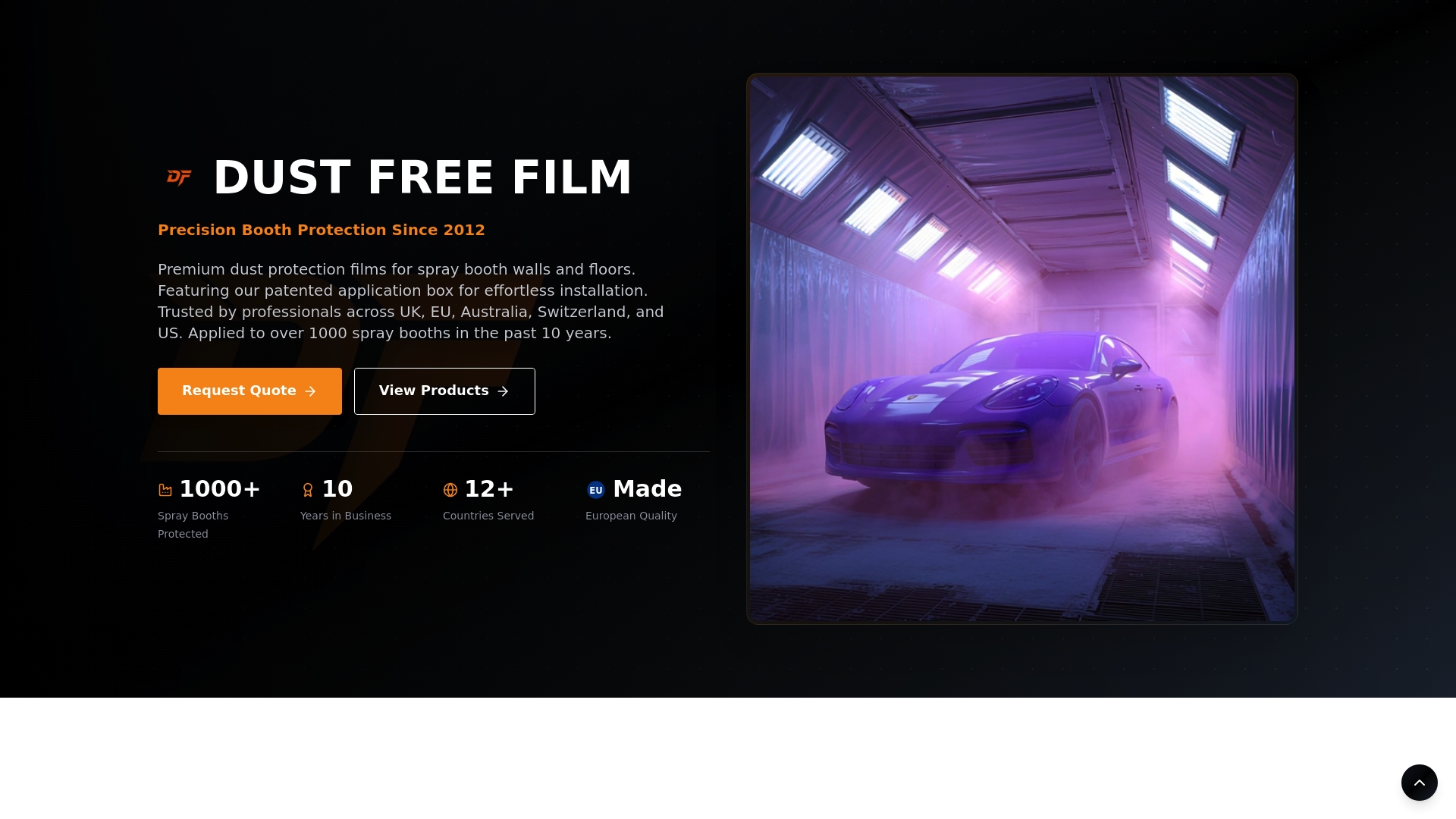
When you reach out, ask for specifics rather than a general price sheet: roll width matched to your wall dimensions, confirmed layer count, the heat rating for your bake cycle, dispenser box compatibility, and realistic lead time for your order size. If your booth has non-standard dimensions, ask about custom widths directly, since a roll that’s two inches short at the seam defeats the whole point of a clean peel. Installation support is also worth asking about upfront, especially if this is your first multi-booth rollout. Reach out through the landing page and get your spec sheet matched to an actual quote before your next repaint is due.
Key Takeaways
Multi-layer electrostatic or strippable film applied with a dispenser system reduces wall repainting by trapping overspray on a removable layer instead of the permanent wall surface.
| Point | Details |
|---|---|
| Match heat rating to bake cycle | Confirm the film’s maximum temperature exceeds your booth’s actual cure temperature before ordering. |
| Peel before saturation threshold | Remove a layer at the manufacturer’s recommended limit to avoid difficult removal and solvent cleanup. |
| Choose white for reflectivity | White film preserves lighting quality for color matching; clear film suits visibility needs instead. |
| Track four ROI metrics | Log cleaning hours, solvent costs, repaints deferred, and peel cycles per roll each quarter. |
| Pilot with Dust Free Film | Run a thirty-day single-booth pilot using Dust Free Film’s patented dispenser before scaling fleet-wide. |
Sources
- Using strippable protective coatings in paint booths — P&F Online
- JTAPE Multi-Layer Booth Protection Film product page
- Baxt WP10 5-Layer Spraybooth Protection Film technical datasheet
- Paint Booth Protective Film: Why It’s Essential For Your Floor And Walls — DailyMoss
FAQ
How Often Should You Replace Booth Wall Film?
Replace a layer when it looks visibly saturated or before you hit the manufacturer’s stated bake-cycle threshold, whichever happens first.
Does White or Clear Film Work Better for Repainting Booths?
White film preserves light reflectivity for accurate color matching, while clear film works better where operators need to see the underlying wall or existing markings.
Can Film Really Replace Repainting Entirely?
Film doesn’t replace the original paint job, but it intercepts the overspray and dust that would otherwise force a repaint, so peeling a saturated layer restores a bright wall without new paint.
What Should Go in a Dust Free Film Quote Request?
Ask for roll width, layer count, heat rating matched to your bake cycle, dispenser box compatibility, and lead time, plus custom width options if your booth has non-standard dimensions.
What Happens if You Leave a Film Layer on Too Long?
Heavy saturation past the recommended threshold makes clean removal difficult and often forces solvent-based cleanup, which erases the labor savings the film was meant to deliver.