

For most spray booths, solvent-resistant booth film is the fastest way to stop solvent scrubbing, protect walls and floors from MEK, xylene, and acetone damage, and keep lighting bright enough for consistent finishes. Liquid booth coatings still make sense for complex fixtures and continuous wall runs. Either way, verify chemical resistance and bake-cycle tolerance before you buy, not after installation.
TL;DR:
- Proper testing of chemical resistance to MEK, xylene, and acetone is essential to ensure films will withstand real booth conditions and avoid sudden failures.
- Multi-layer, cross-linked polymer films made from TPU, PET, or polyimide deliver superior durability and optical clarity, especially in high-temperature bake cycles.
- Peelable films are ideal for quick renewal of windows, lights, and high-traffic walls, while liquid coatings suit complex fixtures and uneven surfaces better.
- Installation quality, including static cling or adhesive systems, significantly impacts film lifespan and contamination prevention, making proper application critical.
- Regular inspection and scheduled replacement based on bake cycles, not just appearance, help prevent solvent bleed-through, residue buildup, and accidental damage during removal.
Table of Contents
- What Is Solvent-Resistant Booth Film and How Does It Protect Surfaces?
- Which Performance Properties Should You Test Before Buying?
- What Materials and Construction Types Should You Specify?
- Peelable Film or Liquid Coating: Which Fits Your Booth?
- How Do You Choose and Maintain Booth Film Over Time?
- What Does Dust Free Film Bring to This Category?
- What Actually Matters When You’re Buying This Stuff
- Ready to Upgrade Your Booth’s Protection?
- Sources
- FAQ
What Is Solvent-Resistant Booth Film and How Does It Protect Surfaces?
Solvent-resistant booth film is a sacrificial barrier applied over booth walls, floors, windows, and light fixtures to absorb overspray, solvent contact, and physical wear that would otherwise damage the substrate underneath. It is not a permanent coating. It is designed to be peeled off and replaced, layer by layer, once it takes enough abuse to dull or degrade.
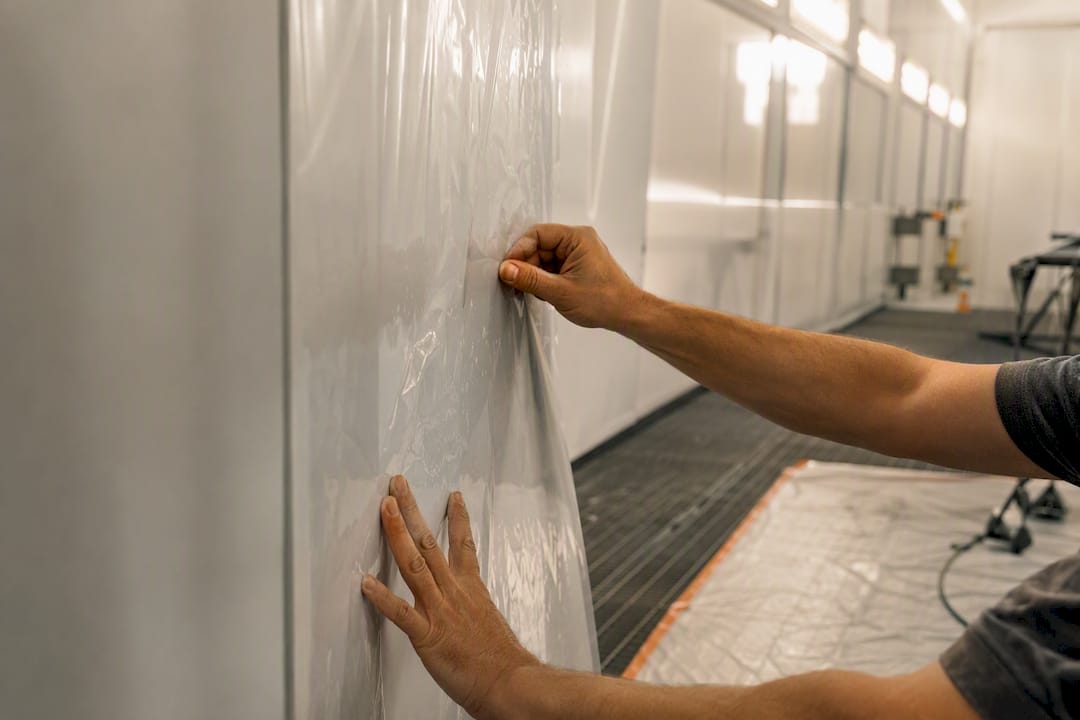
The distinction matters because permanent coatings need to be scrubbed, re-sanded, or repainted when they fail. A properly specified film gets torn off in seconds. That difference shows up directly in labor hours and booth downtime, which is why shops running high volumes of vehicles or parts through a booth each week tend to favor film over recoating cycles.
Film gets used across several surface types, each with a slightly different job to do:
- Walls: absorb overspray buildup and resist solvent bleed-through between paint jobs.
- Floors: handle foot traffic, dropped tools, and solvent spills without staining or swelling.
- Windows: preserve visibility so operators can monitor spray patterns without distortion.
- Light fixtures: keep lumen output consistent, since dulled or yellowed covers directly affect how a painter judges color match.
The material science behind durable films typically relies on cross-linked polymer chemistry, which resists breakdown when solvents like MEK and xylene make contact. Purdue’s polymer engineering department explains that cross-linking creates a molecular network that holds its structure under chemical and thermal stress far better than uncross-linked plastics. That’s the same principle that separates a film that lasts a full production cycle from one that softens and tears after a week. OSHA’s chemical hazard guidance also factors in here: less manual solvent scrubbing means less worker exposure to vapors, which is a safety win as much as an efficiency one.
Which Performance Properties Should You Test Before Buying?
Datasheets make plenty of claims. Testing confirms which ones hold up. Before signing off on a solvent resistant booth film for your facility, run it through the checks that actually predict field performance, not just marketing copy.
- Chemical resistance: confirm resistance to MEK, xylene, and acetone specifically, since these are the reference solvents most commonly used to check for permeation, swelling, or bond failure in industrial finishing environments.
- Thermal stability: ask for the film’s tested temperature ceiling and compare it against your actual bake and curing cycle, not a generic “high heat” claim.
- Abrasion and traffic resistance: relevant mainly for floor film, where dropped tools and foot traffic wear through weak layers fast.
- Static control: electrostatic-cling films should hold position without tape, reducing dust attraction during application.
- Optical clarity: critical for window and light-fixture film, where any haze or yellowing throws off how technicians judge a finish.
- Service life per layer: multi-layer counts should translate into a known number of usable cycles, not a vague “lasts a long time” promise.
A useful benchmark: film hardness and polymer formulation are directly linked to how well a product resists abrasion and solvent contact over repeated cycles, according to SpecialChem’s film hardness guide. If a vendor can’t produce hardness data or solvent-specific test results, treat that as a red flag, not an oversight.
Ask vendors directly for permeation and swelling test results against MEK, xylene, and acetone, along with the specific bake-cycle temperature their product was validated against. A vendor who can’t produce that data hasn’t tested for your use case, whatever the marketing sheet says.
What Materials and Construction Types Should You Specify?
Not all booth film is built the same way, and the material choice should map directly to where the film goes and what it needs to survive.
- TPU (thermoplastic polyurethane): favored for long-term solvent and thermal resistance on walls and floors that see heavy repeated exposure.
- Polyimide: holds up under sustained high heat, making it a fit for surfaces close to curing lamps or bake-cycle hot zones.
- PET (polyester): the standard for high-clarity, multi-layer tear-off systems on windows and light covers, where optical performance matters more than raw chemical toughness.
- Cross-linked polymer formulations: deliver the dimensional stability and solvent resistance that general-purpose water-based coatings typically can’t match, particularly against aggressive solvents like MEK.
Multi-layer tear-off construction is what makes peelable film practical. Instead of one thick sheet, the film is built from multiple thin layers, each electrostatically or adhesively bonded to the one below it. When the top layer degrades or gets overspray buildup, you tear it away and the next clean layer is already in place. Optical-grade PET systems built this way restore lighting clarity instantly, without the discoloration risk that some liquid coatings carry over time.
Adhesive and mounting systems vary too. Some films rely on electrostatic cling for walls, others use light-tack adhesive strips along the perimeter for floors where traffic could dislodge a cling-only system.
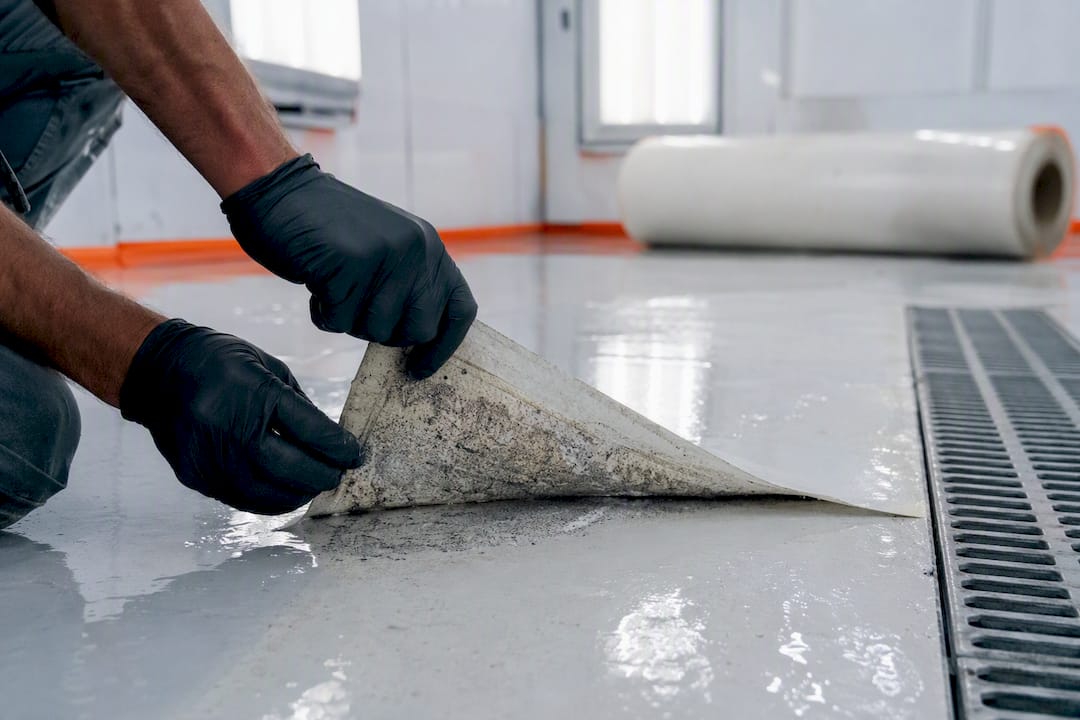
Pro Tip: Before ordering a full booth’s worth of film, test adhesion and removal on a representative section of your actual substrate. A film that peels cleanly off steel can leave adhesive residue on painted drywall, and you won’t know until you try it.
Peelable Film or Liquid Coating: Which Fits Your Booth?
The honest answer depends on the surface and how often you need to renew protection, not on which option sounds more advanced.
- Peelable film wins for windows and light fixtures. Optical restoration is instant. You tear off one hazed layer and get a clear, bright surface back in seconds, with zero cure time.
- Peelable film wins for high-turnover walls and floors. Renewal takes minutes, not hours, which matters most in booths running multiple jobs per day.
- Liquid booth coatings can work better for complex fixtures and irregular geometry. Seamless coverage handles pipes, brackets, and uneven surfaces that film has trouble conforming to, and some formulas wash off with water rather than requiring peel removal.
- Large, flat wall panels are a toss-up. Film offers faster turnaround; liquid coating avoids seam lines across very wide runs.
Common failure modes worth planning for: heat embrittlement from bake cycles exceeding the film’s rated tolerance, adhesive transfer onto substrates that weren’t tested first, and residue buildup when a film sits past its intended service life. Match the product to your bake-cycle temperature and inspection schedule, and most of these failures never happen.
How Do You Choose and Maintain Booth Film Over Time?
A solid RFQ for booth film should demand specifics, not adjectives. Vendors should be able to supply documented chemical resistance data against MEK, xylene, and acetone, a tested thermal limit tied to your actual bake cycle, a current MSDS, real peelability test results, and clear warranty terms. If any of those five are missing, keep looking.
Installation quality affects everything downstream. Tape-free dispenser systems that mount film electrostatically cut application time significantly compared to manual taping, and they reduce the bubbling and misalignment that shorten a film’s usable life before it ever gets dirty. Related guides on step-by-step film application and choosing the right protective film walk through the mechanics in more detail.
Maintenance is really a schedule, not a reaction:
- Inspect film weekly for tears, adhesive lift, or optical haze on windows and lights.
- Replace on a fixed cycle tied to your production volume, not just when it “looks bad.”
- Remove old film with gloved hands, pulling steadily to avoid tearing mid-sheet.
- Dispose of used film per your facility’s solvent-waste protocols, since it has absorbed overspray chemicals.
Pro Tip: Build your replacement schedule around bake cycles, not calendar days. A booth running three bake cycles a day burns through film tolerance faster than one running one cycle every other day, even if both look equally worn on paper.
OSHA’s PPE guidance applies directly during removal, since old film has absorbed solvent residue. Nitrile or butyl gloves are the standard recommendation, and MCR Safety’s solvent and PPE guide offers a useful reference matrix for matching glove material to the solvents your booth actually uses.
What Does Dust Free Film Bring to This Category?
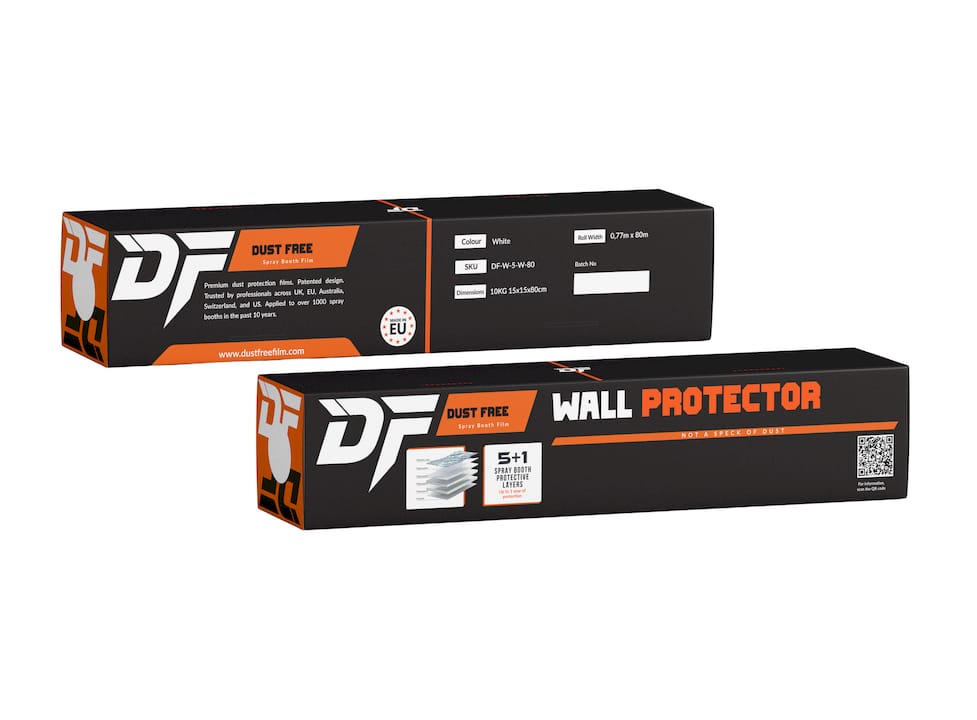
Dust Free Film builds its product line around the exact performance checks covered above: multi-layer electrostatic wall and floor protectors, a patented tape-free dispenser system, and custom configurations for shops running nonstandard booth dimensions.
- Multi-layer construction supports fast tear-off renewal without re-taping or bubbling.
- The dispenser system installs film in a fraction of the time manual taping requires.
- Static-free surface design reduces dust attraction during and after application.
- Bulk and custom ordering options fit both single-bay shops and multi-booth industrial operations.
Shops using this approach report shorter cleaning cycles and clearer lighting retention between replacements, patterns consistent with the operational benefits documented across booth film applications.
What Actually Matters When You’re Buying This Stuff
Most procurement conversations about booth film get stuck on price per roll. That’s the wrong first question. The right first question is whether the film has documented resistance to the specific solvents your booth actually uses, because a film that handles acetone fine but swells under xylene will fail exactly where you need it most.
The conventional advice, buy the thickest film available, misses the point too. Thickness alone doesn’t predict solvent resistance or bake-cycle survival. Polymer chemistry does. A thin, well-formulated cross-linked film will outlast a thick, generic one every time a booth runs a real curing cycle.
If you take one thing from this guide, make it this: get the vendor’s actual test data against MEK, xylene, and acetone before you place a bulk order, not after the film starts failing on the floor. That single step separates shops that replace film on a predictable schedule from shops that get surprised by a mid-cycle failure during a busy production week. Everything else, dispenser convenience, optical clarity, static control, matters, but it matters less than knowing the film survives contact with the chemicals actually used in your booth.
— Pavlos Filippakis
Ready to Upgrade Your Booth’s Protection?
Dust Free Film exists for exactly the buying decision this guide walks through: multi-layer, cross-linked construction built to survive MEK, xylene, and acetone exposure, paired with a patented tape-free dispenser that cuts installation time compared to manual taping methods.
If you’re specifying film for a new booth or replacing a system that’s failing early, request a sample and the bake-cycle datasheet before committing to a bulk order. Dust Free Film supports custom configurations for nonstandard booth dimensions and offers MSDS and technical data on request for procurement teams that need documentation before sign-off. For real-world application patterns across walls, floors, and lighting, the protective film application examples page is worth reviewing alongside your quote. Start by requesting a quote or sample directly from Dust Free Film’s team.
Sources
FAQ
What Makes a Film “Solvent Resistant” Versus Standard Film?
Solvent-resistant film uses cross-linked polymer chemistry that resists permeation and swelling when exposed to solvents like MEK, xylene, and acetone, unlike general-purpose films that soften or degrade on contact.
How Often Should Booth Wall Film Be Replaced?
Replacement frequency depends on bake-cycle count and production volume rather than a fixed calendar date. High-turnover booths running multiple bake cycles daily need more frequent replacement than lower-volume operations.
Can I Use the Same Film on Windows and Walls?
No. Windows and light fixtures need high-clarity PET film to preserve optical performance, while walls and floors typically use thicker TPU or multi-layer film built for abrasion and chemical exposure rather than transparency.
Is Liquid Booth Coating Ever Better Than Film?
Liquid coatings can work better on complex fixtures and irregular geometry where film struggles to conform, and some formulations wash off with water, but film generally wins on renewal speed for flat walls, floors, and lighting.
What PPE Should Workers Wear When Removing Old Film?
Nitrile or butyl gloves are the standard recommendation for removal, since used film has absorbed solvent residue, consistent with OSHA’s chemical hazard and PPE guidance.
Does Dust Free Film Offer Custom Sizing for Nonstandard Booths?
Yes, Dust Free Film provides custom configurations and bulk ordering options for facilities with nonstandard booth dimensions or large-scale operational needs.