
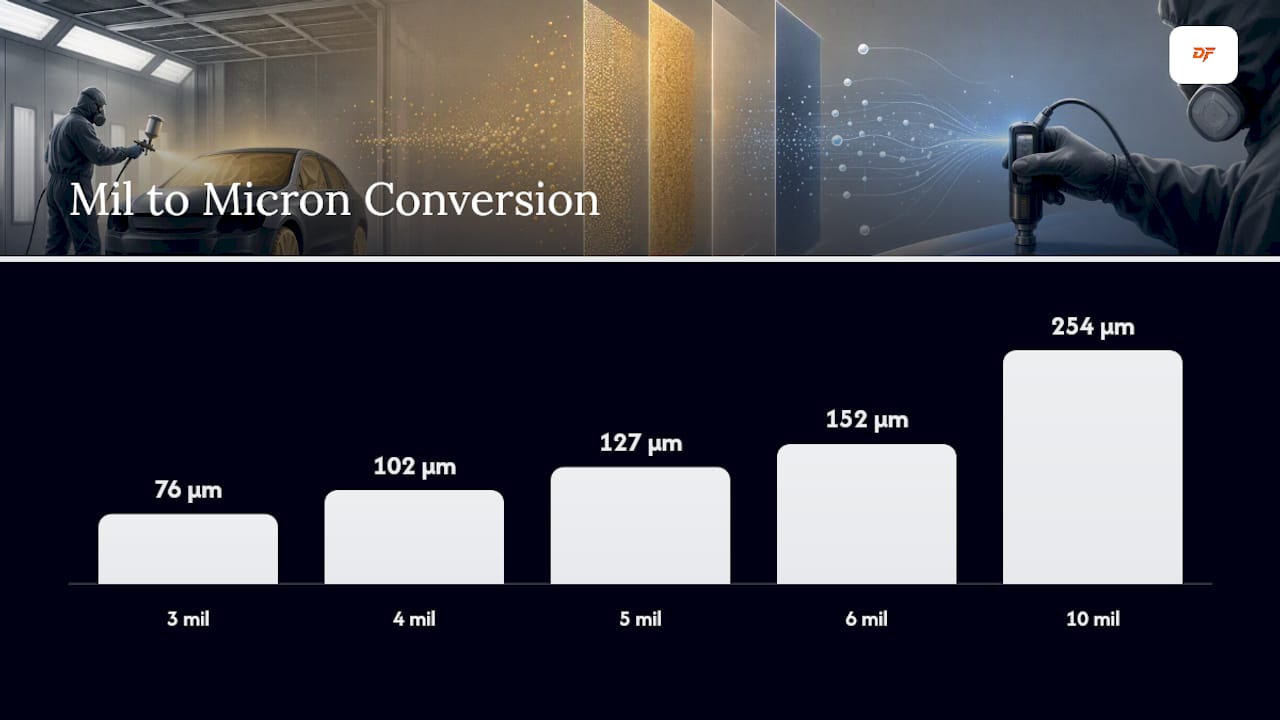
For most spray booths, use these dry-film thickness ranges: electrostatic films at 3 to 5 mil (76 to 127 microns), adhesive protective films at 4 to 6 mil (102 to 152 microns), and peelable spray coatings at 6 to 10 mil (152 to 254 microns). Confirm the unit on the supplier datasheet before you order anything.
That single verification step, mil or micron, catches more procurement mistakes than any other line item on a purchase order.
- Electrostatic booth film: 3 to 5 mil (76 to 127 µm)
- Adhesive PE protective film: 4 to 6 mil (102 to 152 µm)
- Peelable spray booth coating: 6 to 10 mil (152 to 254 µm)
Pro Tip: Remember 1 mil equals 25.4 microns. A quote listing “4” with no unit specified could mean 4 mil or 4 microns, leading to a large difference in actual material thickness.
Key Takeaways
Matching your booth’s film thickness to its surface type, traffic level, and heat exposure, while verifying units before ordering, prevents both wasted material and premature failure.
| Point | Details |
|---|---|
| Electrostatic band | Use 3 to 5 mil (76 to 127 microns) for smooth, glossy walls and light fixtures needing frequent, residue-free changes. |
| Adhesive band | Use 4 to 6 mil (102 to 152 microns) for textured or porous surfaces needing longer-term grip. |
| Peelable coating band | Use 6 to 10 mil (152 to 254 microns), building in multiple coats to avoid sagging or fragmenting on peel. |
| Verify the unit | Confirm mil versus micron on every datasheet since 1 mil equals 25.4 microns and mixing them up causes major order errors. |
| Dust Free Film option | Dust Free Film supplies multi-layer electrostatic and adhesive films engineered to match these recommended thickness bands, with sample rolls available on request. |
Table of Contents
- What Thickness Should You Use for Spray Booth Film?
- Mil vs Micron: Why Getting the Unit Wrong Is Expensive
- How Do You Reach the Right Dry-Film Thickness?
- Electrostatic Film, Adhesive Film, or Peelable Coating: Which One Fits?
- How Long Should Spray Booth Film Last?
- Procurement and Delivery Checklist
- Why Dust Free Film Recommends These Thickness Practices
- Safety and Regulatory Considerations for Booth Film Thickness
- Does Humidity or Temperature Affect Film Thickness Consistency?
- A Simple Rule of Thumb Before You Order at Scale
- Get a Sample Roll or Custom Quote From Dust Free Film
- Sources
- FAQ
What Thickness Should You Use for Spray Booth Film?
The right thickness depends on the surface, the traffic, and how often you plan to strip and replace the protection. There is no single number that works for every booth, but the ranges below cover the vast majority of automotive refinishing and industrial coating operations.
Electrostatic peel films run 3 to 5 mil (76 to 127 microns) for most applications. These cling to smooth, glossy walls and light fixtures through static attraction rather than glue, which makes them the right call anywhere you need fast, repositionable protection without residue.
Adhesive PE protective films typically run thicker, 4 to 6 mil (102 to 152 microns), because the adhesive layer needs more body to grip textured or slightly porous surfaces without tearing on removal. Shops with rough-cast walls or older booth panels usually reach for adhesive over electrostatic for this reason.
Peelable spray booth coatings need the most material: 6 to 10 mil (152 to 254 microns) dry. One product datasheet for a booth coating recommends a minimum dry film thickness of 4 to 5 mils for reliable stripping, and heavier overspray zones often push toward the higher end of the range so the coating peels in whole sheets instead of flaking.
A few edge cases justify going thicker than the standard bands:
- High-heat curing booths, where thinner films can soften or bubble.
- Floor zones with forklift or foot traffic, where abrasion resistance matters more than cost per roll
- Light-critical paint work, where any film sag or wrinkle distorts overhead lighting and affects finish quality
Mil vs Micron: Why Getting the Unit Wrong Is Expensive
A mil is one thousandth of an inch, the standard unit across North American coatings work. A micron (µm) is one thousandth of a millimeter, the unit used almost everywhere else in the world. The conversion is fixed: 1 mil equals 25.4 microns.
That factor matters the moment you’re comparing a domestic supplier’s spec sheet against an overseas one.
| Mils | Microns (µm) |
|---|---|
| 3 mil | 76 µm |
| 4 mil | 102 µm |
| 5 mil | 127 µm |
| 6 mil | 152 µm |
| 10 mil | 254 µm |
Before you place an order, confirm three things: the unit (mil or micron), whether the number quoted is dry-film thickness (DFT) or wet-film thickness (WFT), and whether that figure matches the manufacturer’s own datasheet. Global procurement guidance warns that skipping this check can lead to ordering errors that dwarf the intended spec, sometimes by a factor of 25 or more when a decimal point or unit gets lost in translation.
How Do You Reach the Right Dry-Film Thickness?
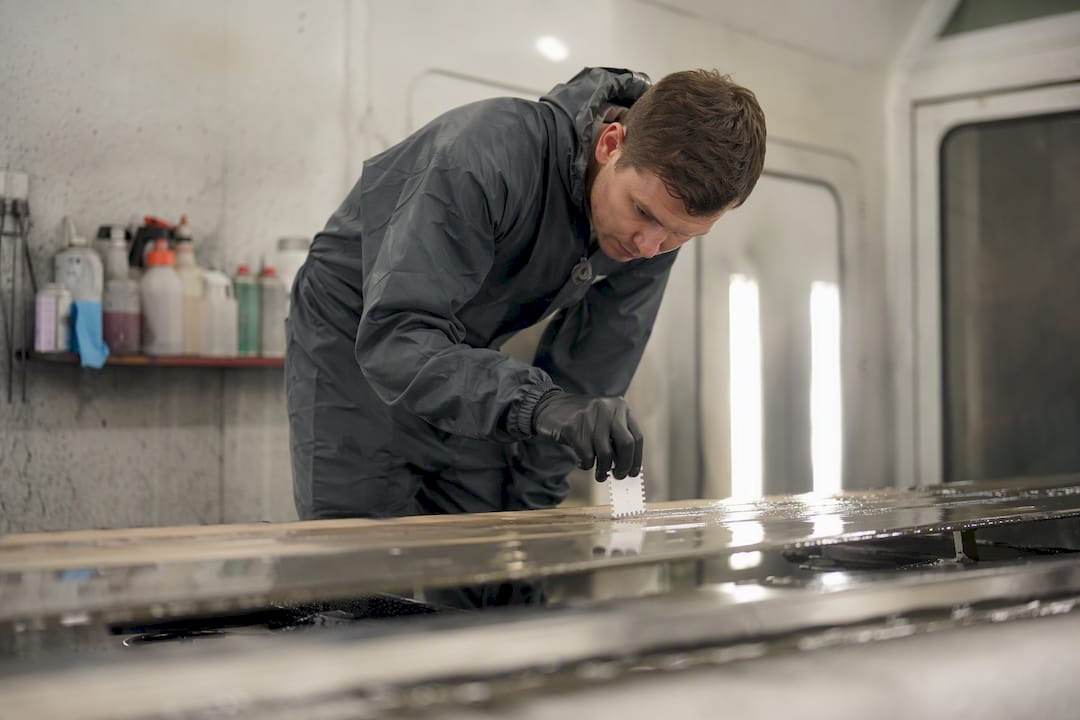
Wet-film thickness (WFT) is what you apply; dry-film thickness (DFT) is what’s left once the coating cures or the film sets. For sprayable peelable coatings, the two numbers are never equal. One booth coating datasheet shows roughly 5.5 to 7.5 mils wet yielding about 1.5 to 2 mils dry per coat, which means hitting a 6 to 8 mil DFT target on rough or powder-coated steel usually takes three to four passes.
Building thickness gradually beats trying to hit the target in one heavy coat:
- Apply a light first coat and let it tack before the next pass.
- Cross-hatch your spray pattern (vertical then horizontal) to avoid striping and thin spots.
- Add coats at the datasheet’s recommended WFT per pass until you reach target DFT.
- Check a test panel or corner with a wet-film comb before committing the whole wall.
- Once cured, verify with a dry-film gauge and compare against the label spec.
Manufacturer guidance on rough substrates specifically recommends building three to four coats at around 7.5 mil WFT to land at a durable 6 to 8 mil DFT that strips cleanly rather than fragmenting.
Pro Tip: Keep a cheap wet-film comb in your booth kit. It costs less than one bad batch of coating and tells you in seconds whether you’re building thickness fast enough to hit spec before the coat sets.
Electrostatic Film, Adhesive Film, or Peelable Coating: Which One Fits?
The three protection types solve different problems, and picking wrong usually shows up as either wasted material or a peeling headache six months later.
- Electrostatic film clings through static charge, not glue, so it comes off smooth and glossy surfaces without residue. Best for walls, ceilings, and light fixtures you’ll swap frequently.
- Adhesive PE film uses a glue layer built to grip textured or slightly porous panels. It runs slightly thicker and holds longer under vibration or airflow, which suits older booths or panels with surface roughness.
- Peelable coatings spray on wet and cure into a strippable skin. They’re the only option that conforms to irregular geometry, like booth corners, ductwork, and floor grating, and they tend to handle heavier overspray loads before failing.
For floors, peelable coatings or heavy-gauge adhesive film generally outperform electrostatic film, which isn’t built for foot and cart traffic. For lights and glossy wall panels, electrostatic film’s residue-free removal saves labor at every changeover. Booths running near heat sources or heavy solvent exposure should lean toward adhesive film or coatings rated for that environment, since some electrostatic films soften faster under sustained heat.
How Long Should Spray Booth Film Last?
Replacement frequency depends more on traffic and overspray volume than on the calendar. High-volume automotive booths often cycle wall film every one to two weeks, while lower-traffic industrial booths can stretch to a month or more between changes.
- Thicker films (toward the top of each recommended band) resist tearing during removal, which cuts down on flaking debris left behind on walls.
- Thin films save material cost upfront but often need more frequent full replacement, especially in booths with heavy overspray.
- Peelable coatings at 6 to 8 mil DFT are built to strip cleanly in large sections rather than crumbling, which saves cleanup time even though the coating itself costs more per application.
To estimate material needs, work backward from booth square footage and target DFT. One coating datasheet lists theoretical coverage of roughly 433 square feet per gallon at 1.0 mil DFT; at 8 mil DFT, that same gallon covers a fraction of that area, so budget accordingly and add a margin for overspray losses on irregular surfaces.
Procurement and Delivery Checklist
A few minutes of verification before and after delivery prevents a wasted order and a delayed booth turnaround.
- Ask the supplier to state DFT explicitly in mils or microns, not a vague “gauge” number.
- Request the spreading rate and recommended WFT per coat so you can plan how many passes you’ll need.
- On delivery, check the roll or drum label matches the quoted spec exactly.
- Run a small peel test on a scrap panel before committing to full-wall application.
- Weigh or measure a sample section against the datasheet’s coverage figures if the order is large enough to matter financially.
Red flags worth stopping an order over: a datasheet with no DFT listed at all, labeling that shifts between mil and micron without clarification, or a supplier who describes thickness only in unspecified “gauge” units. Choosing the right protective film starts with a datasheet you can actually verify against what shows up on your dock.
Why Dust Free Film Recommends These Thickness Practices
Dust Free Film has manufactured multi-layer electrostatic booth films since 2012, built around a patented dispenser system for fast, bubble-free application. Its films are engineered heat-resistant and static-free, aligning directly with the 3 to 5 mil electrostatic band this guide recommends for smooth wall and ceiling protection in high-traffic industrial settings.
- Multi-layer construction built to hold spec at the recommended thickness bands
- Patented application system designed to reduce installation errors that affect actual DFT
- Heat-resistant, static-free formulation suited to demanding booth environments
Safety and Regulatory Considerations for Booth Film Thickness
Spray booth film and coating thickness intersects with fire safety and ventilation rules more than most facility managers expect. Booth walls and protective materials sit inside a space governed by combustible-coating regulations, and OSHA’s spray finishing standard under 29 CFR 1910.107 addresses ventilation, electrical equipment, and the flammable buildup of overspray inside booths. Thickness itself isn’t directly regulated the way ventilation rates are, but the choice of film or coating affects two safety factors inspectors do look at: flame spread characteristics of accumulated overspray, and whether protective material interferes with required exhaust or lighting clearances.
Thicker peelable coatings and films trap more overspray material per square foot before saturation, which can mean less airborne combustible residue circulating through the booth’s exhaust system. That’s a genuine advantage of higher-DFT peelable coatings in heavy-use booths, but it comes with a caveat: any film or coating buildup near electrical fixtures, light lenses, or exhaust filters needs to stay within manufacturer clearance guidance, since blocking airflow or heat dissipation creates its own hazard.
Facility managers should treat film and coating selection as part of the booth’s overall fire and ventilation plan, not a separate cosmetic decision. Check local fire code requirements alongside OSHA guidance, since some jurisdictions add their own combustible-coating accumulation limits on top of the federal standard. When in doubt on a specific booth configuration, a fire marshal or qualified safety consultant should review the setup rather than relying on general guidance alone.
Does Humidity or Temperature Affect Film Thickness Consistency?
Yes, and it shows up most in sprayed peelable coatings rather than pre-manufactured films. Wet-film thickness applied at a given spray setting can dry down to a different DFT depending on ambient humidity and booth temperature, because both factors affect how fast the coating flashes off solvent or water before it levels and cures.
In high-humidity conditions, water-based peelable coatings can take longer to reach final cure, which sometimes lets the wet film sag or run before it sets, thinning the coating in spots and thickening it in others. In hot, dry booths, the opposite risk shows up: the surface can skin over too fast, trapping solvent underneath and leaving a DFT that reads correctly on a gauge but hasn’t fully cured through, weakening peel strength later.
Pre-manufactured electrostatic and adhesive films are far less sensitive to these swings since their thickness is set at the factory, not in the booth. That consistency is one practical reason facility managers running booths with variable climate control lean toward manufactured film for wall and ceiling coverage, reserving sprayed peelable coatings for surfaces and geometries where film simply can’t conform.
Whatever material you’re using, checking booth temperature and humidity against the coating manufacturer’s stated application range before a big job saves you from discovering a thin spot after the fact. A wet-film comb reading taken mid-application, not just at the end, catches drift before it becomes a costly redo.
A Simple Rule of Thumb Before You Order at Scale
If you’re staring at a datasheet and unsure, default to the middle of each band: 4 mil electrostatic, 5 mil adhesive, 8 mil peelable. Pilot-test one wall section first, verify the DFT with a gauge, then scale up.
Get a Sample Roll or Custom Quote From Dust Free Film
Dust Free Film builds its electrostatic and adhesive multi-layer protection to land squarely inside the thickness bands this guide recommends, so you’re not guessing whether a supplier’s “gauge” number actually matches a real DFT spec. Its patented dispenser system also solves the application headache most facility managers hit when they try to hit a target thickness by hand, bubbles, wrinkles, and wasted rolls.
If you manage a booth running heavy automotive traffic or an industrial line with variable overspray, request a datasheet and a sample roll before committing to a bulk order. Facility teams evaluating step-by-step application methods can pilot a small wall section first, confirm the DFT with a gauge, and scale from there. Custom configurations and bulk pricing are available for multi-booth operations. Start by requesting a quote or sample kit at Dust Free Film.
Sources
- Mils vs Microns — Michigan State University Machine Shop
- Binks Booth Coat technical data sheet (example) — MSC / product datasheet
FAQ
What Are the OSHA Regulations for Spray Paint Booths?
OSHA regulates spray finishing operations under 29 CFR 1910.107, covering ventilation rates, electrical equipment classification, and combustible overspray buildup, though it does not set a specific film thickness requirement.
What Is Dry Film Thickness in Paint?
Dry film thickness (DFT) is the thickness of a coating or film after it has fully cured or set, as opposed to wet-film thickness (WFT), which is what’s applied before drying.
What Are the Requirements for a Spray Booth?
Spray booths generally require adequate exhaust ventilation, explosion-proof or properly rated electrical fixtures, and overspray control measures like protective film or coatings that limit combustible residue buildup on walls and equipment.
What Is a Sprayable Paint Booth Coating?
A sprayable, peelable booth coating is a liquid material applied in multiple wet coats to reach a target dry-film thickness, typically 6 to 10 mil, that cures into a skin you can strip off in sheets to remove trapped overspray.
How Do I Choose Between Electrostatic Film and Adhesive Film?
Choose electrostatic film for smooth, glossy surfaces needing frequent, residue-free changes, and adhesive film for textured or porous surfaces where longer-term grip matters more than easy removal.