

For spray booths and industrial finishing, multi-layer electrostatic peelable booth films are the operationally superior choice. They combine fast layer refresh with active particle capture and hold up through repeated bake cycles. Single-layer tacky systems still have a place in low-volume shops, but the selection, install, and cost details below explain why most booth operators are moving toward peelable film systems.
TL;DR:
- Multi-layer electrostatic peelable films actively attract airborne particles, offering faster, easier contamination refreshes than fixed tacky systems.
- These films support up to 80°C bake cycles and can be peeled away in seconds, reducing labor and downtime during maintenance.
- Proper installation and maintenance depend on verifying film specifications, such as layer count, peel method, and temperature ratings, with suppliers providing detailed commitments.
- Films should be replaced before exceeding roughly 150 bake cycles or heavy contamination, with consistent monitoring recommended for high-volume shops.
- For high-frequency bake operations, electrostatic peelable films usually justify their higher material cost through savings in labor and reduced cleaning time.
Table of Contents
- Tacky Mats vs Film: What Actually Differs on the Booth Floor
- Weighing the Trade-Offs Before You Commit
- What to Put on Your Supplier Checklist
- Installing and Maintaining Booth Film Without Losing a Shift
- Does the Cost Actually Pencil Out?
- Why Operational Proof Matters More Than Spec Sheets
- Get the Right Film for Your Booth Without the Guesswork
- Sources
- FAQ
Tacky Mats vs Film: What Actually Differs on the Booth Floor
The two approaches solve the same problem, keeping dust and overspray off finished surfaces, through different mechanics. A tacky single-layer system relies on surface stickiness to hold particles in place, and that stickiness is fixed for the life of the material. A multi-layer electrostatic peelable film uses a static charge to draw airborne paint and dust to the surface, then lets you peel away a contaminated layer to expose a fresh one underneath. The BAXT WP10 technical datasheet describes exactly this design: a 5-layer film charged to a safe static level, built for repeated refresh rather than one-and-done coverage.
That structural difference drives everything else that matters to a shop:
- Particle capture: electrostatic attraction pulls contamination actively; tackiness only catches what lands directly on it.
- Bake-cycle durability: the WP10 datasheet rates its material for bake temperatures between 60°C and 100°C, while many tacky products degrade faster under repeated heat.
- Refresh speed: peeling one exposed layer takes seconds; a tacky mat or sheet has to be fully removed and replaced.
- Install ergonomics: multi-layer films are built for dispenser boxes that let one person unroll and cut a straight line; single-layer tacky sheets are often hung or taped by hand.
- Paint quality impact: protective film that stays reflective and clean preserves the light quality technicians need for accurate color matching, a factor tackiness alone doesn’t address.
Products like Film4Booth apply this multi-layer, antistatic logic to wall protection specifically, layering four sheets that peel away individually as they load with overspray. The takeaway for procurement: tackiness is a passive property, while electrostatic multi-layer design is an active system built around scheduled maintenance.
Weighing the Trade-Offs Before You Commit
Where multi-layer electrostatic film wins:
- Faster contamination refresh, since peeling a layer takes far less labor than stripping and rehanging a full sheet.
- Active electrostatic capture pulls airborne dust to the surface instead of waiting for direct contact.
- Tape-free overlapping edges and visible layer numbering keep installation and scheduling simple.
- Some multi-layer films have rated operating temperatures up to 80°C to support repeated bake-cycle use without breaking down.
Where single-layer tacky options still make sense: short-term jobs, one-off booth setups, or very low-volume shops where the cost of a multi-layer system outweighs the labor it would save. If you’re painting a handful of panels a month, a simple tacky sheet might get the job done without the added spec.
Watch for these failure modes. The WP10 datasheet warns against pushing film past roughly 150 bake cycles or heavy contamination, since overbaked layers can bond to the surface and tear on removal. Punctures from dropped tools or cart wheels can also let contamination bypass the film entirely.
Pro Tip: Keep your booth ventilation running during film removal. Peeling large sheets can kick loose dust back into the air right before your next paint cycle.
What to Put on Your Supplier Checklist
Before you sign a purchase order, get suppliers to commit to specifics in writing, not just marketing language. The gap between a film that performs and one that fails usually shows up in the details nobody asks about upfront.
Required specs to request:
- Maximum operating temperature and confirmation it matches your booth’s bake cycle.
- Layer count and peel method (how many layers, how they separate).
- Anti-static versus static-dissipative formulation, matched to your booth’s humidity and climate conditions.
- Tackiness level appropriate for walls versus the slip resistance needed on floors.
- Visible layer numbering and integrated length markings, which support scheduled layer changes instead of reactive replacement.
On the application side, ask whether the dispenser box supports one-person installation, includes a metal cutting bar for straight cuts, and allows tape-free overlaps at the edges. Then push into procurement logistics: available roll widths, custom configurations for irregular booth dimensions, bulk pricing breaks, and realistic lead times for reorders. When the shipment arrives, do a quick acceptance check: unroll a section, confirm the layer numbering matches the datasheet, and test peel resistance on a scrap section before it goes on the wall.
Installing and Maintaining Booth Film Without Losing a Shift
A one-person install works when the dispenser box is designed for it. Here’s the general sequence:
- Position the roll in the application box and steady it with one foot as you unroll.
- Align the leading edge against your starting wall or floor point before making the first cut.
- Unroll in a straight, continuous pass, using the box’s cutting bar to trim clean edges.
- Overlap the next section using the tape-free edge design rather than taping seams by hand.
- Note the exposed layer number so your team knows how many peels remain before a full swap.
Tie replacement cadence to actual use, not the calendar. High-volume booths running frequent bake cycles should plan on peeling a layer well before it looks visibly dirty, since renewing film before it’s overloaded prevents the exact adhesion failures that make removal a mess.
Pro Tip: Check window and light-fixture film separately from wall film. These surfaces load with overspray fast and directly affect how well your team can judge color and finish.
Does the Cost Actually Pencil Out?
Run the math per square foot of coverage, not per roll. Add labor time for install and removal, then subtract the downtime you avoid by peeling instead of full replacement. Shops that switched to multi-layer self-adhesive systems reported faster renovation cycles and fewer adhesion failures, both of which show up directly as reduced downtime.
High-volume shops running daily bake cycles typically break even fast, since avoided cleaning hours and repainting alone often justify the material cost. Low-volume operations need to run the numbers more carefully.
- Factor in hidden costs: film left on past its bake-cycle limit that tears on removal, punctures from dropped tools, or the wrong tackiness level for your surface.
- Compare against professional cleaning costs, which usually run higher than a scheduled film swap done regularly.
- Pilot one booth for a month, tracking cleaning hours and rework avoided before rolling the system out shop-wide.
For deeper context on how coating chemistry affects overspray behavior and film selection, additive suppliers offer useful background when your paint formulations change.
Why Operational Proof Matters More Than Spec Sheets
Anyone can print a datasheet. What separates a film that actually works from one that fails mid-shift is whether its claims hold up under real bake cycles and real installation crews, not lab conditions.
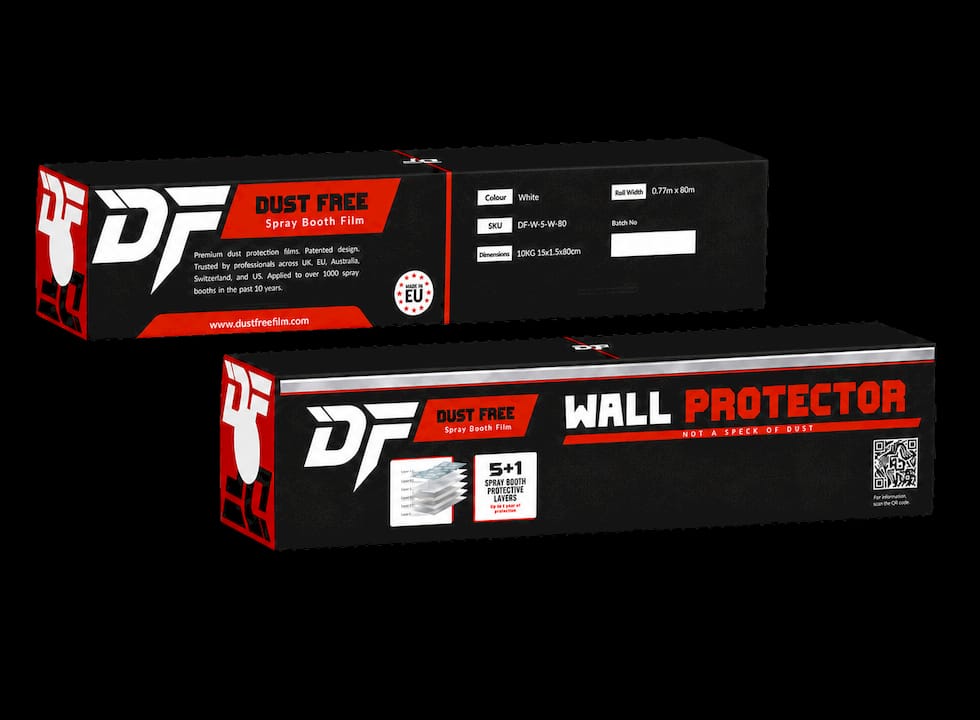
Some manufacturers build their Wall Protector and Floor Protector lines around that operational reality: electrostatically charged surfaces for active particle capture, a patented application box with a freely rotating roll and metal cutting bar for one-person install, tape-free overlapping edges, visible layer numbering, integrated length markings, and a rated operating temperature up to 80°C. Those aren’t features chosen for a brochure. They’re the details that determine whether a Monday morning install eats fifteen minutes or an hour.
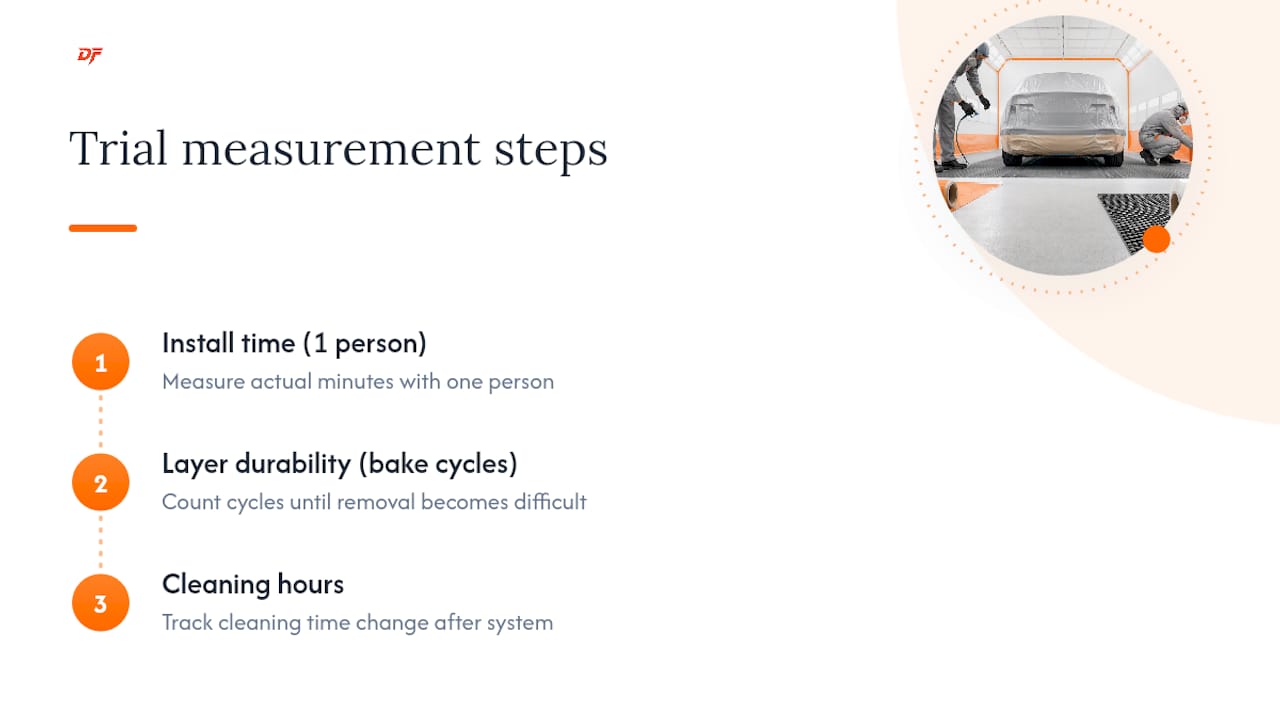
If you’re evaluating a supplier, measure three things during a trial: how long install actually takes with one person, how many bake cycles a layer survives before removal gets difficult, and whether cleaning hours drop once the system is in place.
— Pavlos - Angelos Filippakis
Get the Right Film for Your Booth Without the Guesswork
Some companies offer multi-layer electrostatic systems with Wall Protector and Floor Protector films featuring a patented dispenser box, tape-free overlapping edges, visible layer numbering, and heat resistance up to 80°C for repeated bake cycles.
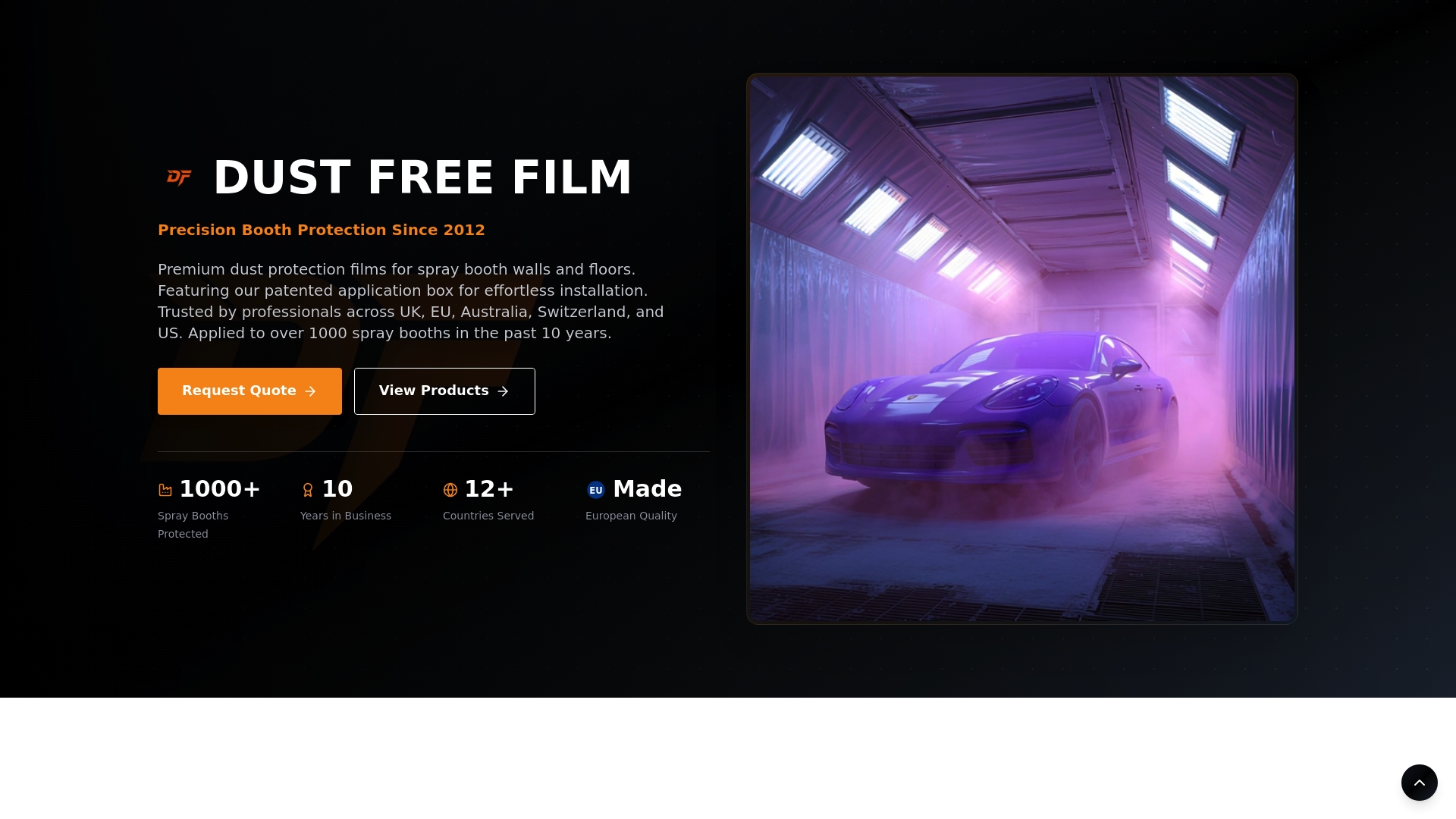
Instead of piecing together tacky sheets and guessing at replacement timing, you get a system built for scheduled layer changes and one-person installs, backed by bulk and custom configuration support for shops of any size. Whether you’re running a single booth or managing protection across multiple facilities, some suppliers offer factory-direct or distribution partner sales, with private-label and worldwide shipping options for larger accounts.
Request a sample roll or a bulk quote through Dust Free Film to see how the dispenser and layer system perform in your own bake cycle before committing to a full booth changeover.
Sources
- Paint Booth Protective Film: Why It’s Essential For Your Floor And Walls - The DailyMoss
- Film4Booth product page (Colad / EMM)
- Renovating a Spray booth for a premier refinisher | DTC
FAQ
What Is the Difference Between Tacky Mats and Film for Spray Booths?
Tacky single-layer systems rely on surface stickiness alone, while multi-layer electrostatic peelable films actively attract particles with a static charge and let you peel away a used layer to expose a fresh surface underneath.
How Often Should You Replace Booth Protection Film?
Most multi-layer films should be renewed well before roughly 150 bake cycles or once heavily contaminated, per the BAXT WP10 datasheet, with many shops on a 60 to 90 day cycle depending on volume.
Can One Person Install Multi-Layer Booth Film?
Yes. Dispenser boxes with a freely rotating roll and integrated cutting bar allow a single installer to steady the box and unroll a straight line without a second person.
Is Electrostatic Film Better Than Tacky Mats for High-Volume Shops?
For high-volume booths running frequent bake cycles, electrostatic multi-layer film typically wins on cost and downtime because peeling a layer takes far less labor than replacing a full tacky sheet.
What Temperature Can Spray Booth Protection Film Handle?
Ratings vary by product. Some multi-layer films are rated up to 80°C for repeated bake cycles, while certain floor films tolerate temperatures near 93°C, so confirm the exact rating against your booth’s bake profile before ordering.