

Use a dispenser-applied, multi-layer electrostatic tape-free film for professional spray booths to cut prep time and reduce contamination. This is the standard for tape free booth film in high-throughput automotive and industrial shops: a self-adhesive, static-cling sheet unrolled from a boxed applicator, pressed onto booth walls or floors in overlapping lanes, with no masking tape and no adhesive residue.
The recommendation is straightforward: dispenser-applied multi-layer electrostatic film outperforms taped alternatives for any booth running regular cycles.
- Cuts booth prep time versus cutting and hanging taped sheeting
- Produces fewer seams because lanes overlap instead of butting at tape lines
- Gives quality inspectors a consistent, contamination-free surface between jobs
One layer soiled? Peel it, and the layer underneath is ready. Some multi-layer systems are built around this exact tape-free, overlapping self-adhesive design, and that peel-and-go mechanic is the single biggest reason shops switch away from tape.
Key Takeaways
Dispenser-applied multi-layer electrostatic film removes tape from booth protection entirely, cutting install labor and reducing seam failures compared to taped masking.
| Point | Details |
|---|---|
| Confirm temperature rating first | Match the film’s working range, often around 15 to 40°C, to your booth’s actual conditions before comparing price. |
| Measure before ordering rolls | Roll widths commonly run 77 to 90 cm; confirm your dispenser and booth dimensions match before you buy. |
| Overlap replaces tape | Two to three inches of lane overlap does the sealing job tape used to do, with fewer failure points. |
| Plan peels by volume, not calendar | Layer replacement depends on job frequency, not a fixed schedule; watch for dulled or gritty surfaces. |
| Dust Free Film covers the checklist | Multi-layer electrostatic, heat-resistant, static-free film with a patented tape-free dispenser and bulk pricing options. |
Table of Contents
- What Is Tape-Free Booth Film and How Does It Work?
- What Specs Should You Request in a Quote?
- How Do You Install Tape-Free Film Without Bubbles?
- How Long Does Booth Film Last Before Replacement?
- Why Choose Dust Free Film for Tape-Free Booth Protection?
- What Health and Safety Steps Matter During Installation?
- Is Tape-Free Film Actually Cheaper Than Taped Masking?
- Where Can You Source Tape-Free Booth Film?
- Does Tape-Free Film Perform Better Than Taped Alternatives?
- The Honest Verdict on Tape-Free Booth Film
- Ready to Switch to Tape-Free Booth Protection?
- Product and Installation Documents Cited
- Sources
- FAQ
What Is Tape-Free Booth Film and How Does It Work?
Tape-free booth film relies on a slightly tacky or electrostatic surface rather than an adhesive strip. The film clings to walls and floors through static attraction and light surface tack, strong enough to hold against overspray and airflow, weak enough to peel without tearing paint or leaving glue behind. That distinction is what separates it from taped masking sheeting, which depends entirely on adhesive at the seams and edges.
Most commercial products stack four or five separate layers, each one numbered and designed to be stripped away once it collects enough overspray and dust. A five-layer product commonly delivers 9 to 12 months of protection depending on cycle volume, so a booth running two shifts a day burns through layers faster than one running occasional jobs.
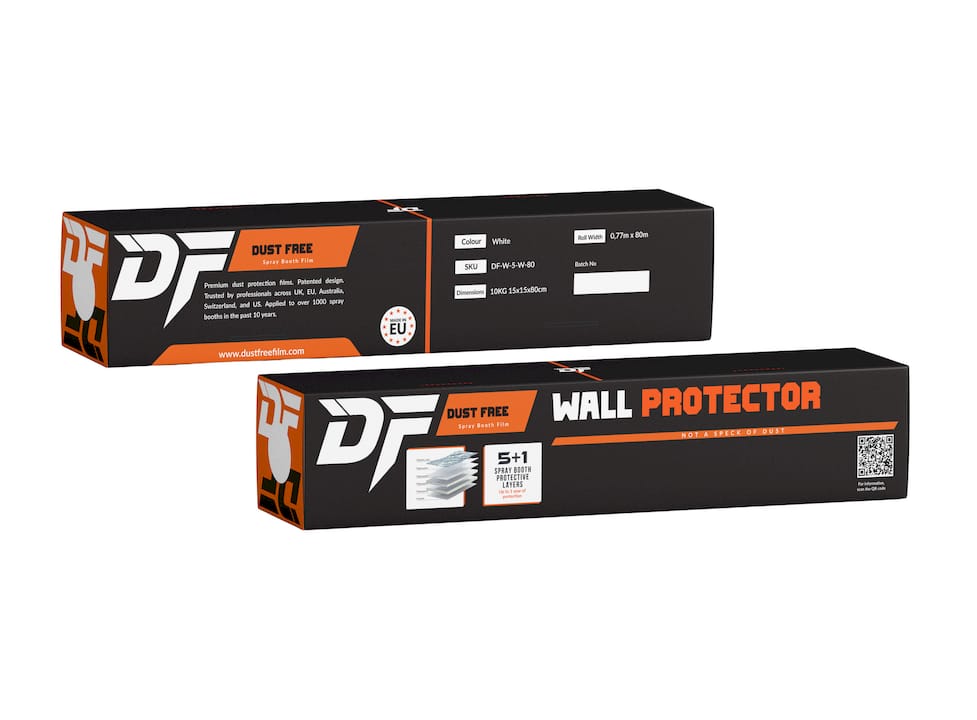
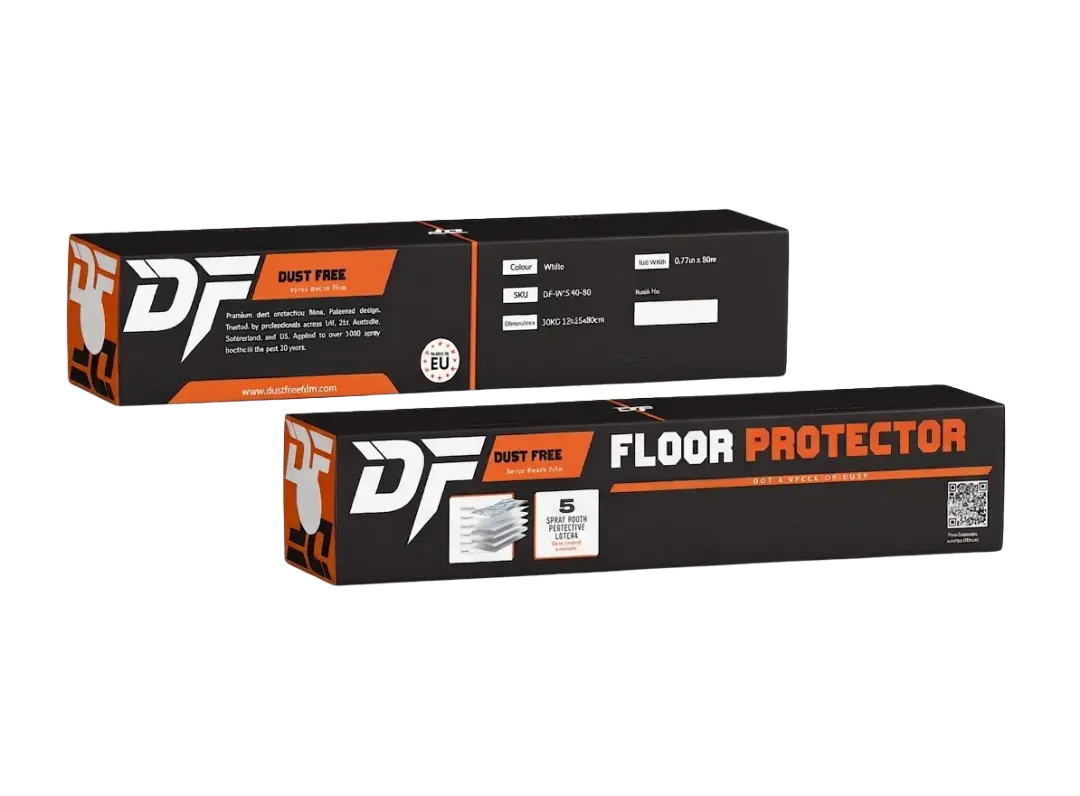
The dispenser is what actually removes the tape. Instead of hand-cutting strips and pressing them along a wall, the operator wheels or mounts a boxed dispenser, unspools the film in a straight lane, and overlaps the next lane by a few inches. No cutting mat, no tape gun, no measuring twice.
Specs worth checking before you buy a roll:
- Temperature rating: most antistatic PE films are rated for a working range, with manufacturer guidance often citing an application window around 15 to 40°C
- Antistatic treatment: confirms the film won’t generate its own static discharge that attracts more dust than it repels
- Thickness per layer: thicker layers resist tearing during peel but add cost per roll
- Base material: polyethylene (PE) is the common choice over PVC for booth-grade films
What Specs Should You Request in a Quote?
Procurement teams waste time comparing films on price alone. Price without matching specs is comparing rolls, not comparing performance. Before you send an RFQ, get answers on these five points.
- Layer count and expected life. Ask how many peel-away layers the roll includes and what soil load triggers a peel. A four-layer wall film in a low-volume shop might run most of a year; the same product in a high-volume paint line could need a fresh roll every couple of months.
- Roll dimensions and dispenser fit. Roll widths commonly run 77 to 90 cm with lengths of 80 meters or more. Confirm the supplier’s dispenser accepts that width, and measure your booth’s wall height and floor run before ordering, not after.
- Heat resistance and static-free test data. Ask for the actual datasheet, not a marketing claim. A supplier that can’t produce a melting point or working temperature range is guessing.
- Dispenser type. A patented boxed applicator system installs faster and more consistently than a manual roll-and-press method, which matters when you’re paying installer labor by the hour.
- Customization, lead time, and bulk pricing. Multi-booth operators should ask about floor protection options alongside wall film, custom widths for irregular booth shapes, and whether bulk orders unlock per-roll discounts.
Pro Tip: Ask every supplier for the same three numbers, layer count, roll width, and temperature range, in the same units. Vendors that quote in mismatched formats are usually hiding a weaker spec somewhere.
How Do You Install Tape-Free Film Without Bubbles?
Installation quality comes down to prep, temperature, and technique, not the film itself. A dispenser reduces the room for error but doesn’t eliminate the need for a trained hand on the applicator, a point echoed across installation guidance for large-format film systems.
- Clean and dry the surface first. Dust, grease film, or residual overspray under the new layer will show up as bumps and will shorten the life of the layer underneath.
- Check ambient temperature. Most PE booth films install best in a moderate range, and some large-format guides recommend staying above roughly 55°F (13°C) and below 90°F for proper tack.
- Mount the dispenser and square the first lane. A crooked first lane throws off every lane after it, so take the extra minute to align it against a wall seam or floor line.
- Overlap each new lane by two to three inches. This is what makes the tape-free method work: overlap does the sealing job tape used to do.
- Squeegee outward from center to edges. Static-cling film installation guidance recommends a firm, even pass to push out trapped air before it sets, rather than working corner to corner.
- Trim at corners and fixtures with a fresh blade. A dull blade drags and tears the top layer, which defeats the point of a clean peel-away surface.
Common mistakes: installing over a dusty surface (redo the prep, don’t just press harder), running the dispenser too fast and skipping overlap (slow down, the seconds saved aren’t worth the seam), and installing in a cold booth where the film won’t tack properly (wait for the booth to reach temperature).
Pro Tip: Time your crew on one taped install versus one tape-free dispenser install. Most shops find the dispenser method cuts wall prep time by roughly half once the crew has done it three or four times.
How Long Does Booth Film Last Before Replacement?
Each layer’s lifespan depends on booth volume, not a fixed calendar. Visual cues matter more than a set schedule: overspray buildup that dulls the surface, visible grit, or a texture change under your hand all signal it’s time to peel.
- A soiled top layer peels off in minutes, revealing a clean layer underneath with no downtime for repainting the booth interior
- High-volume booths running multiple jobs daily may cycle through a layer every few weeks, while lower-volume shops can stretch a layer for months
- Removal should pull cleanly without leaving adhesive residue. If a layer tears or leaves marks, that’s usually a sign it sat too long past its useful life
- Recycling depends on base material. PE films are more commonly accepted by industrial film recyclers than PVC-based products, so ask your supplier which polymer their film uses before assuming local disposal rules apply the same way
Plan the peel schedule around your booth’s job volume, not the calendar, and you’ll get full value out of every layer before it goes in the scrap bin.
Why Choose Dust Free Film for Tape-Free Booth Protection?
Dust Free Film has manufactured protective films for spray booths since 2012, built around European manufacturing standards and a patented dispenser system designed specifically to eliminate tape from the installation process.
- Multi-layer electrostatic wall and floor film, heat-resistant and static-free for high-traffic industrial use
- Patented application system built for quick, bubble-free installation without tape or adhesive residue
- Custom configurations and bulk-order pricing for multi-booth operations and large facilities
- Support for distributors and direct buyers across automotive, marine, industrial, and manufacturing paint booths
The operational payoff is prep time. A peel-and-go layer refresh replaces a full retaping job, and that difference compounds across a facility running several booths a week. Shops that want to see the mechanics before ordering can review electrostatic film performance details or browse wall protection film options directly.
What Health and Safety Steps Matter During Installation?
Film installation is low-hazard compared to most booth maintenance work, but it isn’t zero-risk. Ladder and lift work for wall-height application is where most incidents happen, not the film itself, so standard fall-protection rules apply the same way they would for any overhead booth maintenance.
Cutting tools are the other real concern. Trimming film at corners, doorframes, and exhaust fixtures calls for a sharp blade held at a controlled angle, and a dull or damaged blade increases the chance of a slip that cuts a hand rather than the film. Crews should treat blade changes as routine, not an afterthought saved for when cutting gets difficult.
Respiratory exposure during installation is minimal since no adhesives, solvents, or aerosols are involved in applying a tape-free film. That’s a genuine advantage over some taped masking methods, which sometimes require adhesive removers or cleaning solvents during teardown that carry their own ventilation requirements. Booth ventilation should still run during installation to clear any residual overspray dust disturbed while prepping the surface, and installers should wear basic eye protection when trimming near face height.
Static discharge is worth a mention, too. Antistatic-treated films are designed to minimize static buildup during application, which matters in an environment where flammable coatings and solvents may be present nearby. Ask suppliers for antistatic certification rather than taking a marketing claim at face value, particularly if your booth handles solvent-based coatings.
Is Tape-Free Film Actually Cheaper Than Taped Masking?
The upfront roll cost for a multi-layer tape-free film often runs higher than a comparable roll of plain masking sheeting, but the total cost comparison has to include labor, tape, and rework. Taped installations require separate rolls of masking tape at every seam and edge, plus the labor hours to cut, position, and press each strip by hand. Multiply that across a booth’s full wall and floor area, and the tape line item adds up fast.
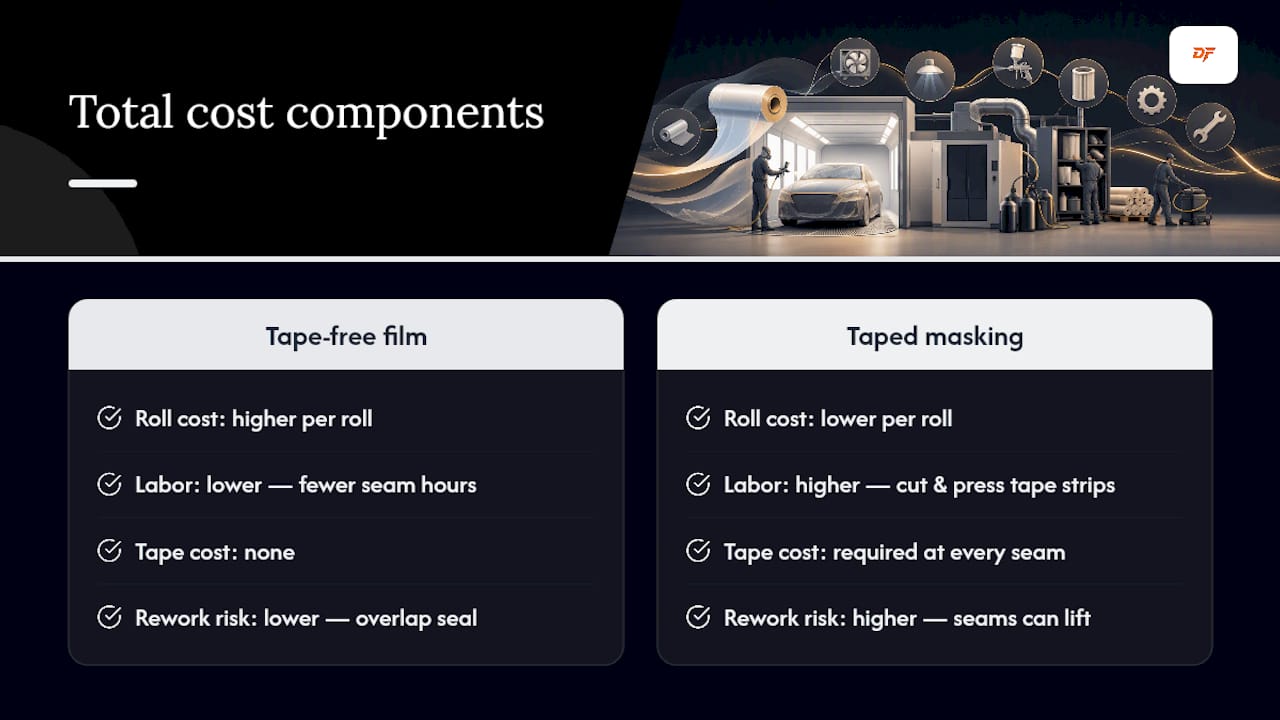
Tape-free dispenser systems eliminate the tape purchase entirely and reduce the labor hours spent on seam work, since overlapping lanes replace what tape used to do. Suppliers position this labor-saving, repeatable method as a direct answer to seam errors common with taped masking, which matters most in shops running frequent color changes or high booth turnover.
The other cost taped methods rarely account for is rework. A taped seam that lifts mid-job risks overspray bleeding through, which can mean a redo on the finish itself, not just the masking. A peeled-away contaminated layer under a multi-layer film never had that failure mode to begin with, because the seal comes from overlap and tack rather than an adhesive edge that can fail under vibration or heat cycling.
For a facility running a booth daily, the labor savings on install and the avoided rework from failed taped seams usually outweigh the higher per-roll price within the first few cycles. For a low-volume shop running one job a week, the gap narrows, and either method can pencil out depending on local labor rates and roll pricing from your supplier.
Where Can You Source Tape-Free Booth Film?
Supply channels for tape-free booth film split into a few paths, and which one fits depends on your order size and how fast you need product.
Direct factory-to-facility purchasing works best for shops that know their specs and want to skip a markup layer, particularly for bulk or recurring orders. Authorized distributor networks serve shops that want local stock, faster shipping, or hands-on support choosing between wall and floor variants. Some manufacturers also offer exclusive distributorship arrangements in specific regions, which can affect lead times and pricing depending on where your facility operates.
Availability varies by roll width and dispenser compatibility more than by geography. A shop in one country and a shop in another running the same booth size should expect similar options, since most manufacturers ship internationally and build products to common industrial booth dimensions. What differs more is lead time on custom configurations, since a nonstandard roll width or a bulk order with custom branding takes longer to produce than a stock item.
Before committing to a supplier, confirm they can support your booth’s actual dimensions, not just their standard catalog width, and ask directly about restocking lead times if you’re running a facility that can’t afford downtime waiting on a film delivery.
Does Tape-Free Film Perform Better Than Taped Alternatives?
Performance gains show up in three places: install speed, seam integrity, and consistency across repeat installs. Taped masking depends on the installer getting every strip straight and every seam tight, and that consistency degrades with crew fatigue, especially on the fifth or sixth booth wall of a shift. Overlapping dispenser lanes don’t have that failure mode because the technique is the same lane after lane.
Seam integrity is the bigger performance story. A taped seam is a single point of failure, if the adhesive lifts anywhere along that line, overspray gets through. An overlapping tape-free lane has a few inches of redundant coverage built into every seam, so a small lift at one edge doesn’t expose bare wall the way a lifted tape edge does.
Where tape-free film loses ground is upfront cost per roll and the learning curve for crews used to taping. A crew that has taped booths for a decade needs a few installs to get comfortable with dispenser handling and overlap discipline. That adjustment period is real, but it’s short, and the efficiency gains compound the moment a crew stops treating dispenser installation like a taping job with extra steps.
The Honest Verdict on Tape-Free Booth Film
The industry sells tape-free film on speed, and speed is real, but it’s not the strongest argument. The stronger case is consistency. A taped install is only as good as the installer’s patience on a Friday afternoon with five more booths to go. A dispenser lane is the same lane every time, which means the quality of your booth’s dust protection stops depending on who’s holding the tool.
Where conventional advice falls short is treating layer count as the main spec to compare. Layer count matters less than matching roll width to your actual booth dimensions and confirming antistatic performance with real datasheet numbers rather than a marketing line. A five-layer film in the wrong width, requiring awkward cuts and patches, performs worse than a four-layer film sized correctly for your walls.
The priority for any facility manager reading this: get the temperature rating and roll dimensions in writing before comparing price. Everything else, layer count, dispenser type, bulk pricing, is a secondary decision once those two specs are locked in. Skip that step and you’ll end up comparing quotes that aren’t actually comparable.
— Pavlos Filippakis
Ready to Switch to Tape-Free Booth Protection?
If your booths are still running taped masking, the fastest fix isn’t a new taping technique, it’s removing tape from the process entirely. Dust Free Film’s patented dispenser system is built specifically for the checklist covered above: multi-layer electrostatic film, antistatic and heat-resistant construction, and manufacturing built to European standards since 2012.
The film comes in configurations sized for standard and custom booth dimensions, with bulk pricing available for multi-booth operations and distributor support for facilities that want local stock on hand. Whether you’re outfitting one booth or standardizing across a plant, the same peel-and-go layer system applies.
If you’re ready to compare specs against your current setup, request a quote through Dust Free Film’s wall protection line, ask for a sample roll to test dispenser fit in your booth, or review step-by-step application guidance before your next scheduled film replacement.
Product and Installation Documents Cited
- BAXT LAYERSHIELD WP10 5-Layer Spray Booth Wall Protector
- Multi-Layer Booth Protection Film Product Page
- Film4Booth Material and Application Specifications
- Static Cling Film Installation Instructions
- panoRama Film8020 Application Recommendations
- DI-NOC Installation Guide on Adhesion Promoters
Sources
- BAXT LAYERSHIELD WP10 5-Layer Spray Booth Wall Protector | DTC
- Multi-Layer Booth Protection Film | JTAPE
- Film4Booth
- How to Install Static Cling Window Film | Hidbea
FAQ
What Makes a Booth Film “Tape-Free”?
Tape-free film uses an electrostatic or slightly tacky surface applied through a dispenser box instead of adhesive tape at seams and edges, with overlapping lanes replacing the seal a taped edge would normally provide.
How Many Layers Should a Booth Film Have?
Most commercial multi-layer films use four to five peel-away layers, offering roughly 9 to 12 months of protection depending on how often the booth runs, though high-volume shops will cycle through layers faster.
Can Tape-Free Film Be Used on Both Walls and Floors?
Yes, dispenser-applied electrostatic film comes in separate wall and floor variants, with floor products typically built with more traffic-resistant thickness to handle foot and cart traffic.
Does Tape-Free Film Cost More Than Taped Masking?
The per-roll price is often higher, but factoring in eliminated tape purchases and reduced install labor, tape-free systems frequently even out or come out ahead over a full replacement cycle, especially in high-turnover booths.
Is Dust Free Film’s System Compatible With Custom Booth Sizes?
Dust Free Film offers custom configurations and bulk pricing designed for facilities with nonstandard booth dimensions or multi-booth operations, alongside its standard patented dispenser rolls.