
Many shop owners believe all surface protective films are created equal, but improper selections can compromise both safety and finish quality. Heat resistant films are engineered to withstand high temperatures while preventing dust infiltration, making them crucial in controlling booth temperatures and dust for flawless automotive refinishing. This guide breaks down what heat resistant films are, why they matter, how they work, and how to choose the right type for your operation.
Table of Contents
- Understanding heat resistant films: Definition and core properties
- How heat resistant films work in spray booths
- Types of heat resistant films used in automotive refinishing
- Key benefits of using heat resistant films in spray booths
- Industry standards, certifications, and compliance requirements
- How to select the right heat resistant film for your spray booth
- Protect your spray booth with trusted heat resistant films
- Frequently asked questions
Key Takeaways
| Point | Details |
|---|---|
| Purpose of heat resistant films | Heat resistant films shield spray booth surfaces from high temperatures and dust, supporting superior refinishing results. |
| Film types and selection | Various options like polyester, polycarbonate, and multilayer films serve different booth needs; select by temperature and cycle frequency. |
| Operational benefits | Using proper films reduces rework, lengthens maintenance cycles, and enhances compliance and safety. |
| Compliance matters | Choose films with the right certifications for safety, fire resistance, and industry standards compliance. |
| Practical implementation | A step-by-step selection process ensures shops pick and use the most effective film for their conditions. |
Understanding heat resistant films: Definition and core properties
Now that the importance of specialization is clear, let’s define exactly what heat resistant films are and what makes them suitable for demanding spray booth environments.
Heat resistant films are specialty films designed for high temperature environments where standard protective materials would fail. Core materials include polyesters, polycarbonates, and multi-layer laminates, each offering distinct advantages for spray booth applications. These films must maintain structural integrity and adhesive stability during repeated heat cycles while containing dust particles that would otherwise compromise finish quality.
Key performance metrics define film suitability: thermal tolerance ranges from 150°F to 250°F depending on material composition, adhesive stability under sustained heat exposure, and dust particle containment efficiency. Thermophysical property testing validates these specifications through controlled laboratory conditions that simulate real-world booth cycles.
Must-have properties for automotive spray booths:
- Thermal stability across the full curing temperature range
- Static-free surface to prevent dust attraction
- Clean removal without adhesive residue
- Multi-layer construction for extended durability
- Flame resistance meeting safety standards
- Dimensional stability preventing warping or shrinkage
Pro Tip: Always verify the film’s maximum continuous operating temperature matches or exceeds your booth’s peak curing cycle. A 20°F safety margin prevents premature degradation.
The material science behind these films involves polymer chains engineered to resist thermal breakdown. Polyester films offer excellent clarity and moderate heat resistance up to 180°F, while polycarbonate variants push limits to 220°F with superior impact resistance. Multi-layer laminates combine materials to achieve both high temperature tolerance and enhanced dust barrier properties, creating the most robust solution for demanding operations.
How heat resistant films work in spray booths
Understanding the material properties, the next step is to see exactly how these films perform in a real spray booth cycle.
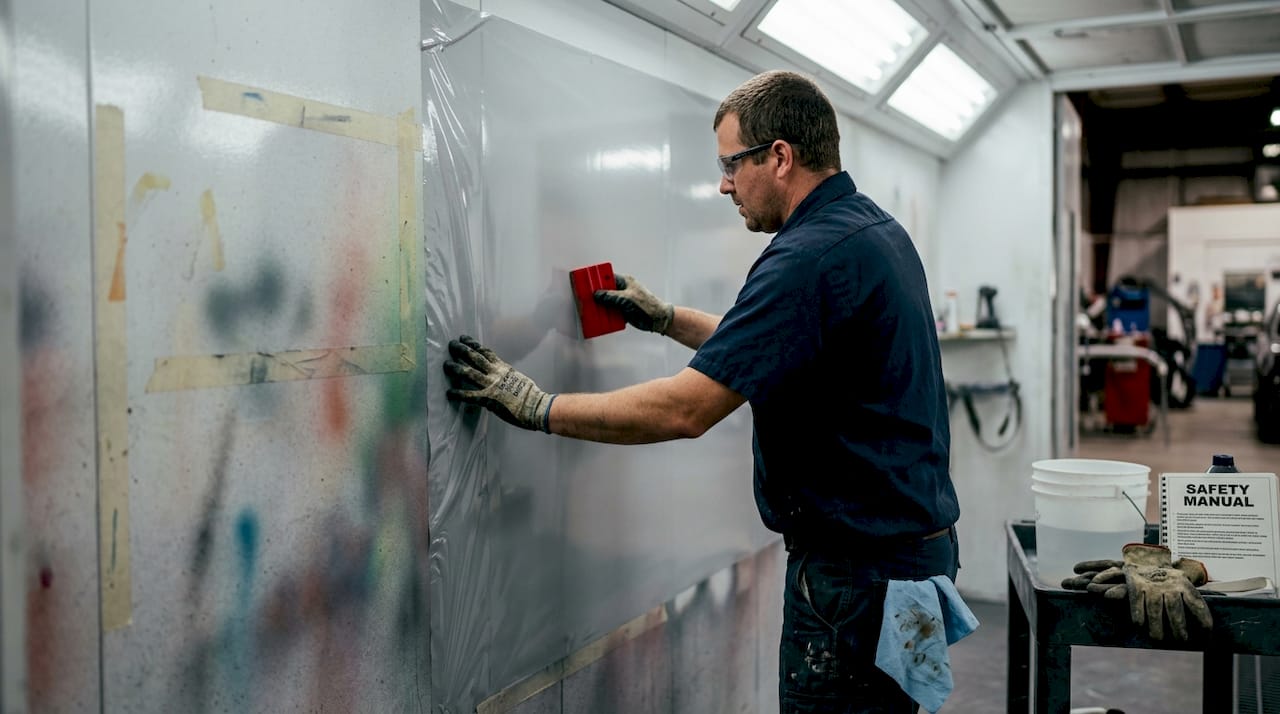
These films prevent airborne dust and withstand curing cycles up to 200°F and above through a layered structure that blocks contamination while tolerating paint curing heat cycles. The mechanism relies on controlled permeability, where the film allows minimal air exchange while creating an impenetrable barrier to particulate matter.
Installation and performance cycle:
- Surface preparation: Clean booth walls, floors, and ceilings to ensure proper film adhesion
- Film application: Apply using specialized dispensers for bubble-free, wrinkle-free coverage
- Heat exposure: Film withstands multiple spray and cure cycles without degradation
- Replacement: Remove and replace film based on accumulation levels or time intervals
Most failures occur when films are not rated for the booth’s peak temperature, leading to adhesive failure, film shrinkage, or surface contamination. The difference between adequate and optimal film selection becomes evident during high-volume periods when booth uptime directly impacts profitability.
“Top-performing shops invest in premium films because consistent finishes depend on eliminating every variable. When you control dust and heat exposure simultaneously, rework drops and customer satisfaction climbs.”
Consider two scenarios: Shop A uses standard protective film rated to 160°F in a booth that reaches 190°F during cure cycles. Within hours, the film edges curl, adhesive fails, and dust infiltrates the protected surfaces. Shop B deploys properly rated heat resistant film and completes 40 paint jobs before scheduled replacement, with zero dust-related defects.
Thermal degradation evidence shows that films operating beyond their rated temperature lose 60% of adhesive strength within 8 hours, creating the exact contamination risk they’re meant to prevent.
Types of heat resistant films used in automotive refinishing
With an understanding of film function, let’s compare the main types used in the field and what situations they’re best suited for.
Multiple film types exist, ranging from single-layer polyesters to advanced multilayer protection solutions. Each category serves specific operational requirements based on temperature exposure, application frequency, and finish quality standards.
| Film Type | Max Temperature | Dust Control | Durability | Best Application |
|---|---|---|---|---|
| Polyester | 180°F | Good | Moderate | Low-temp booths, occasional use |
| Polycarbonate | 220°F | Excellent | High | High-temp operations, frequent cycles |
| Multi-layer | 240°F+ | Superior | Very High | Premium finishes, continuous operation |
| Specialty Engineered | 250°F+ | Maximum | Extreme | Industrial, aerospace applications |
Polyester films offer the most economical entry point for shops with moderate heat exposure and standard finish requirements. They provide reliable dust protection and clean removal, making them suitable for wall and ceiling applications where temperature peaks remain below 180°F.
Polycarbonate films deliver enhanced performance for operations running multiple daily cure cycles. Their superior material durability withstands repeated thermal stress while maintaining adhesive integrity, ideal for floor protection in high-traffic booth areas.
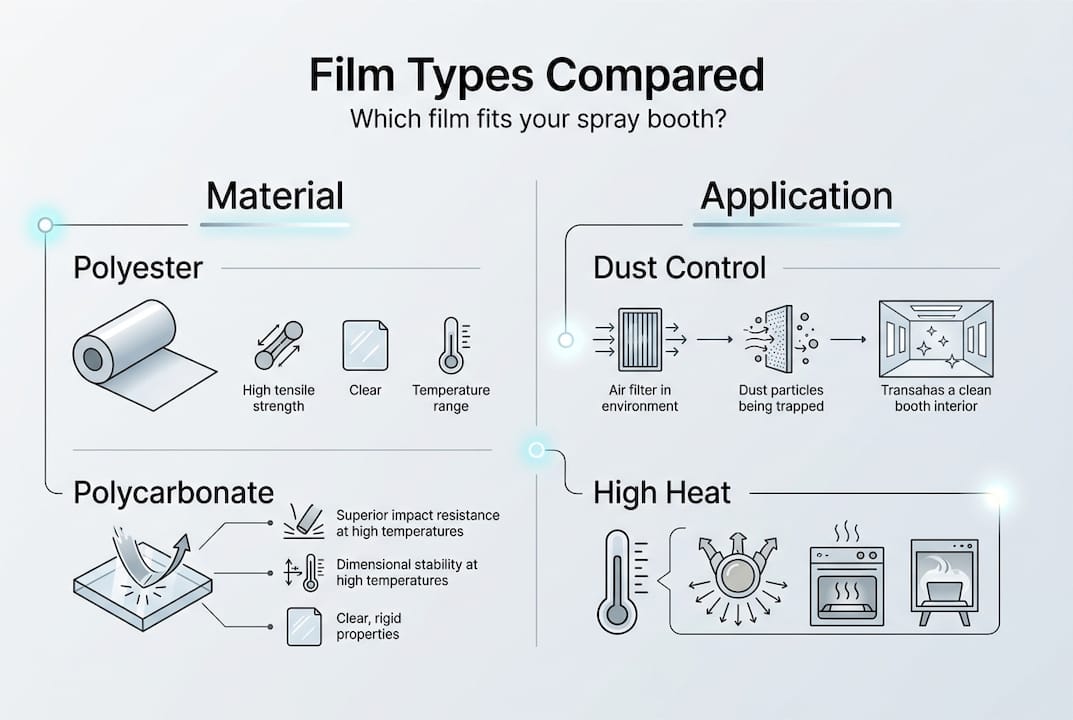
Multi-layered solutions represent the premium tier, combining materials to achieve both extreme heat resistance and maximum dust containment. These films feature engineered layers that work synergistically: an outer layer resists heat, a middle layer provides structural stability, and an inner layer ensures clean adhesion and removal.
Choosing film type based on shop needs:
- High-volume shops: Multi-layer films reduce replacement frequency and minimize downtime
- Specialty finishes: Premium films eliminate contamination risks for show-quality work
- Budget-conscious operations: Polyester films for walls, polycarbonate for floors balances cost and performance
- Mixed-use facilities: Stock multiple types to match specific job requirements
High-temperature materials reference data confirms that material selection directly correlates with operational efficiency, with properly matched films extending booth protection cycles by 40% compared to generic alternatives.
Key benefits of using heat resistant films in spray booths
Having reviewed types and qualities, it’s time to focus on the tangible benefits shop owners experience by investing in true heat resistant films.
The operational advantages extend far beyond simple surface protection. Shops report reduced refinishing defects and improved turnaround from up to 60% cleaner booth operation, translating directly to bottom-line profitability.
Measurable operational improvements:
- Extended maintenance cycles: Properly rated films last 3-4 times longer than inadequate alternatives
- Reduced rework costs: Dust-related paint flaws drop by 60-75% with premium films
- Enhanced operator safety: Heat-stable films eliminate off-gassing and adhesive failure risks
- Regulatory compliance: Certified films meet fire safety and environmental standards
- Increased throughput: Less downtime for booth cleaning and surface preparation
- Finish consistency: Controlled environment produces repeatable, predictable results
The financial impact becomes clear when you calculate rework costs. A single dust-related defect requiring color correction and reapplication costs $200-400 in materials and labor. Eliminating just two defects per month through better booth protection pays for premium film investment while improving customer satisfaction.
Pro Tip: Track your maintenance intervals and defect rates before and after upgrading to heat resistant films. Most shops document ROI within 60-90 days through reduced rework alone, not counting time savings and improved capacity utilization.
Greater operator safety emerges as an often-overlooked benefit. Films that fail under heat exposure release volatile compounds and create slip hazards from adhesive residue. Heat-stable films maintain their integrity throughout the cure cycle, protecting both the booth surfaces and the technicians working within the environment.
Regulatory compliance grows increasingly important as environmental and safety standards tighten. Certified heat resistant films document your commitment to best practices, supporting insurance requirements and customer quality audits that larger contracts demand.
Industry standards, certifications, and compliance requirements
Along with technical and operational gains, meeting recognized standards is critical for risk management in today’s regulatory environment.
Films should meet or exceed specifications for flame resistance, outgassing, and stability per international standards. These certifications protect your operation from liability while ensuring consistent performance across different environmental conditions.
Critical certification marks to verify:
- ASTM E84: Surface burning characteristics and flame spread ratings
- UL 94: Flammability testing for plastic materials
- ISO 9001: Quality management system compliance
- REACH compliance: European chemical safety regulations
- VOC certifications: Low volatile organic compound emissions
Insured shops must document standards compliance to maintain coverage and defend against liability claims. When a finish defect leads to a customer dispute, your ability to demonstrate proper materials and procedures becomes your primary defense. Certified films provide that documentation trail.
Thermal analysis services validate manufacturer claims through independent testing, giving you confidence that rated specifications match real-world performance. This third-party verification matters when you’re making purchasing decisions that impact your operation’s efficiency and reputation.
“Non-compliant materials create risks that extend beyond immediate performance failures. They expose your business to regulatory penalties, insurance complications, and customer disputes that proper certification prevents.”
The certification process involves rigorous testing under controlled conditions that simulate worst-case scenarios. Films must maintain their properties through repeated thermal cycles, demonstrate predictable behavior under stress, and prove they won’t contribute to fire hazards or toxic emissions.
How to select the right heat resistant film for your spray booth
The final step is a proven workflow for choosing and validating the right product for your operation’s unique needs.
Proper material selection and installation are key to maximizing protection and cost savings. This systematic approach eliminates guesswork and ensures your investment delivers expected returns.
Selection workflow:
- Document booth temperature profile: Measure actual peak temperatures during cure cycles, not just equipment specifications
- Assess dust risk factors: Evaluate booth age, ventilation efficiency, and typical contamination sources
- Define finish quality requirements: Match film grade to customer expectations and job complexity
- Calculate usage patterns: Determine replacement frequency based on spray volume and cycle intensity
- Verify supplier credentials: Confirm certifications, technical support availability, and product consistency
- Conduct trial validation: Test sample rolls during peak conditions before committing to bulk purchases
Pre-purchase checklist:
- Film type matches booth temperature range with 20°F safety margin
- Certifications align with insurance and regulatory requirements
- Installation method compatible with existing booth configuration
- Supplier provides technical support and application guidance
- Pricing structure supports both trial quantities and volume discounts
- Replacement intervals fit operational schedule and budget constraints
Pro Tip: Test a trial roll during your hottest booth cycle before a full rollout. Run three complete cure cycles and inspect for edge lifting, adhesive failure, or surface changes. This validation prevents costly mistakes and confirms manufacturer specifications match your reality.
The supplier relationship matters as much as the product itself. Choose partners who understand spray booth operations and can provide application guidance, troubleshooting support, and consistent product availability. Premium films from unreliable suppliers create operational headaches that negate their technical advantages.
Consider total cost of ownership rather than just purchase price. A film that costs 30% more but lasts twice as long and eliminates defects delivers far better value than cheaper alternatives that require frequent replacement and allow contamination. Calculate costs per booth cycle rather than per roll to make accurate comparisons.
Protect your spray booth with trusted heat resistant films
For shop owners ready to level up their operations, here’s where to explore purpose-built solutions for spray booth protection.
Your spray booth represents a significant investment in your operation’s capability and reputation. Protecting that investment with purpose-built heat resistant films ensures consistent results, reduces maintenance costs, and supports the finish quality your customers expect. Since 2012, we’ve specialized in manufacturing premium dust protection films designed specifically for automotive refinishing and industrial painting applications.
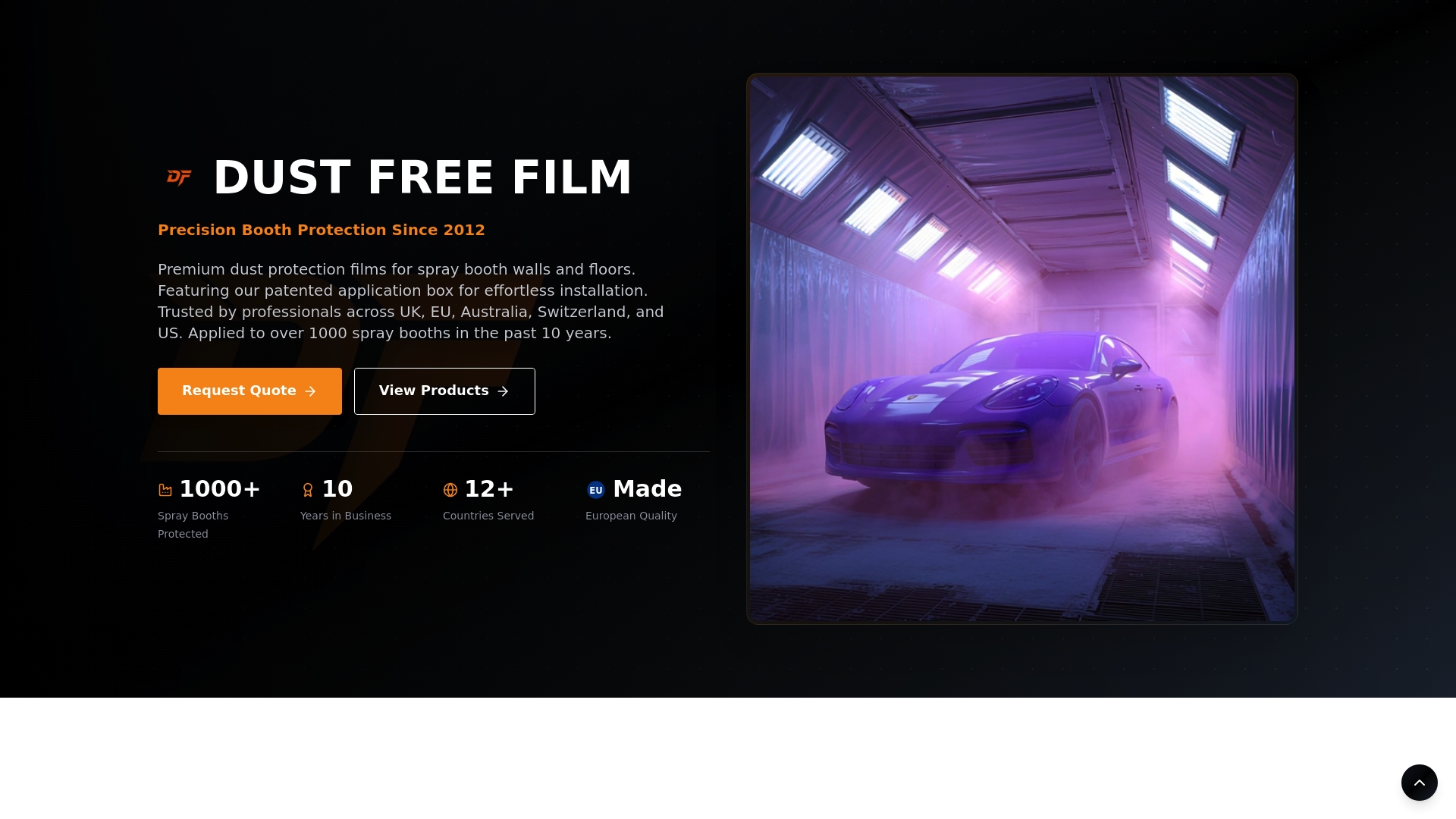
Our multi-layer electrostatic films feature patented application systems for quick, bubble-free installation, with heat resistance engineered for the demanding conditions of modern spray booths. European manufacturing standards ensure consistent quality, while our technical support team helps you select the optimal solution for your specific booth configuration and operational requirements. Explore our complete range of wall protector films and floor protection systems designed to keep your booth dust-free and your finishes flawless.
Frequently asked questions
What temperature can heat resistant films withstand?
High-grade heat resistant films in spray booth applications typically withstand continuous exposure up to 200°F or more, with premium multi-layer options rated to 250°F depending on material composition.
How often should I replace heat resistant film in my spray booth?
Replacement cycles vary by exposure and material durability, ranging from monthly to quarterly depending on spray booth usage intensity and manufacturer recommendations for your specific film type.
Can heat resistant films help with dust and particle control?
Yes, heat resistant films are engineered to prevent dust infiltration in spray booths, providing an effective barrier against airborne particles while supporting both cleanliness and finish quality during refinishing operations.
What certifications should I look for when buying spray booth film?
Look for certifications covering flame resistance and stability such as ASTM E84 for surface burning characteristics, UL 94 for flammability, and ISO 9001 for quality management compliance.
What’s the ROI for investing in premium heat resistant film?
Operational advantages and ROI are realized through fewer defects, reduced maintenance costs, longer booth surface life, and increased throughput from cleaner operations and fewer finish-related rework cycles.