

Choose heat-resistant, multi-layer electrostatic dust-protection film when your spray booth runs bake, IR, or force-dry cycles. Standard films soften, lift, or leave adhesive residue at elevated temperatures. Temperature-rated films stay put, remove cleanly, and protect finishes through every curing cycle. Before placing a bulk order, confirm three things:
- The film’s maximum continuous temperature rating matches or exceeds your booth’s peak post-heater temperature
- The product datasheet specifies clean removal without solvent after a stated number of bake cycles
- The supplier offers a patented dispenser system that eliminates tape and cuts application time per wall
Dustfreefilm manufactures multi-layer electrostatic booth films with heat ratings for bake cycles, a patented dispenser system, and factory-direct bulk supply. Request a labeled sample roll and a full technical datasheet before committing to volume.
Key Takeaways
Heat-resistant, multi-layer electrostatic booth films are the correct specification for any spray booth running bake, IR, or force-dry cycles, and the dispenser system is as critical to performance as the film’s temperature rating.
| Point | Details |
|---|---|
| Match rating to booth peak | Specify a film rated above your booth’s measured maximum temperature. |
| Require post-bake removal data | A temperature rating alone is insufficient; demand a residue test result before bulk ordering. |
| Evaluate the dispenser system | Bubble-free, tape-free application makes rated performance repeatable across every operator and shift. |
| Run a one-bake pilot | Measure rework incidents, refresh time, and cleanup time to build your ROI case before full rollout. |
| Dustfreefilm for bulk orders | Multi-layer electrostatic films with heat ratings, patented dispenser systems, and European manufacturing standards available factory-direct. |
Table of Contents
- What “heat-resistant protection” actually means for spray-booth films
- Operational benefits of specifying heat-resistant protection
- When you must specify heat-resistant protection
- How to choose a heat-resistant protective film
- Installation best practices and patented dispenser systems
- Exact specs to include on a purchase order
- Cost drivers and how to calculate ROI
- What proof to request from suppliers before a bulk order
- The spec sheet is not the whole story
- Dustfreefilm fits the procurement criteria
- Sources
What “heat-resistant protection” actually means for spray-booth films
In spray-booth procurement, heat-resistant protection refers specifically to multi-layer electrostatic or adhesive films engineered to withstand elevated booth temperatures during bake and curing cycles, not personal protective equipment. The distinction matters because most generic protective films are rated for ambient conditions only.
Manufacturers state temperature performance in one of three ways on a technical datasheet: maximum continuous temperature (in °C or °F), bake-cycle tolerance (number of cycles before mandatory replacement), or cumulative bake hours. Some datasheets list temperature resistance up to 80°C (176°F) and tie replacement intervals to bake hours or months of use, whichever comes first. Other products, including multi-layer polypropylene films, also publish mechanical properties like elongation at break and tensile strength, which tell you how the film behaves during layer-by-layer removal.
Watch for these specification terms: “heat resistant up to X°C,” “bake-cycle tolerance,” “static-charged surface,” “removable without adhesive residue.” Vague language like “suitable for warm environments” is not a temperature rating.
Pro Tip: Request both the maximum temperature rating AND the removal life expressed as a bake-cycle count. A film rated to 80°C that degrades after three cycles is the wrong choice for a high-throughput shop running eight bakes per day.
Operational benefits of specifying heat-resistant protection
The core case for heat-resistant films in spray booth efficiency comes down to three measurable outcomes: fewer paint defects, less downtime per booth refresh, and lower labour cost per application.
- Reduced paint defects and rework: A film that stays flat and residue-free through a bake cycle keeps overspray particles captured and off the painted surface. Fewer contaminants mean fewer defects per job.
- Longer protection life: Heat-rated films survive multiple bake cycles before replacement, cutting the frequency of booth shutdowns for re-lining.
- Cleaner removal: High-quality booth film resists temperatures around 200°F and removes cleanly without solvent, protecting floors and walls from adhesive buildup that would otherwise require chemical cleanup.
- Improved QC visibility: Bright white film surfaces make dust, drips, and surface imperfections visible under booth lighting, which speeds inspection.
- Non-slip floor safety: Floor protection that maintains grip at elevated temperatures reduces slip risk during active spray and curing operations.
- Labour savings from dispenser use: A patented dispenser system produces repeatable overlaps and bubble-free application without tape or magnets, cutting application time per wall compared to manual methods.
A layered booth protection renovation documented by DTC showed improved throughput and reduced rework alongside a brighter workspace that made inspection faster and more reliable.
When you must specify heat-resistant protection
Not every booth needs temperature-rated film. These are the triggers that make it non-optional:
Process triggers: IR lamps, convection bake ovens, or force-dry systems that push booth air temperatures above standard film ratings. If your booth reaches temperatures where a standard film would soften or lift, you need a heat-rated product.
Throughput triggers: High bake frequency compresses the replacement interval of standard films. When you’re re-lining walls more than once a week, the labour cost alone justifies upgrading to a film with a longer bake-cycle tolerance.
Environmental triggers: Booths in hot climates, or designs with localized hot spots near heater outlets, can exceed ambient ratings even without a dedicated bake cycle.
A booth that reads 75°C at the sensor may spike higher near the outlet. A film rated to 80°C offers almost no buffer.*
How to choose a heat-resistant protective film
Work through this checklist before sending an RFQ:
- Material type: Multi-layer polypropylene or equivalent with published mechanical properties (tensile strength, elongation at break).
- Temperature rating: Maximum continuous temperature in °C/°F, confirmed on the datasheet, not in marketing copy.
- Bake-cycle tolerance: Number of cycles or cumulative hours before mandatory replacement.
- Adhesive profile: Tack level appropriate for your wall/floor substrate; confirm zero-residue removal after bake exposure.
- Static-free formulation: Electrostatic charge attracts overspray particles and holds them in the film rather than letting them re-enter booth air.
- Layer count: Multi-layer systems allow peel-and-refresh without full re-lining, which cuts downtime between jobs.
- Roll dimensions and core size: Match to your dispenser system to avoid manual cutting and waste.
- Dispenser compatibility: Confirm the roll fits the supplier’s patented dispenser box before ordering bulk.
Red flags that should stop an order:
- Temperature claims stated only in marketing materials, not on a signed datasheet
- “Typical values only” without test context or test conditions listed
- No sample or dispenser demo available before bulk commitment
- Adhesive residue not addressed in the removal section of the datasheet
Run every shortlisted film through one full bake cycle on a sample panel. Check for dimensional change, adhesive transfer, and ease of layer removal before approving volume.
Installation best practices and patented dispenser systems
Application method determines whether a heat-resistant film performs as rated. Bubbles and lifted edges create airflow channels that pull overspray under the film, defeating its purpose entirely.
Dustfreefilm’s patented dispenser system eliminates tape and magnets, produces consistent overlaps, and allows one operator to line a full booth wall in a fraction of the time manual application requires. The dispenser box holds replacement layers ready for peel-and-refresh between jobs, so booth downtime stays minimal.
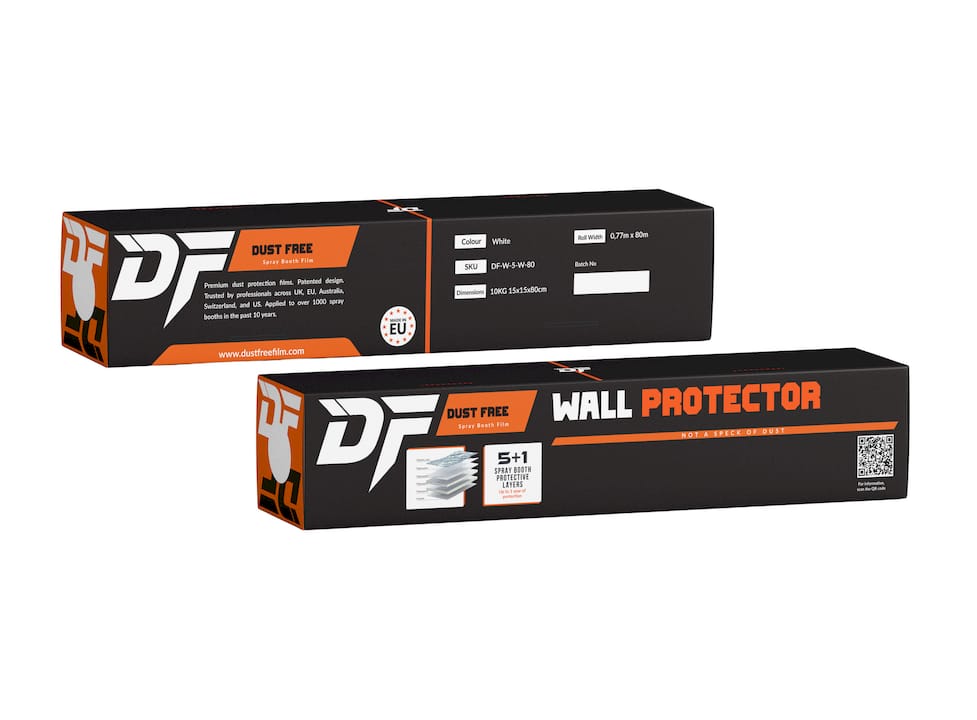
High-level installation sequence: clean and dry all surfaces before application, start from the top of the wall and work down, overlap edges by at least 5 cm to prevent airflow lift, smooth each section as you go to eliminate bubbles, and remove any protective backing layers specified by the manufacturer before the first bake cycle.
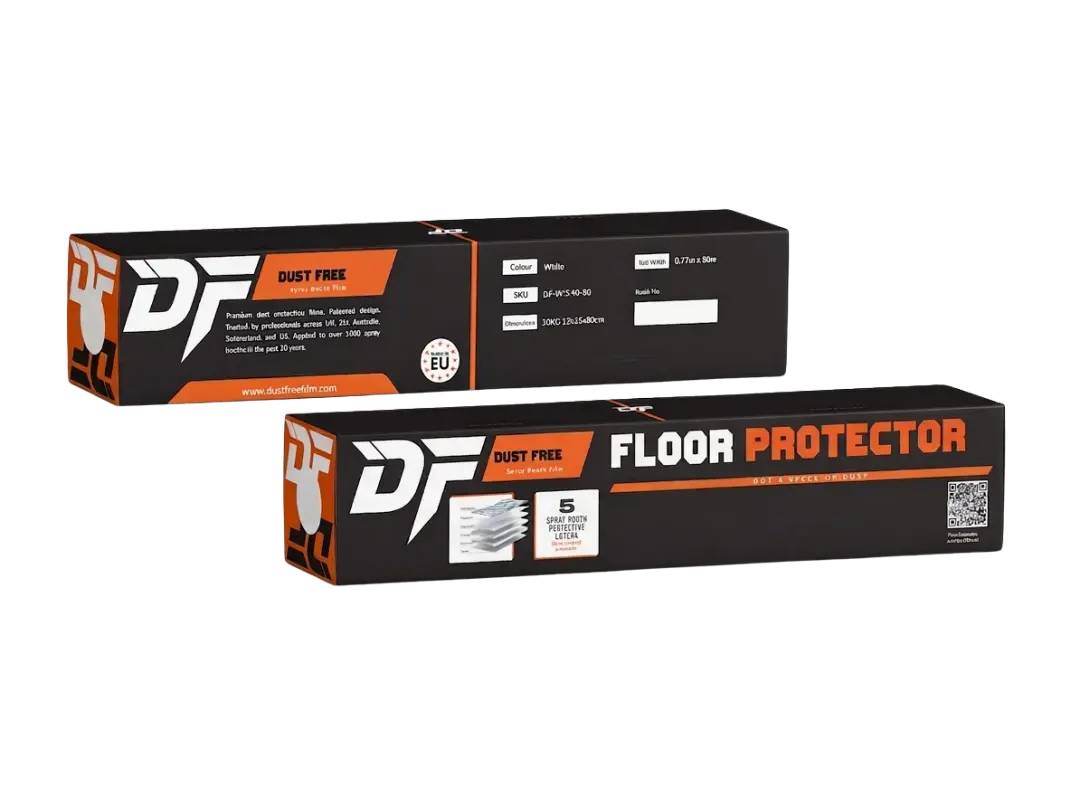
Pro Tip: Keep a full replacement set of rolls loaded in the dispenser box at all times. Set a scheduled refresh cadence based on your bake-cycle count, not calendar time. A shop running ten bakes per day burns through film life faster than one running two.
Exact specs to include on a purchase order
Paste these fields into every PO and RFQ for heat-resistant booth film:
| PO Field | What to specify |
|---|---|
| Product family | Multi-layer electrostatic booth wall/floor protector |
| Max continuous temperature | °C and °F, from signed datasheet |
| Bake-cycle tolerance | Number of cycles or cumulative hours |
| Layer count | Number of peelable layers per roll |
| Static behavior | Electrostatic charge confirmed |
| Adhesive type | Tack level; zero-residue removal guarantee |
| Roll width / length / core | Dimensions in mm/m; core diameter in mm |
| Thickness | Microns per layer |
| Color / opacity | White preferred for QC visibility |
| Dispenser compatibility | Confirm fit with supplier’s dispenser system |
With your sample request, include: a labeled sample roll, the full technical datasheet, a removal-life test report showing post-bake adhesive residue results, and dispenser mounting instructions. For bulk orders, confirm palletization format, lead time, and minimum order quantity for custom configurations.
Cost drivers and how to calculate ROI
The incremental cost of heat-resistant film over standard film is real, but the math usually closes quickly. Primary cost drivers: material cost per m², labour hours to apply and remove, booth downtime per refresh cycle, and disposal cost.
A simple ROI framework procurement teams can run during a pilot:
| Input | Baseline (standard film) | Heat-resistant film |
|---|---|---|
| Rework incidents per week | Measure during pilot | Measure during pilot |
| Time to refresh booth (minutes) | Measure during pilot | Measure during pilot |
| Adhesive cleanup time (minutes) | Measure during pilot | Measure during pilot |
| Material cost per m² | Record from invoice | Record from invoice |
ROI = (avoided rework cost + labour savings + reduced downtime value) ÷ incremental material cost per application period.
Heat-resistant films extend equipment lifespan and reduce downtime when correctly matched to booth curing temperatures, which means the pilot period typically produces enough data to justify the upgrade within the first month.
What proof to request from suppliers before a bulk order
Send this document request to every shortlisted supplier before committing to volume:
- Full technical datasheet with maximum continuous temperature, bake-cycle tolerance, and test conditions stated
- Static-charge test description confirming electrostatic performance
- Removal and residue test results showing post-bake adhesive transfer (or confirmed absence of it)
- CE marking documentation or equivalent European manufacturing standard certification
- Laboratory exposure data if available, matched to your booth temperature profile
- A customer reference or short case study from a facility with a similar bake profile and throughput
When reviewing a datasheet, match the test conditions to your actual booth conditions. A film tested at 60°C for two hours is not validated for a 90°C, four-hour bake cycle. Ask for raw test parameters when the language is vague.
The spec sheet is not the whole story
Most procurement guides for booth protection stop at temperature ratings and cost per m². That framing misses the real variable: installation consistency.
A film rated to 100°C applied with bubbles and misaligned overlaps will underperform a film rated to 80°C applied correctly every time. The dispenser system is not a convenience feature. It is the mechanism that makes the film’s rated performance repeatable across operators and shifts. Procurement teams that evaluate film in isolation, without testing the dispenser system in their actual booth, are measuring half the product.
The second thing most guides underweight is the removal step. A film that applies quickly but requires solvent cleanup or leaves adhesive residue adds hidden labour cost that never appears in the per-m² price comparison. Require a post-bake removal test, not just a temperature rating, before approving any supplier.
Dustfreefilm fits the procurement criteria
Dustfreefilm manufactures multi-layer electrostatic booth wall and floor protectors built for bake-cycle environments, backed by European manufacturing standards and available in bulk configurations with custom roll sizing.
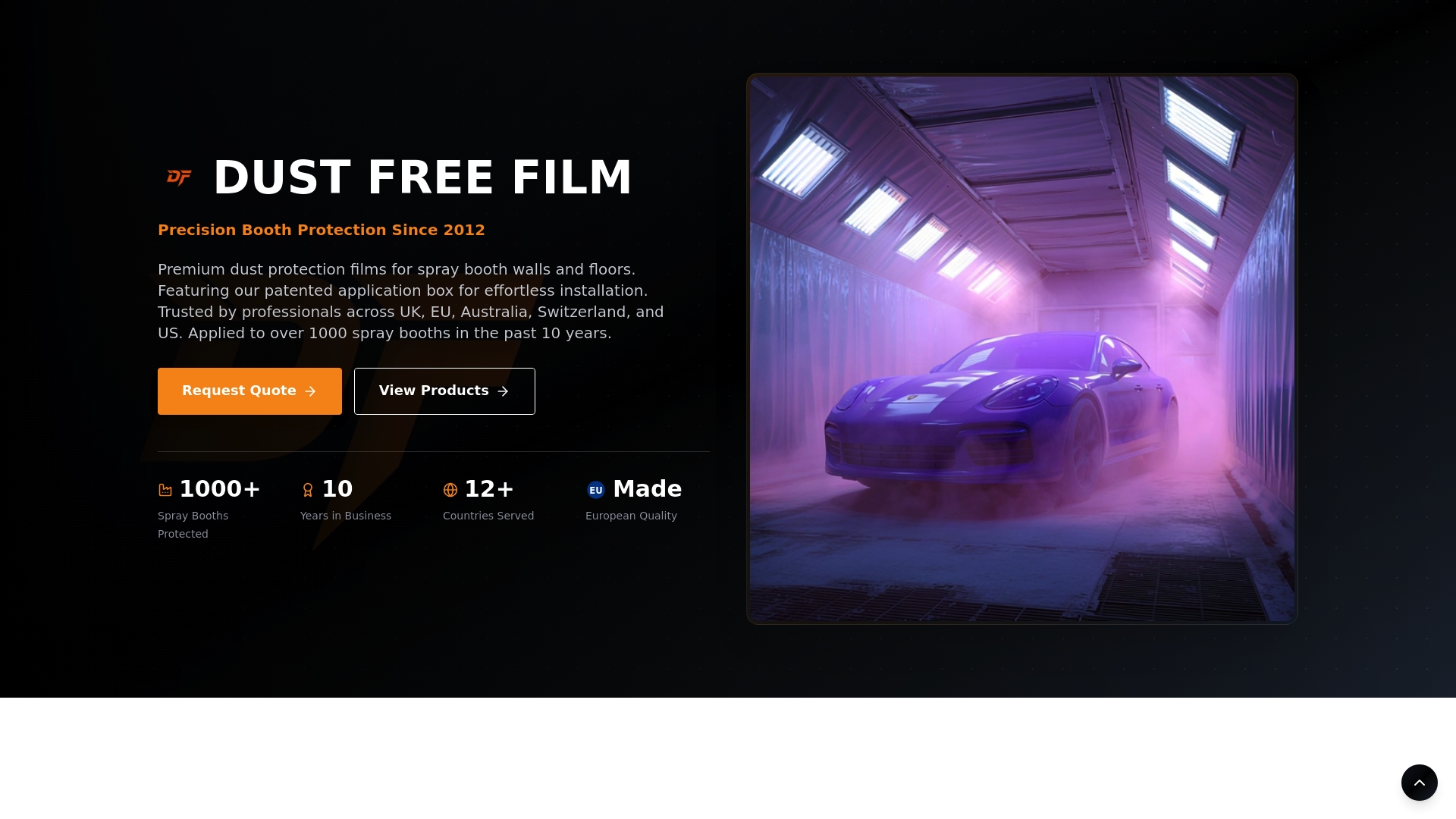
The patented dispenser system produces bubble-free, tape-free application with consistent overlaps, and replacement layers stay loaded in the box for fast peel-and-refresh between jobs. Every product ships with a technical datasheet covering temperature ratings and removal-life data.
To evaluate Dustfreefilm for your facility: request a labeled sample roll, run it through one full bake cycle at your booth’s peak temperature, check for residue, then schedule a dispenser demo with your team. Include your booth’s maximum temperature, bake cadence, and required roll dimensions in your inquiry. Contact Dustfreefilm at Dustfreefilm to request samples and a quote.
Sources
- Paint Booth Protective Film: Why It’s Essential For Your Floor And Walls - The DailyMoss
- Renovating a Spray booth for a premier refinisher of prestige & performance cars | DTC