

Stopping winter static in a paint booth comes down to three checks, done in order: confirm every grounding and bonding point reads within acceptable resistance, push booth relative humidity back into the target range, and put ionization or anti-static wipes between your hands and the panel. Skip any one of these and the other two only mask the problem. This isn’t optional housekeeping either. NFPA 33 ties grounding directly to ignition risk around solvent vapors, so a static complaint in January is also a compliance check you can’t put off. Grab a hygrometer and a ground continuity tester before your next shift starts.
TL;DR:
- Maintaining grounding resistance below 25 ohms and verifying all bonding points weekly is essential to prevent static-triggered fires during winter.
- Increasing indoor humidity to at least 40% through proper humidification methods reduces static charge dissipation time in cold, dry conditions.
- Moving humidity sensors to working height and recalibrating seasonally ensures accurate readings and effective static control during winter months.
- Using ionizing tools and anti-static wipes correctly lowers static buildup on panels, but grounding remains a critical safety requirement.
- Installing electrostatic protective film on booth surfaces helps contain airborne dust attracted by static, supporting static control routines without disrupting production.
Table of Contents
- What Causes Static Electricity in a Spray Booth
- Why Winter Air Makes Static Control Harder
- Grounding and Bonding: The Checks You Can’t Skip
- Humidity and Air-Management Choices That Actually Hold Up in Cold Weather
- Anti-Static Cleaning and Ionization That Cuts Winter Defects
- A Same-Shift Troubleshooting Workflow for Static Problems
- The Regulatory Baseline: NFPA, OSHA, and Ignition Risk
- Where Electrostatic Protective Film Fits Into Winter Static Control
- What a Maintenance Lead Actually Prioritizes Each Winter
- A Practical Next Step for Managing Booth Contamination
- Standards and Studies Worth Keeping on File
- Sources
- FAQ
What Causes Static Electricity in a Spray Booth
Static in a paint booth comes from triboelectric charging: two materials rub, slide, or separate, and electrons transfer from one surface to the other. Paint particles atomizing through a spray gun nozzle do exactly this against the surrounding air, and so does a technician’s coveralls brushing against a plastic bumper cover. The charge has to go somewhere, and if the booth isn’t grounded well, it sits on the surface until it discharges, often by grabbing the nearest floating dust particle first.
Common sources you’ll find in almost any booth include:
- Personnel walking across booth flooring, especially in non-conductive shoes
- PPE and clothing made from synthetic fibers
- Plastic and composite substrates that don’t conduct charge away
- Airflow dragging through filter media, which strips electrons off fast-moving air
Once a panel holds a static charge, it pulls in overspray and airborne dust like a magnet, which is why a “clean” booth still produces a speckled finish in cold months.
Why Winter Air Makes Static Control Harder
Cold outside air holds very little moisture, and heating that air for makeup supply doesn’t add water vapor, it just drops the relative humidity further. Booths running on 100% outside air can see indoor RH fall into the single digits during a hard freeze, according to Carel’s air management guidance. Below roughly 40% RH, surface moisture that normally helps dissipate charge basically disappears, so static that would leak away in July sticks around for minutes in January.
A few practical notes worth knowing before you adjust the humidification controls:
- Booths that recirculate a portion of return air tend to maintain higher humidity compared to full outside-air systems in cold climates.
- Desiccant humidification tends to outperform evaporative or ultrasonic units when incoming air is already near freezing, since it doesn’t rely on evaporative cooling to add moisture.
- Sensor placement matters more than most shops realize: a ceiling-mounted hygrometer can read well above the humidity technicians actually experience at panel height.
Pro Tip: Move your hygrometer to roughly the height where the gun meets the panel, not the ceiling, and recalibrate it at the start of every heating season. A sensor that’s been drifting since last spring will send you chasing the wrong number all winter.
Grounding and Bonding: The Checks You Can’t Skip
NFPA 33, NFPA 77, OSHA’s 29 CFR 1910.107, and the National Electrical Code all require spray booths to maintain a continuous, verified path to earth ground for every conductive component. This isn’t a suggestion. Solvent vapor inside a booth needs surprisingly little ignition energy, and a 2025 study on vehicle painting ignition points to static discharge as a documented cause of fire and explosion incidents during spraying operations.
Verifying continuity takes a megohmmeter and about ten minutes:
- Test resistance from each major metal component (booth frame, ductwork, spray gun, part racks) to the grounding electrode.
- Confirm every reading falls under the NFPA acceptance threshold of 1 megohm, with under 25 ohms recommended for genuinely reliable dissipation.
- Check that paint pails, mixing containers, and any metal fixtures touching flammable coatings are bonded to the same ground, not just plugged into a wall outlet.
- Inspect ground clamps and cables for corrosion, loose connections, or physical damage, since a clamp that looks fine can still read open.
Ground resistance benchmark: NFPA and OSHA guidance sets the acceptance ceiling at under 1 megohm, but shops chasing consistent static dissipation, not just code minimums, target under 25 ohms.
A documented grounding audit run every season catches the slow drift that ad-hoc checks miss.
Humidity and Air-Management Choices That Actually Hold Up in Cold Weather
Four humidification approaches show up in most booths: evaporative pad systems, ultrasonic misting, steam injection, and desiccant-based units. Evaporative and ultrasonic systems both struggle when incoming air is near freezing, since they either rely on warm air to carry moisture or risk icing components. Steam injection works but adds real energy cost. Desiccant humidification, paired with proper preheating of makeup air, tends to be the more dependable option once outdoor temperatures drop hard.
Running the system well matters as much as picking it:
- Preheat incoming air before it hits the humidifier, don’t ask the humidifier to do both jobs.
- Set your hygrostat to a practical target window, roughly mid-40s to mid-60s percent RH depending on the coating you’re spraying.
- Watch for condensation on cold surfaces near the booth envelope; oversaturating the air to fight static just trades one defect for another.
- Recalibrate sensors seasonally, and place at least one at working height rather than relying on a single ceiling unit.
Pro Tip: If your finish quality swings hard between morning and afternoon shifts in winter, check whether your humidifier cycles off overnight. A cold-soaked booth needs longer to recover than most setback schedules allow.
Getting this dialed in isn’t a one-time setup. A detailed humidity control walkthrough is worth keeping on hand for the shops running multiple booth types side by side.
Anti-Static Cleaning and Ionization That Cuts Winter Defects
Standard tack cloths, the waxy kind many shops have used for decades, actually generate friction charge as they wipe a panel, which can make static worse right before you spray. Swapping to anti-static wipes or conductive tack cloths removes that risk without changing your prep routine.
Where ionization earns its place:
- Ionizing bars or handheld ionizing guns neutralize charge on a panel surface within seconds, and manufacturer guidance recommends positioning them close to the work area rather than at booth entry points.
- Ion output drops steadily as dust and overspray coat the emitter pins, so a wipe-down schedule, not a “replace when it fails” approach, keeps output steady.
- Anti-static additives in some coatings and a shift to waterborne systems can reduce charge buildup at the source, though you should always check the specific coating’s technical data sheet before assuming compatibility.
None of this replaces grounding. It reduces the charge that grounding then has somewhere safe to go.
A Same-Shift Troubleshooting Workflow for Static Problems
When a panel starts pulling dust mid-shift, work through this order rather than guessing:
- Check the hygrometer at working height. If RH has dropped below your target window, boost the humidifier before touching anything else.
- Test grounding continuity on the part rack and gun. A loose clamp here explains more static complaints than any other single cause.
- Swap your cleaning method. If you’re still using a wax tack cloth, switch to an anti-static wipe immediately.
- Test the ionizer output on a scrap panel. If it’s noticeably weaker than usual, clean the emitter pins.
- Check PPE and flooring. Non-ESD shoes on a non-conductive floor mat can recharge a technician every few steps.
Pro Tip: Keep a spare set of anti-static wipes and a known-good ionizer test panel in the booth itself. Walking to the supply closet mid-shift is how “quick fixes” turn into an hour of downtime.
If grounding continuity fails at more than one point, or you can’t get RH to hold above roughly 30% even with humidification running, stop spraying and call a qualified electrician or your HVAC technician rather than pushing through with workarounds.
The Regulatory Baseline: NFPA, OSHA, and Ignition Risk
Spray booth grounding isn’t governed by a single flexible guideline. NFPA 33 and NFPA 77 set static control expectations, OSHA’s 1910.107 covers spray-finishing workplace hazards, and the NEC governs the electrical installation itself.
- Solvent-based coatings produce flammable vapor concentrations that need only a small discharge to ignite.
- Every metallic component in the spray path, guns, pails, racks, ductwork, needs verified continuity to ground.
- Document inspection dates and resistance readings; a paper trail matters if an insurer or inspector asks.
- When in doubt on wiring or bonding integrity, bring in a licensed electrician rather than troubleshooting live electrical connections yourself.
Ground resistance readings above 1 megohm fail NFPA’s own acceptance criteria, not just a best-practice recommendation.
Where Electrostatic Protective Film Fits Into Winter Static Control
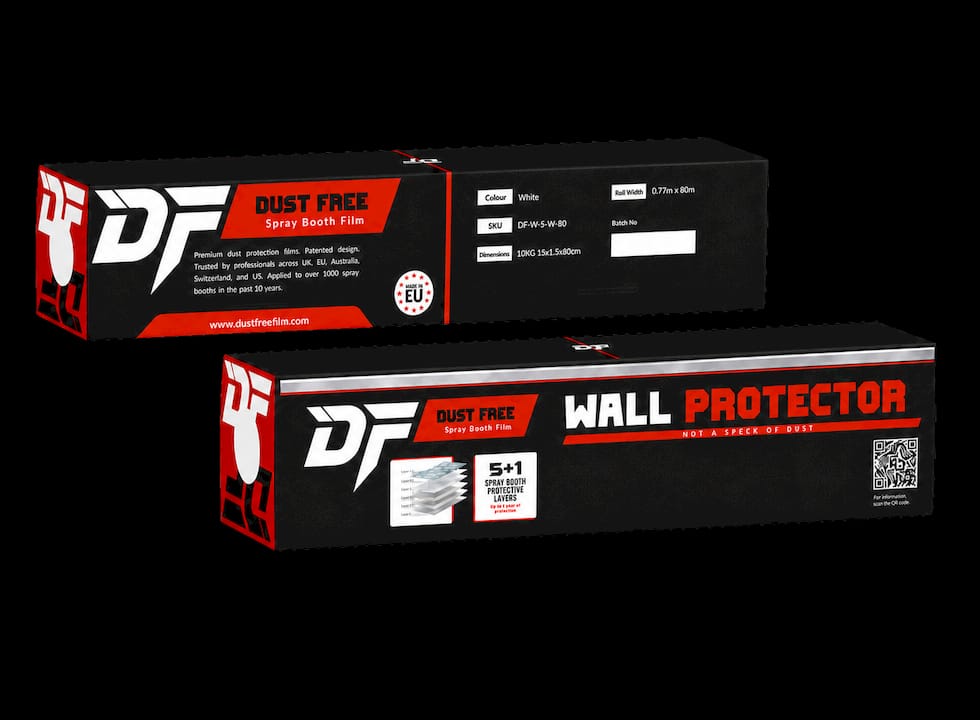
Grounding, humidity, and ionization handle the charge itself. Surface protection handles what that charge attracts once it’s there. Multi-layer Wall Protector and Floor Protector films use an electrostatically charged surface to capture airborne dust and overspray before it lands on a curing panel, and a patented application box allows one installer to dispense a straight, tape-free run without pulling the whole system down.
- Peel away the top used layer to expose a fresh surface without a full reinstall.
- Position Floor Protector in high-traffic zones where dragged parts and foot traffic generate the most charge.
- Replace layers on a cadence tied to your booth’s cleaning schedule, not just when contamination becomes visible.
Film reduces what static pulls onto your walls and floor. It doesn’t replace a grounding audit.
What a Maintenance Lead Actually Prioritizes Each Winter
Every fall, before heating season hits full swing, run a grounding audit, recalibrate every RH sensor, and refresh staff on anti-static handling, wipes, footwear, no dragging parts. Preventive checks cost an afternoon. A static-caused rework batch or, worse, an ignition event costs far more.
— Pavlos - Angelos Filippakis
A Practical Next Step for Managing Booth Contamination
Grounding audits, humidity control, and ionization solve the static itself, but they don’t stop dust and overspray from settling on booth surfaces the moment charge builds up between service intervals. That’s a separate problem, and it’s the one Dust Free Film’s electrostatic wall and floor protection films are built to handle.

The multi-layer design means your team peels off a contaminated layer and exposes a clean surface in minutes, without shutting the booth down for a full reinstall, which keeps cleaning downtime out of your production schedule during the exact season when static problems spike hardest. A patented application box handles the roll, cutting, and straight-line dispensing with one installer and one pass. If winter contamination is eating into your booth’s uptime, get product specs and a quote directly from Dust Free Film.
Standards and Studies Worth Keeping on File
- OSHA’s spray-finishing safety guidance for workplace hazard compliance
- NFPA 33 grounding and bonding summary for resistance acceptance criteria
- The 2025 vehicle-painting ignition study for documented static-ignition mechanisms
- NIST’s electrostatics reference for underlying charge behavior
Treat these as a starting point, not a substitute for consulting the full standards yourself.
Sources
- NFPA 33 grounding and bonding guidance (Spray Systems summary)
- Optimizing air management in paint booths (Carel blog)
- OSHA guidance on spray finishing and related hazards (OSHA3912)
- A study of vehicle painting ignition caused by static electricity (2025 DOI)
FAQ
What is the ideal temperature for a paint booth?
Most coating manufacturers specify a booth temperature in a moderate range, but the exact target depends on the specific coating’s technical data sheet, since cure times shift significantly outside recommended temperatures.
What are the NFPA 33 requirements for paint booths?
NFPA 33 requires verified grounding and bonding of all conductive components in the spray area, with resistance readings kept under 1 megohm and ideally under 25 ohms for reliable static dissipation.
What are the OSHA requirements for a paint booth?
OSHA’s 29 CFR 1910.107 covers spray-finishing operations, addressing ventilation, electrical equipment, and safe handling of flammable coatings and solvents.
How do you neutralize static in a paint booth?
Verify grounding continuity first, then raise booth relative humidity into the mid-40s to mid-60s percent range, and use ionizing bars or anti-static wipes to neutralize charge already sitting on panels and tools.
Does electrostatic protective film reduce static buildup?
Dust Free Film’s protective films are designed to capture airborne dust and overspray that static charge attracts, working alongside grounding and humidity control rather than replacing either one.