

TL;DR:
- Automation in spray booths enhances production capacity, coating quality, and safety by integrating robotics, conveyors, and environmental controls. Proper system design, operator training, and booth redesign are essential to realize the full benefits and prevent performance issues. Dustfreefilm provides protective films that help maintain a clean environment critical for automated finishing processes.
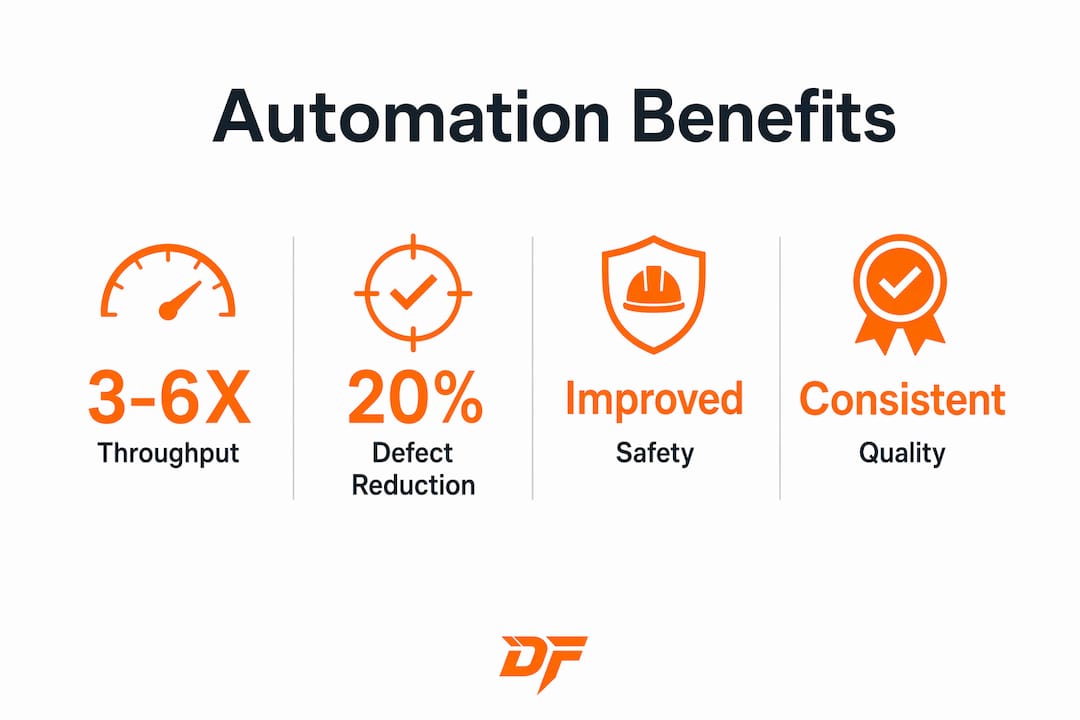
Automation in spray booth operations refers to the use of integrated robotics, conveyor systems, and environmental control technologies that together increase production capacity, coating quality, and operator safety. The role of automation in spray booth operations has moved well beyond simple mechanical assists. Today, systems combine Programmable Logic Controllers (PLCs), robotic spray arms, and real-time sensor networks to maintain OSHA-compliant air quality, precise film builds, and repeatable finishes across every shift. Facilities that treat automation as a full system rather than a collection of bolt-on parts see the strongest results in throughput, material savings, and defect reduction.
How does automation improve production efficiency in spray booths?
Automated spray booth systems eliminate the two biggest throughput killers in manual operations: operator fatigue and handling bottlenecks. A skilled manual sprayer slows down after two hours. A robot does not. That physical consistency translates directly into cycle time reduction and higher daily output.
Conveyor integration enables continuous part flow through the booth, removing the stop-and-start rhythm of batch processing. A single conveyor cell operated by one person can increase production capacity by 3–6X compared to a manual line. That capacity gain does not require proportionally more labor, which is where the real cost advantage appears.
The financial case is clear. Robotic spray systems deliver ROI within 12–36 months, with throughput gains of 30%–50% and labor cost reductions of 40%–60%. Paint material savings run 10%–30% because robots apply coating at a consistent transfer efficiency that manual sprayers rarely match. A $150,000 robotic cell that cuts rework and material waste by 20% pays for itself faster than most capital equipment in a finishing facility.
Key efficiency gains from automation in paint booths include:
- Continuous part flow through conveyor integration, removing manual handling delays
- Robotic spray arms that maintain consistent speed, distance, and angle across every part
- Synchronized booth controls that shift automatically between spray, flash-off, and cure modes
- Reduced rework cycles because defect rates drop with repeatable spray paths
Pro Tip: Match your automation level to your production volume before purchasing. A facility running high-volume, low-variety parts benefits most from full robotic integration. A shop with frequent color changes and mixed part sizes may get better ROI from conveyor-only automation first, then add robotics as volume grows.
What quality and consistency benefits does automation bring?
Coating quality depends on three variables: spray path, environmental conditions, and material application rate. Manual spraying introduces variation in all three. Automation locks each one down.
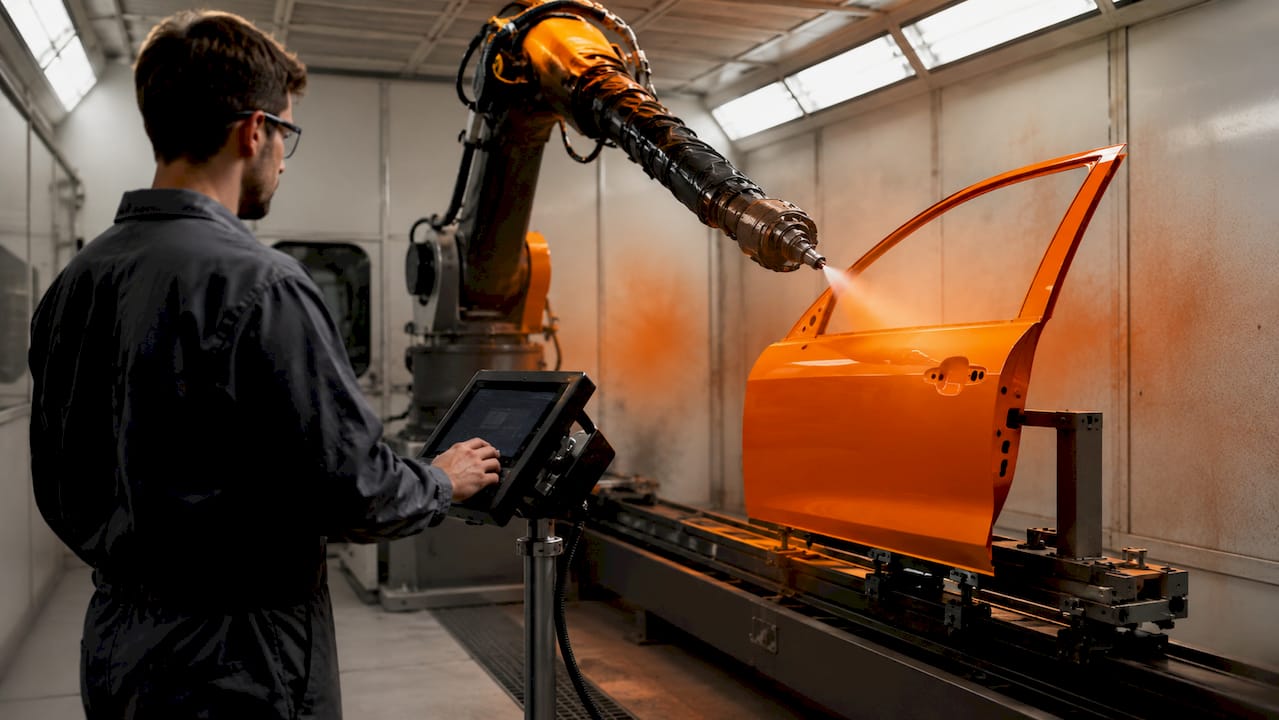
Robots repeat the same spray path at identical speed and distance for every part, which is the foundation of consistent film build. This repeatability is why aerospace and precision manufacturing facilities adopted robotic spray first. A 0.1mm deviation in spray distance changes film thickness. Robots do not drift. Operators do.
Environmental control adds the second layer of consistency. PLCs and sensor networks automate airflow, temperature, humidity, and filter monitoring inside the booth. The system maintains balanced pressure and switches operational modes, from spray to cure, without manual input. That means the coating environment stays within spec even when ambient conditions outside the booth change.
The result is measurable. Automation reduces defect rates by at least 20% through repeatability alone. Fewer defects mean fewer rework cycles, less material waste, and faster throughput to shipping.
| Quality metric | Manual spraying | Automated spraying |
|---|---|---|
| Film build consistency | Variable by operator and shift | Consistent across every part and shift |
| Defect rate | Higher due to fatigue and variation | Reduced by 20%+ through repeatability |
| Environmental control | Manual adjustment, reactive | PLC-automated, proactive |
| Color change speed | Slow, operator-dependent | Minutes with AI-integrated systems |
| Rework frequency | Higher | Significantly lower |
How does automation address safety and labor challenges?
Operator safety is the most underrated driver of automation adoption. Spray booths expose workers to isocyanates, solvents, and particulates that cause long-term respiratory damage even with proper PPE. Automation moves operators outside the chemical exposure zone entirely. The robot sprays. The operator monitors from a control panel.
The labor shortage problem is equally real. Experienced spray technicians are retiring faster than facilities can train replacements. Automation addresses this directly by shifting the required skill set from manual spray technique to digital system management. Operators become cell supervisors who read dashboards, adjust programs, and troubleshoot sensor alerts.
That shift requires deliberate investment in training. Digital literacy is not optional when your spray system runs on PLCs and AI diagnostics. Facilities that skip operator training see automation underperform because the equipment runs at default settings rather than being actively tuned to production conditions.
Critical safety and workforce considerations include:
- Robots eliminate direct operator exposure to spray chemicals during active coating cycles
- Booth redesign is required to support robotic spray patterns and manage overspray volumes correctly
- Operators need training in PLC interfaces, program editing, and digital fault diagnosis
- Automation creates new roles in quality monitoring and system maintenance, not just fewer jobs
Pro Tip: Before committing to a robotic system, run the three-test framework: assess your color-change frequency, your film thickness tolerance, and your current operator exposure levels. These three factors determine which automation tier fits your operation and what training investment you need.
What are critical considerations for integrating automation into existing setups?
The most common automation mistake is treating a robot as a standalone upgrade. Successful integration requires engineering the booth, robotics, conveyor, and controls as a single system. A robot dropped into an existing booth without airflow redesign will produce worse finishes than a skilled manual sprayer. Overspray management changes completely when a robot moves at programmed speeds through fixed paths.
Airflow and booth design must be re-engineered to handle robotic spray patterns and the higher overspray volumes they generate. Capture velocities that work for manual spraying often fall short for robotic applications. Inlet and outlet airflow, exhaust capacity, and filtration all need evaluation before a robot enters the booth.
Isolated automation upgrades frequently fail because they do not synchronize ventilation, thermal conditions, and spray parameters. Predictive control systems that coordinate all three improve both efficiency and sustainability. This is not a software feature. It is a design requirement.
| Automation level | Best fit | Key requirement |
|---|---|---|
| Conveyor only | High volume, simple parts, one operator | Synchronized booth airflow and controls |
| Conveyor plus robotic arm | Medium variety, consistent part geometry | Booth airflow redesign, PLC integration |
| Full robotic line | High volume, precision finishes, low variety | Complete system engineering, operator retraining |
| AI-integrated robotic system | High variety, fast color changes, complex paths | Advanced controls, digital operator training |
Matching automation level to your production profile prevents over-investment and underperformance. A shop running 50 parts per day with 10 color changes does not need a full robotic line. A facility running 500 identical parts per shift does. The booth efficiency guide from Dustfreefilm covers how to evaluate your current setup before committing to a specific automation tier.
What practical steps maximize the benefits of automation?
Automation delivers its full value only when operators actively manage it. A robotic system running on factory default spray parameters will not outperform a skilled manual sprayer by much. Active monitoring and continuous parameter adjustment are what separate good results from great ones.
Follow these steps to get the most from your automated system:
- Train operators on PLC and digital control interfaces before the system goes live. Operators who understand the software make faster adjustments and catch faults earlier.
- Establish baseline spray parameters for each part number during commissioning. Document speed, distance, atomization pressure, and fan width for every program.
- Monitor film build data continuously using integrated measurement tools. Adjust programs when readings drift outside tolerance rather than waiting for a defect to appear.
- Synchronize conveyor speed with booth airflow so parts move through the spray zone at the rate the ventilation system was designed to handle. Mismatched speeds create overspray buildup and finish defects.
- Review maintenance logs weekly. Robotic systems flag filter saturation, nozzle wear, and sensor drift before they cause quality failures. Acting on those alerts early prevents downtime.
- Prepare the booth surface environment before every production run. Dustfreefilm’s booth preparation guide details how dust control at the booth level protects the finish quality that automation works to achieve.
The cultural shift matters as much as the technical steps. Transitioning from manual spraying to automation requires a new operational mindset focused on monitoring and digital troubleshooting rather than hands-on technique. Facilities that build that culture alongside the hardware see faster payback and fewer implementation failures.
Key Takeaways
Automation in spray booth operations delivers measurable gains in throughput, quality, and safety only when the booth, robotics, conveyor, and controls are engineered and managed as a single integrated system.
| Point | Details |
|---|---|
| System integration is non-negotiable | Robots, conveyors, booth airflow, and PLCs must be designed together, not added separately. |
| Throughput gains are significant | Conveyor integration alone can increase capacity 3–6X with one operator running the cell. |
| Quality improves through repeatability | Automated spray paths reduce defect rates by at least 20% compared to manual application. |
| Safety and labor both improve | Robots remove operators from chemical exposure zones and address skilled labor shortages. |
| Operator training determines ROI | Digital literacy and active parameter management separate high-performing systems from underperforming ones. |
What I’ve learned from watching automation done right and wrong
Automation gets sold as a hardware decision. It is actually a workflow decision that happens to involve hardware. The facilities I have seen struggle with automation share one pattern: they bought the robot before they redesigned the process around it. The booth stayed the same. The airflow stayed the same. The operators were handed a new control panel with two hours of training. The results were predictably disappointing.
The facilities that got it right started with a clear production audit. They mapped their color-change frequency, their part complexity, and their current defect rates before a single vendor conversation. They redesigned airflow before the robot arrived. They trained operators for weeks, not hours. And they treated the first three months as a calibration period, not a full production launch.
The safety argument for automation is stronger than the cost argument, and I think the industry undersells it. Isocyanate exposure is a serious, cumulative health risk. Moving operators out of the spray zone is not just an OSHA compliance move. It is the right thing to do for the people running your facility. The recirculating booth design guide covers how booth architecture choices affect both operator safety and finish quality, and it is worth reading before any automation project starts.
Automation also does not eliminate the need for a clean booth environment. Robots apply coating with precision, but dust contamination still ruins finishes. The surface protection layer, the films on walls and floors, the filtration system, all of that still matters. Automation raises the ceiling on what your booth can produce. Dust control keeps you from hitting the floor instead.
— Dust
How Dustfreefilm supports your automated spray booth
Automation raises your spray booth’s production potential. Dustfreefilm makes sure the booth environment is clean enough to deliver on that potential.
Dustfreefilm manufactures multi-layer electrostatic protection films for booth walls and floors, built to withstand the heat and chemical exposure of active spray environments. The patented dispenser system allows fast, bubble-free installation that does not interrupt production schedules. For automated facilities running continuous shifts, Dustfreefilm’s films reduce dust contamination between cycles and protect the booth surfaces that robotic systems depend on for consistent overspray capture. Visit Dustfreefilm to see the full product range and find the right dust protection configuration for your operation.
FAQ
What is the role of automation in spray booth operations?
Automation in spray booth operations integrates robotics, conveyor systems, PLCs, and environmental sensors to increase throughput, maintain coating consistency, and remove operators from chemical exposure zones. The system functions as a coordinated whole, not a set of independent upgrades.
How much can automation increase spray booth throughput?
Conveyor integration with synchronized booth controls can increase production capacity by 3–6X compared to manual batch processing, with robotic systems adding 30%–50% throughput gains on top of that.
Does automation reduce paint defects?
Automated spray paths reduce defect rates by at least 20% through repeatability. Robots maintain identical speed, distance, and angle on every part, eliminating the variation that causes runs, sags, and uneven film build.
What training do operators need for automated spray systems?
Operators need training in PLC interfaces, program editing, and digital fault diagnosis. Digital literacy is the core skill requirement, replacing manual spray technique as the primary competency for booth personnel.
Can I add a robot to my existing spray booth without redesigning it?
Adding a robot to an existing booth without redesigning airflow typically degrades finish quality. Robotic spray patterns generate different overspray volumes and require tuned capture velocities that most manual-spec booths cannot provide without modification.