

Most facility managers running spray booths have made the same assumption at some point: any film is good enough to protect walls and floors from overspray and dust. That assumption is expensive. In high-temperature spray environments, standard plastic sheeting warps, paper tears, and neither material holds up through a full cure cycle. Heat-resistant protective films are engineered specifically for these conditions, and the performance gap between them and generic alternatives shows up directly in your reject rates, rework hours, and booth maintenance costs. This article breaks down why heat resistance matters, what the data shows, and how to deploy these films correctly.
Table of Contents
- Understanding heat resistant films in spray booths
- Key benefits for dust protection and paint finish quality
- Comparing heat-resistant films to alternative solutions
- Effective deployment: Installation best practices and common mistakes
- A facility perspective: What most managers miss about heat resistance
- Next steps: Maximize your booth performance with the right protection
- Frequently asked questions
Key Takeaways
| Point | Details |
|---|---|
| Reduces contamination risk | Heat-resistant film guards against dust and overspray, improving booth cleanliness and finish quality. |
| Boosts finish quality | Facilities using heat-resistant films report up to 25% fewer coating defects than untreated booths. |
| Outperforms alternatives | Compared to paper or regular plastic, heat-resistant film offers better durability and dust control under heat. |
| Enables efficient operations | Proper use of heat-resistant film lowers rework rates and reduces booth maintenance cycles. |
Understanding heat resistant films in spray booths
With the stakes clear, let’s break down what makes heat-resistant films unique in spray booth settings.
What heat-resistant film is matters before anything else. These are multi-layer protective films engineered to maintain structural integrity at the elevated temperatures common in automotive and industrial spray booths, typically ranging from 140°F to 185°F during bake cycles. Unlike standard polyethylene sheeting, heat-resistant films use specialized polymer blends that resist shrinking, bubbling, and adhesive breakdown under thermal stress.
Standard plastic films fail in predictable ways. They shrink and wrinkle during bake cycles, which creates gaps where dust and overspray can migrate onto freshly coated surfaces. Paper alternatives absorb moisture and solvents, lose their structural integrity, and shed fibers that contaminate wet paint. Neither material is designed for the chemical exposure that comes with modern waterborne or solvent-based coatings.
Heat-resistant films address these failure points with several built-in advantages:
- Thermal stability: Maintains shape and adhesion through full bake cycles without shrinking or lifting at the edges.
- Chemical resistance: Resists breakdown from solvents, isocyanates, and waterborne coating chemistries.
- Electrostatic charge retention: Holds a static charge that actively attracts airborne dust particles before they settle on painted surfaces. Electrostatic versions reduce dust contamination by up to 25%.
- Multi-layer construction: Allows top layers to be peeled away as they accumulate overspray, extending the usable life of the installation.
The impact on maintenance cycles is significant. Booths protected with proper heat-resistant films require fewer deep cleans between jobs because the film captures and holds contamination rather than allowing it to redistribute. Film durability directly determines how long a single installation stays effective, which affects your labor costs and booth downtime. Facilities that upgrade from paper or standard plastic often report cutting their between-job cleaning time by a meaningful margin, freeing up technician hours for productive work.
For procurement specialists, the construction quality of the film also affects installation speed. Patented dispenser systems, like those used with Dust Free Film products, allow for bubble-free application in minutes rather than the slow, wrinkle-prone process that comes with cheaper materials. That installation efficiency compounds over hundreds of jobs per year. When you factor in premium paint protection options across a facility, the material choice at the film level has a larger downstream impact than most managers initially expect.
Key benefits for dust protection and paint finish quality
Once you understand the unique properties of heat-resistant films, their benefits in action are clear.
The numbers are direct: facilities using dust-preventing films report up to 25% fewer coating defects compared to untreated areas. That is not a marginal improvement. In a busy auto body shop or industrial coating line, a 25% reduction in defects translates to fewer rework cycles, less wasted paint, and faster throughput per booth.
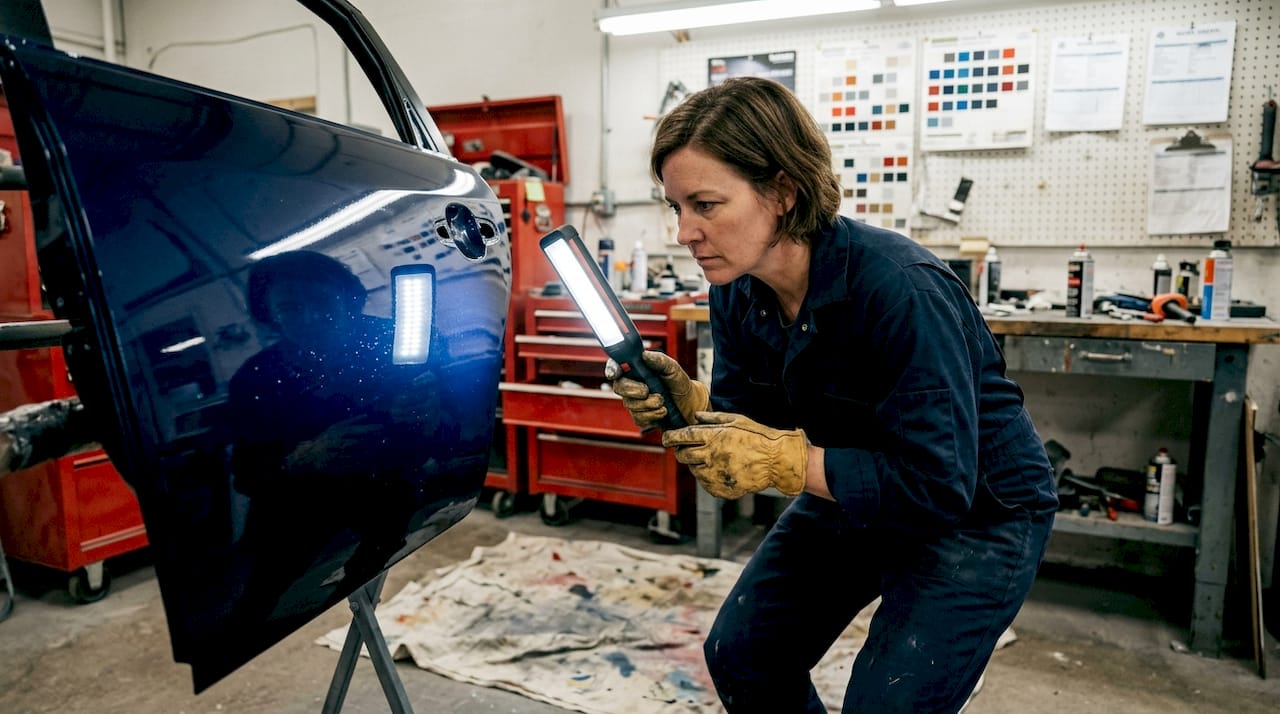
Dust contamination is the leading cause of paint finish failures in spray environments. A single particle settling into wet clearcoat creates a visible inclusion that requires sanding, recoating, and re-curing. Multiply that across a full day of production and the cost in materials and labor adds up fast. Electrostatic heat-resistant films address this by actively pulling airborne particles toward the wall and floor surfaces rather than letting them drift onto the vehicle or part being coated.
| Protection method | Dust control | Heat tolerance | Defect reduction | Reusability |
|---|---|---|---|---|
| Heat-resistant electrostatic film | High | Yes (up to 185°F) | Up to 25% | Multi-layer peel |
| Standard plastic sheeting | Low | No | Minimal | Single use |
| Paper masking | Low | No | Minimal | Single use |
| Bare wall/floor | None | N/A | None | N/A |
Wall protector insights show that vertical surfaces are often the most overlooked contamination source. Overspray accumulates on walls and then dislodges during air movement, landing on work in progress. Films that cling securely to wall surfaces without lifting at the edges prevent this redistribution cycle entirely.
Pro Tip: Specify electrostatic film grades for areas directly adjacent to the spray zone. The static charge does the work of attracting fine particles that standard films simply let pass. For floor protection, look for multi-layer options that allow quick peel between jobs without full reinstallation.
“The quality of your booth protection is a direct input to the quality of your finished product. Treating it as an afterthought is one of the most common and correctable mistakes we see in production facilities.”
For procurement teams, the business case is straightforward. Fewer defects mean fewer rework jobs. Fewer rework jobs mean lower paint consumption, lower labor hours, and faster delivery times. Enhancing booth quality through proper film selection is one of the highest-return, lowest-complexity improvements available to a facility. When you look at paint protection examples across automotive applications, the pattern is consistent: surface protection quality determines finish quality.
Comparing heat-resistant films to alternative solutions
It’s important to see how heat-resistant films truly stack up to the solutions they replace.
The three most common alternatives to purpose-built heat-resistant film are standard polyethylene sheeting, paper masking products, and simply leaving booth surfaces unprotected. Each has a different failure profile, but all share one outcome: higher total cost over time.
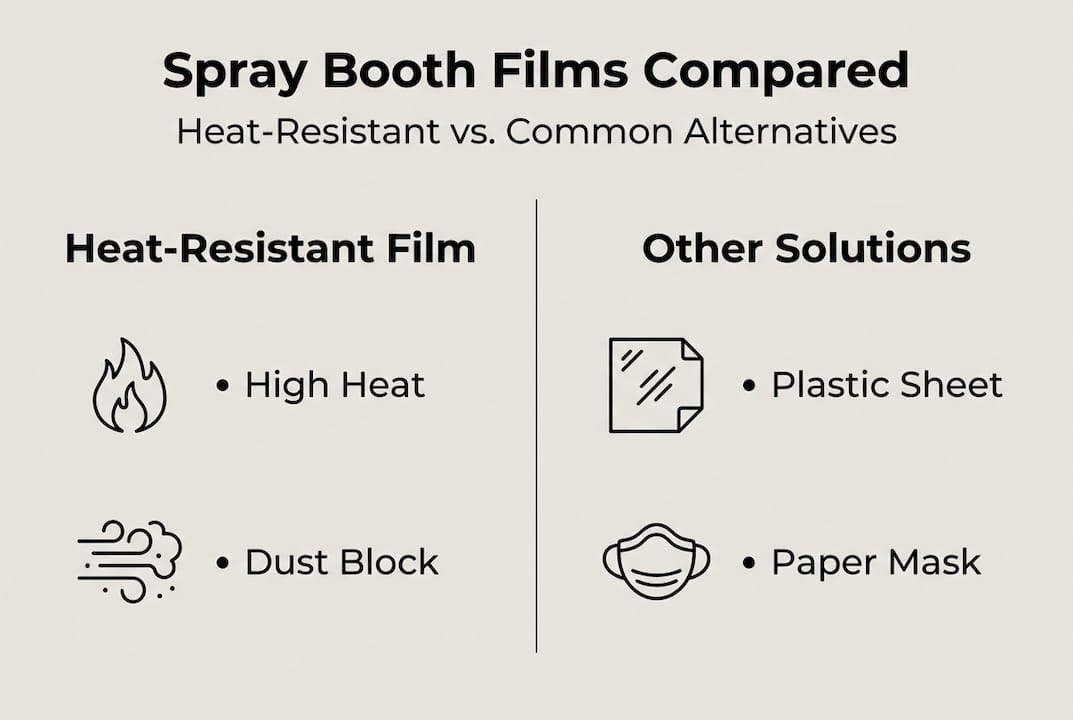
Standard plastic sheeting is inexpensive upfront. It costs less per roll and is widely available. The problem is that it was never designed for spray booth conditions. It melts or warps during bake cycles, loses adhesion at elevated temperatures, and provides no electrostatic dust attraction. Every time it fails mid-job, you face a choice between stopping production to reapply or accepting the contamination risk.
Paper masking products are familiar to most auto body technicians. They are easy to handle and conform to surfaces reasonably well at room temperature. However, heat-resistant films offer greater conformability and contamination prevention than paper, particularly during bake cycles where paper absorbs solvent vapors and can release them back into the booth environment.
| Criterion | Heat-resistant film | Standard plastic | Paper masking |
|---|---|---|---|
| Upfront cost | Moderate | Low | Low |
| Heat tolerance | High | None | Low |
| Dust attraction | Electrostatic | None | None |
| Rework risk | Low | High | High |
| Total cost of ownership | Low | High | High |
For film use cases across different facility types, the pattern is consistent. Facilities that switch to heat-resistant films from paper or plastic almost always report that the upfront cost difference is recovered within weeks through reduced rework and faster booth turnaround.
Key decision criteria for facility managers choosing between film types:
- Does the film maintain adhesion and shape through your specific bake cycle temperature?
- Does it carry an electrostatic charge to actively capture airborne dust?
- Can layers be peeled individually to extend installation life between full replacements?
- Is the application system fast enough to minimize booth downtime during changeover?
Material durability is the factor that most separates professional-grade films from commodity alternatives. Durability is not just about how long a film lasts; it is about how consistently it performs throughout its service life. A film that starts strong but degrades after two bake cycles is not a durable product, regardless of its initial specifications. Look at film protection examples to understand what consistent performance looks like in practice.
Effective deployment: Installation best practices and common mistakes
Knowing which film to choose is just the start. Deploying it correctly is critical for real-world results.
Even the best heat-resistant film will underperform if it is applied incorrectly. Surface preparation is the most commonly skipped step and the most common reason for premature failure. Here is a practical installation sequence that works in production environments:
- Clean all surfaces thoroughly. Remove overspray residue, grease, and dust from walls and floors before applying new film. Contaminated surfaces prevent proper adhesion.
- Allow surfaces to dry completely. Any moisture trapped under the film creates bubbles and reduces adhesion, especially at elevated temperatures.
- Use a dispenser system designed for the film. Patented dispenser systems allow for straight, bubble-free application without stretching the film, which can reduce its electrostatic effectiveness.
- Overlap seams by at least two inches. This prevents gaps at joints where dust can migrate through to booth surfaces.
- Press edges firmly. Edge lift is the most common failure point. Use a squeegee or roller to ensure full contact along all borders.
- Inspect before each spray cycle. A quick visual check catches any lifted edges or tears before they become contamination sources.
Protective films must be replaced regularly to maintain efficiency and cleanliness. For most production facilities, this means replacing or peeling multi-layer films every few weeks depending on job volume and temperature exposure. The maintenance workflow for your booth should include film inspection and replacement as a scheduled task, not a reactive one.
Pro Tip: For high-volume booths running multiple bake cycles daily, use multi-layer electrostatic films and peel one layer after every three to five jobs. This keeps the active surface fresh and electrostatically charged without requiring a full reinstallation every time.
Common mistakes to avoid include applying film over dirty or damp surfaces, using generic tape to extend film that has started to lift, and skipping the spray booth setup guide recommendations for your specific booth configuration. Each of these shortcuts creates a compounding problem that shows up in your finish quality before it shows up anywhere else. The safety solutions guide covers additional considerations for facilities managing both dust control and worker safety simultaneously.
A facility perspective: What most managers miss about heat resistance
With best practices in hand, it’s worth stepping back to re-examine what is truly at stake.
Most managers who choose cheaper films are not being careless. They are responding to budget pressure and making a decision that looks rational on a purchase order. The problem is that the purchase order does not capture rework labor, wasted paint, extended booth downtime, or the cost of a dissatisfied customer who received a substandard finish.
We have seen facilities spend three times more on rework than they saved on film costs. That math never works in favor of the cheaper option. The real calculation is total cost of ownership: what does this film cost per finished job, including all the downstream consequences of its performance?
When you measure it that way, investing in booth quality through proper film selection is not a premium. It is the baseline for running a competitive operation. The facilities that understand this are the ones consistently delivering first-pass quality finishes while their competitors are sanding and recoating.
Next steps: Maximize your booth performance with the right protection
If you are ready to see improved spray booth results and lower rework rates, here is how you can take the next step.
At Dust Free Film, we have spent over a decade engineering heat-resistant, electrostatic protective films specifically for the demands of automotive and industrial spray environments. Our products are built to European manufacturing standards and are used in high-volume facilities across multiple countries.
Whether you need wall protector film for your spray zone or a complete floor and wall protection system, we offer configurations for facilities of every size. Custom options and bulk purchasing are available for large-scale operations. Request a quote today and let our team help you match the right film specification to your booth conditions and production volume.
Frequently asked questions
How does heat-resistant film reduce spray booth contamination?
Heat-resistant film maintains its structure at high temperatures and, in electrostatic versions, actively attracts airborne dust particles to the film surface rather than letting them settle on painted work. Electrostatic versions reduce dust contamination by up to 25%.
How often should spray booth heat-resistant film be replaced?
Most facilities replace or peel heat-resistant films every few weeks based on job volume, with full replacement triggered by visible dust saturation or edge wear. Protective films must be replaced regularly to maintain efficiency and cleanliness.
Can paper or standard plastic films offer the same benefits as heat-resistant types?
No. Paper and standard plastic both fail under the thermal and chemical conditions of active spray booths. Heat-resistant films offer greater conformability and contamination prevention than paper across every relevant performance category.
What is the most common installation mistake with protective film?
Skipping surface preparation is the most frequent error. Applying film over residue, grease, or moisture prevents proper adhesion and leads to edge lift and premature failure during bake cycles.